
- BGG rank
- BGG #1,254
- BGG rating
- 7.2
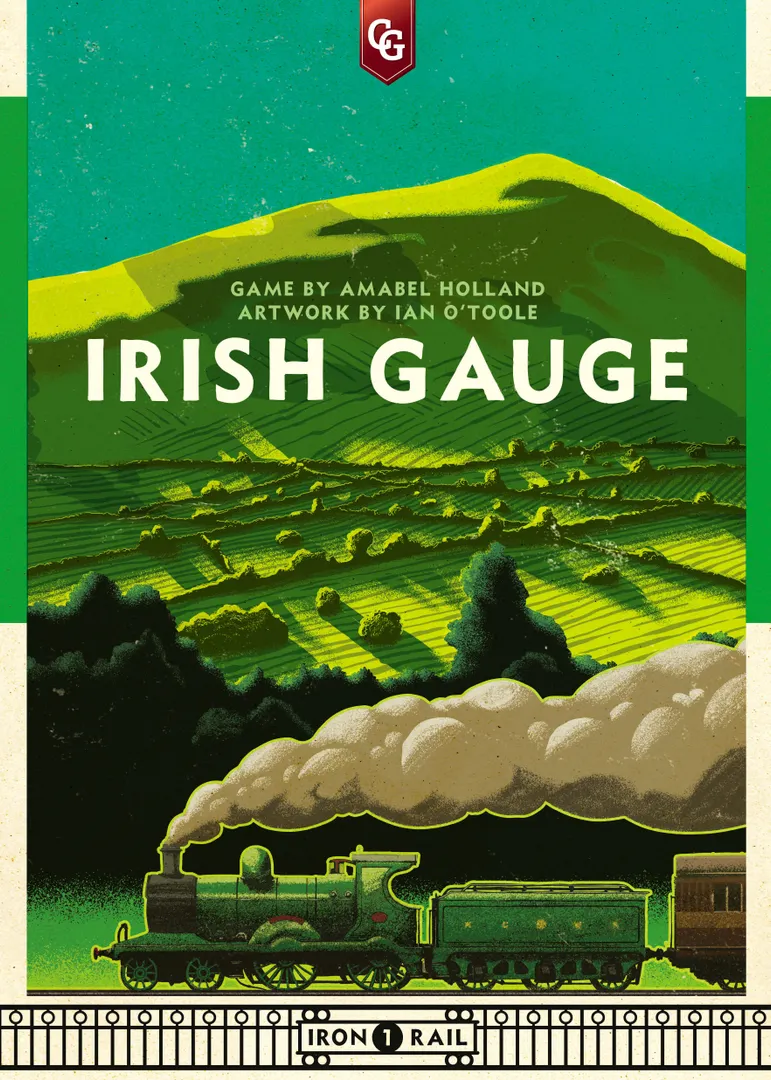
Irish Gauge
- 3–5 players
- 60 min
- Complexity 2.3/5
- 2014
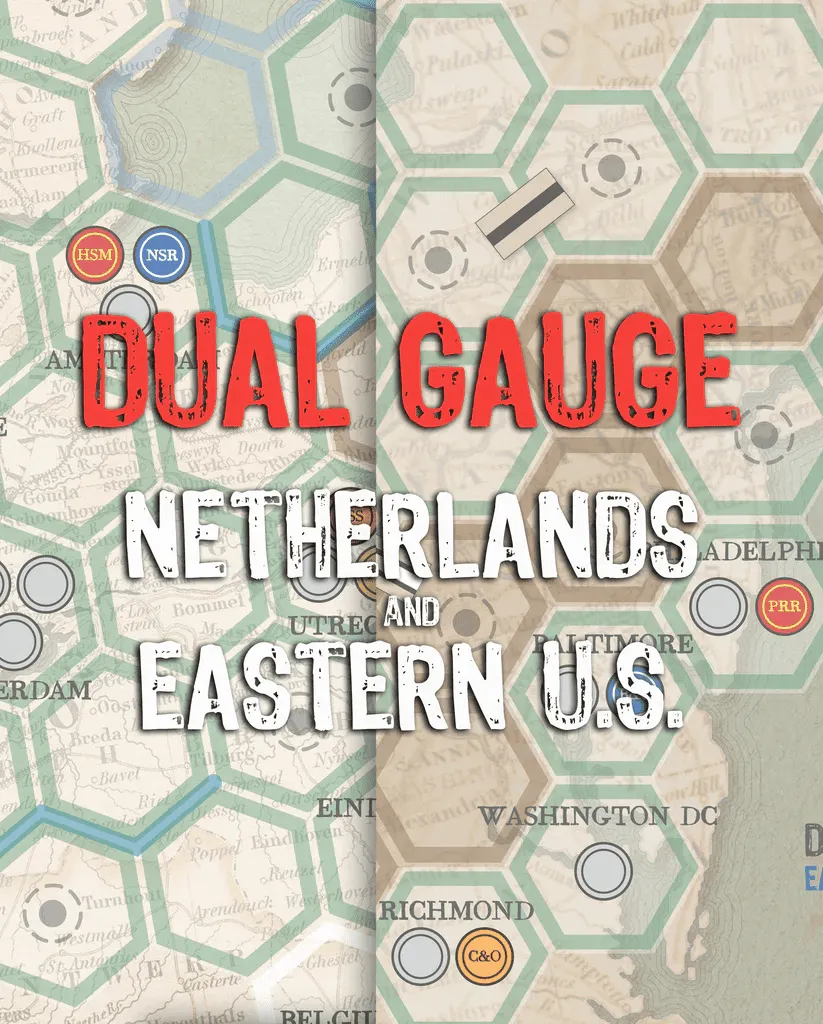
Rules assistance for Dual Gauge: Netherlands and Eastern U.S.
Plain-language explanations of turns, card effects and disputed situations, with official source references and saved question history.
What would you like to know?
Answers come from the official rulebook, with the page to check.
Dual Gauge: Netherlands and Eastern U.S. is an expansion for Dual Gauge released in 2023 for 3–5 players and 60 minutes per game. It was designed by Amabel Holland and its main mechanics are Network and Route Building and Stock Holding.





The third expansion map set for Dual Gauge! These maps introduce Star Dits, which function as normal dits for most purposes – they count as a stop but cannot be tokened – but are worth more money. Depending on the map, players may also have an additional incentive to hit these stops over others. Both maps also see players in a race to grab bonuses, which also serve as another game end trigger. The Netherlands map seats up to five players and features a new gauge conversion step, allowing you to flip narrow track to its standard side. Of course, what it doesn't do is change your narrow trains. You'll need to plan your train purchases carefully, and beware of opponents who might use this tactic offensively. That's if you have enough time, of course! The standout feature of this map is a race to complete certain Goals. Achieving one of the map's eight Goals will win you a disc. This can be traded in later, either to place a station or to buy a precious second share of stock in a single round. The Eastern US map is for three to four, and is a bit subtler. Preprinted track segments provide awkward chokepoints to either work around or embrace. Company turn order isn't fixed, but shifts from round to round depending on company stock value. Increases in that value are gated – tied to your dividends, so you'll need to work for big routes while your rivals try to block you with aggressive token play. At the western end of the maps, there are the destination cities of Detroit and Chicago, each containing a set of Bonus Discs. When a company ends a run there, their President claims a disc. At the end of game, you'll get a payout based on the number of discs you've claimed. -description from publisher
Dual Gauge: Netherlands and Eastern U.S. supports 3–5 players according to the catalogue. This range comes from the publisher’s listed player count, so the game can be set up for any group size within it. Some setups, rules and scoring details may still vary by player count, so check your edition’s rulebook for the exact configuration.
The listed playing time for Dual Gauge: Netherlands and Eastern U.S. is 60 minutes. This is the publisher’s estimate for a full game. The actual duration depends on the group, the player count and familiarity with the rules: first sessions usually run longer, while experienced groups often finish faster. Setup and teaching time are not included in this estimate.
Dual Gauge: Netherlands and Eastern U.S. belongs to these categories: Trains and Expansion for Base-game. Its main mechanics are Network and Route Building and Stock Holding. Categories describe the theme and setting of a game, while mechanics describe what players actually do on their turns. Each mechanic links to a catalogue hub with similar games, which helps when you want something comparable.
The credited designers of Dual Gauge: Netherlands and Eastern U.S. are: Amabel Holland. These credits come from the published game data and name the people responsible for the game’s design, not its illustrators or publishers. Designer pages on MeepleRules collect other titles by the same designers, which helps when you enjoy a game and want to find similar ones.
The catalogue lists Dual Gauge: Netherlands and Eastern U.S. as an expansion for Dual Gauge. Expansions add new content, rules or scenarios to the base game and usually cannot be played on their own, so you need Dual Gauge to use it. Check that your edition of Dual Gauge is compatible, as some expansions were revised between editions.