- BGG rating
- 8.5
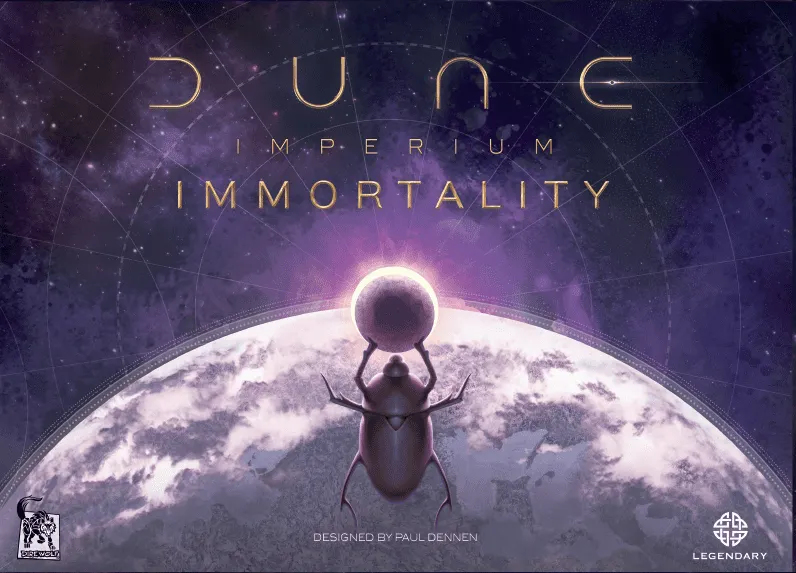
Dune: Imperium – Immortality
1–4 players60–120 min2022
Complexity 3.3/5
2020
Rules assistance for Dune: Imperium
Plain-language explanations of turns, card effects and disputed situations, with official source references and saved question history.
What would you like to know?
Answers come from the official rulebook, with the page to check.
Have the most Victory Points when the game ends; ties break by spice, Solari, water, then garrison troops.
About 8 min · 8 steps
Step 1 of 8
Play a card with a matching Agent icon and choose an unoccupied space. Pay its cost and meet its requirements.
Yes. After you reveal, you take no further turns that phase.
During your Reveal effects, before, between, or after resolving them. Unspent Persuasion is lost at round’s end.
No. Only troops in the Conflict count, at two strength each, plus swords on revealed cards.
No one gets the first reward; tied players each get the second reward. In a four-player game, other players compete for third.
Gain one Victory Point, which you lose if your Influence later falls below two.
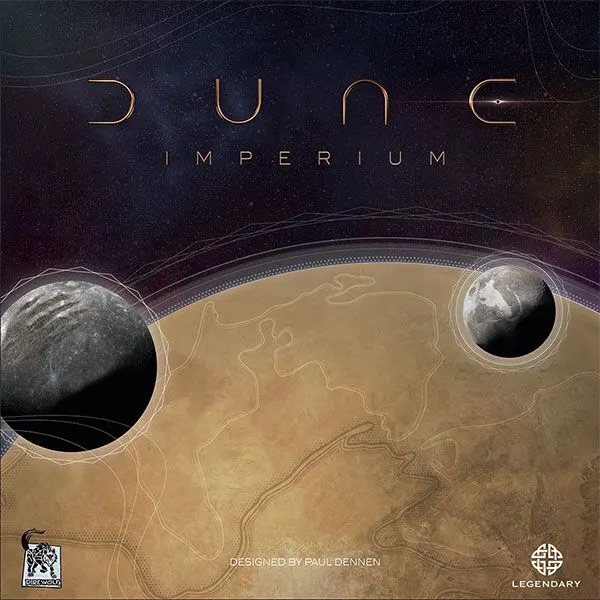
Dune: Imperium is a board game released in 2020 for 1–4 players, 60–120 minutes per game, and ages 14 and up. It was designed by Paul Dennen and its main mechanics are Variable Player Powers, Take That, and Race. MeepleRules offers a rules assistant for Dune: Imperium that explains turns, card effects and disputed situations in plain language.
1–5 players90–150 min2023
1–4 players30–120 min2020
1–5 players120 min2013
2–4 players120–180 min2026

2 players20 min2014
2–4 players30–60 min2016

2–4 players90–120 min2019

1–4 players60–240 min2011

2–7 players480 min2004

1–4 players30–90 min2019

1–6 players45–120 min2012
Dune: Imperium is a game that uses deck building to add a hidden information angle to traditional worker placement. It finds inspiration in elements and characters from the Dune legacy, both the new film from Legendary Pictures and the seminal literary series from Frank Herbert, Brian Herbert, and Kevin J. Anderson. As a leader of one of the Great Houses of the Landsraad, raise your banner and marshal your forces and spies. War is coming, and at the center of the conflict is Arrakis – Dune, the desert planet. You start with a unique leader card, as well as a deck identical to those of your opponents. As you acquire cards and build your deck, your choices will define your strengths and weaknesses. Cards allow you to send your Agents to certain spaces on the game board, so how your deck evolves affects your strategy. You might become more powerful militarily, able to deploy more troops than your opponents. Or you might acquire cards that give you an edge with the four political factions represented in the game: the Emperor, the Spacing Guild, the Bene Gesserit, and the Fremen. Unlike many deck building games, you don’t play your entire hand in one turn. Instead, you draw a hand of cards at the start of every round and alternate with other players, taking one Agent turn at a time (playing one card to send one of your Agents to the game board). When it’s your turn and you have no more Agents to place, you’ll take a Reveal turn, revealing the rest of your cards, which will provide Persuasion and Swords. Persuasion is used to acquire more cards, and Swords help your troops fight for the current round’s rewards as shown on the revealed Conflict card. Defeat your rivals in combat, shrewdly navigate the political factions, and acquire precious cards. The Spice must flow to lead your House to victory! Some important links: The Official FAQ, the Unofficial FAQ, and an Automa (solo and 2p) Overview
Use the rules assistant for Dune: Imperium to describe a turn, card effect or disputed situation. Get a plain-language explanation with official source references, then return to the question in your saved history. Select your edition when available so the sources match your game.
Ask about the rulesDune: Imperium supports 1–4 players according to the catalogue. This range comes from the publisher’s listed player count, so the game can be set up for any group size within it. Some setups, rules and scoring details may still vary by player count, so check your edition’s rulebook for the exact configuration.
The listed playing time for Dune: Imperium is 60–120 minutes. This is the publisher’s estimate for a full game. The actual duration depends on the group, the player count and familiarity with the rules: first sessions usually run longer, while experienced groups often finish faster. Setup and teaching time are not included in this estimate.
The catalogue lists Dune: Imperium for ages 14 and up. This is the publisher’s recommendation and reflects reading demands, rule complexity and small components rather than theme alone. Younger players can often join with help from an adult, so check the age guidance on your edition and consider your group’s experience with board games.
Dune: Imperium has a complexity rating of 3.1 out of 5 from BoardGameGeek players, which makes it a medium-weight game. The rating reflects how much rules knowledge, planning and decision-making a typical game demands. Expect a longer first teach for heavier games, and use a preparation guide before game night.
Dune: Imperium belongs to these categories: Movies / TV / Radio theme, Political, and Science Fiction. Its main mechanics are Variable Player Powers, Take That, and Race. Categories describe the theme and setting of a game, while mechanics describe what players actually do on their turns. Each mechanic links to a catalogue hub with similar games, which helps when you want something comparable.
The credited designers of Dune: Imperium are: Paul Dennen. These credits come from the published game data and name the people responsible for the game’s design, not its illustrators or publishers. Designer pages on MeepleRules collect other titles by the same designers, which helps when you enjoy a game and want to find similar ones.
The catalogue lists Dune: Imperium as a base game. It can be played on its own with the components in the box and does not require any other title. Expansions, if any exist, add new content or rules on top of it and are listed separately in the catalogue with a link back to this base game.