
- BGG rank
- BGG #4,845
- BGG rating
- 6.1
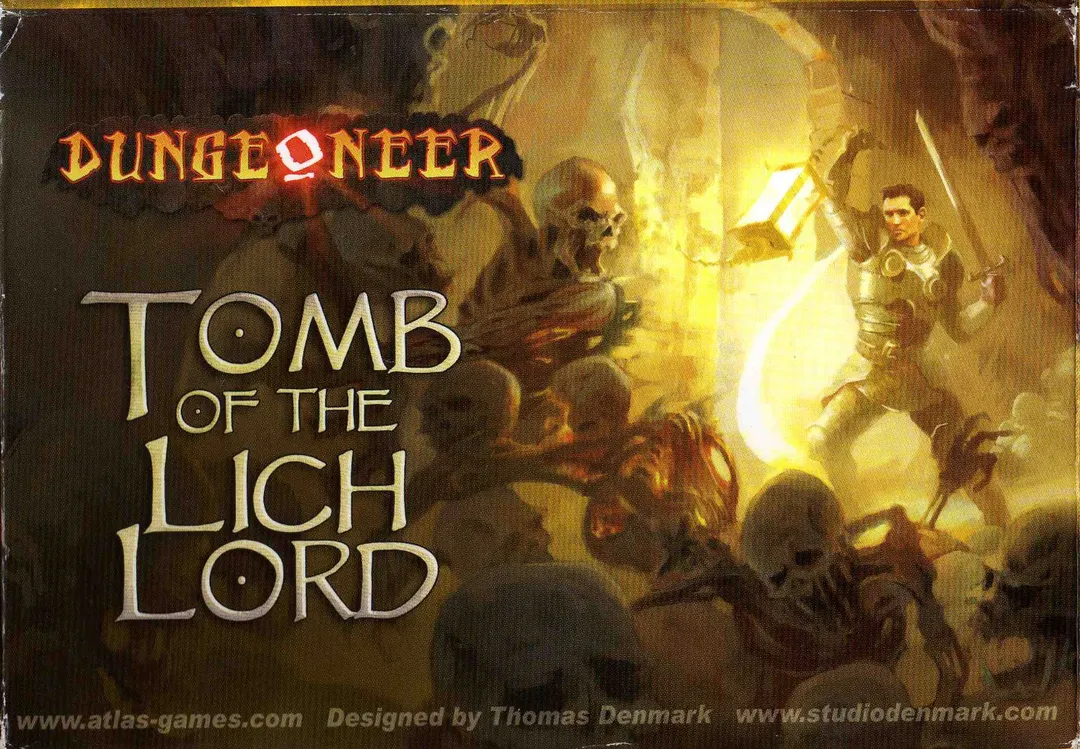
Dungeoneer: Tomb of the Lich Lord
- 2–4 players
- 60 min
- Complexity 2.2/5
- 2003
2003
Rules assistance for Dungeoneer: Vault of the Fiends
Plain-language explanations of turns, card effects and disputed situations, with official source references and saved question history.
For 2 players
What would you like to know?
Answers come from the official rulebook, with the page to check.
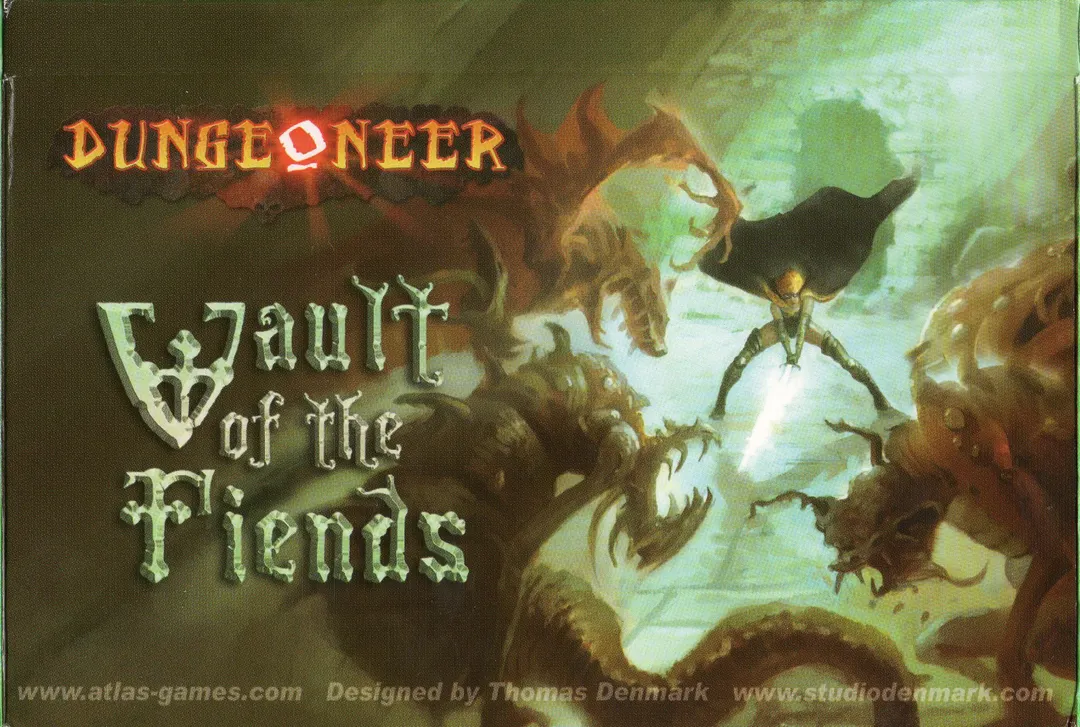
Dungeoneer: Vault of the Fiends is a board game released in 2003 for 2–4 players, 30 minutes per game, and ages 12 and up. It was designed by Thomas Denmark and its main mechanics are Variable Player Powers, Hand Management, and Dice Rolling.






Dungeoneer: Vault of the Fiends is a non-collectable dungeon-crawl card game for 2-4 players. It is meant as an expansion to the Dungeoneer: Tomb of the Lich Lord also published by Atlas Games, but Tomb of the Lich Lord is not necessary to play this set, as Vault of the Fiends is also a stand-alone set. Players play the part of one of six heroes. Each hero has variable melee, magic and speed scores, as well as a unique ability. Your second role in the game is as the malevolent “Dungeonlord”, trying to exterminate the other heroes. You win the game when as a hero you complete 3 Quests such as destroying an evil laboratory or rescuing a princess. An alternate win goal is as the Dungeonlord if all the other heroes are defeated except yours. Vault of the Fiends features a variety of new heroes. Elf Assassin, Human Beastmaster, Drakan Sentinal, Ork Shaman, Dwarf Runecaster, and Gnome Illusionist. Each turn you may: Play monsters, traps and other bad events on opponents Build a dungeon Move around the dungeon with your hero (collect Glory and Peril resources) Play abilities and treasures for yourself Complete a Quest Discard an unwanted card Fill your hand to 5 cards This game is similar to Wiz-War where you race in a dungeon to complete your objectives. This dungeon is created by the laying down of Map cards. You collect Glory and Peril as you move through the dungeon. Glory buys cards that help your hero such as abilities and treasures, but your opponent spends your Peril against you to play monsters, traps and other unpleasant stuff. Combat is similar to Talisman. Roll a six-sided die and add the score you are combating with, either Melee or Magic, to beat your opponent’s roll. The way the cards interact will be familiar to CCG players, in that you have “Permanents” and “Instants” that you can use strategically, or in combinations, but this game is not really a strategy game. Most of the fun comes from the theme, and surprising combination of events that occur. Dungeoneer is likely to appeal to those who enjoy a classic dungeon crawl and RPG like action. Vault of the Fiends features a few new mechanics that should serve to enhance the game play which players of Tomb of the Lich Lord will be familiar with. Some monsters, and attack cards are “pumpable” that means you may spend extra Glory or Peril to boost the effectiveness of the card. Also conditions on the map change such as effects being deactivated when a certain Quest is completed or throwing a switch in a room to extend a bridge across the Fiery Chasm. One of the more unexpected new mechanics are “artifact” Quests, such as the Armor Golem’s Glove which makes your hero more powerful or the Sunken Treasure which makes your hero faster. These do not confer a level, but are rotated 180 degrees so you can read the bonus they provide. Part of the Dungeoneer Series.
Dungeoneer: Vault of the Fiends supports 2–4 players according to the catalogue. This range comes from the publisher’s listed player count, so the game can be set up for any group size within it. Some setups, rules and scoring details may still vary by player count, so check your edition’s rulebook for the exact configuration.
The listed playing time for Dungeoneer: Vault of the Fiends is 30 minutes. This is the publisher’s estimate for a full game. The actual duration depends on the group, the player count and familiarity with the rules: first sessions usually run longer, while experienced groups often finish faster. Setup and teaching time are not included in this estimate.
The catalogue lists Dungeoneer: Vault of the Fiends for ages 12 and up. This is the publisher’s recommendation and reflects reading demands, rule complexity and small components rather than theme alone. Younger players can often join with help from an adult, so check the age guidance on your edition and consider your group’s experience with board games.
Dungeoneer: Vault of the Fiends has a complexity rating of 2.2 out of 5 from BoardGameGeek players, which makes it a medium-light game. The rating reflects how much rules knowledge, planning and decision-making a typical game demands. Expect a longer first teach for heavier games, and use a preparation guide before game night.
Dungeoneer: Vault of the Fiends belongs to these categories: Card Game, Fantasy, and Dice. Its main mechanics are Variable Player Powers, Hand Management, and Dice Rolling. Categories describe the theme and setting of a game, while mechanics describe what players actually do on their turns. Each mechanic links to a catalogue hub with similar games, which helps when you want something comparable.
The credited designers of Dungeoneer: Vault of the Fiends are: Thomas Denmark. These credits come from the published game data and name the people responsible for the game’s design, not its illustrators or publishers. Designer pages on MeepleRules collect other titles by the same designers, which helps when you enjoy a game and want to find similar ones.
The catalogue lists Dungeoneer: Vault of the Fiends as a base game. It can be played on its own with the components in the box and does not require any other title. Expansions, if any exist, add new content or rules on top of it and are listed separately in the catalogue with a link back to this base game.