

- BGG rating
- 8.7
Elfball: 2 Minute Warning
- 2 players
- 60 min
- Complexity 2.7/5
- 2010
2007
Rules assistance for ElfBall
Plain-language explanations of turns, card effects and disputed situations, with official source references and saved question history.
For 2 players
What would you like to know?
Answers come from the official rulebook, with the page to check.
ElfBall is a board game released in 2007 for 2 players and 75 minutes per game. It was designed by Phil Bowen, Tom Anders, Max Haider, and Eric Reiter and its main mechanics are Dice Rolling, Hexagon Grid, and Simulation.

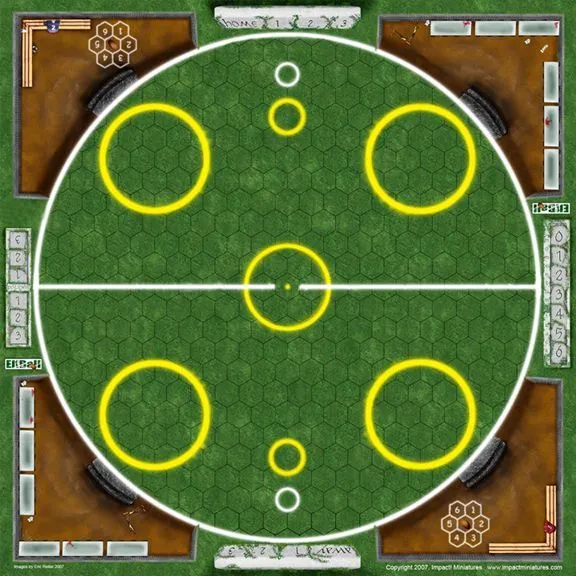
From the designer: ElfBall is rich in tactical stimulation, but streamlined in play. It's the kind of game for those nights when you'd like to play something, but don't want to commit to a traditional fantasy sports simulation. One of the great mysteries of the sport of Elfball is just where it began, and how it got its name. The Elves of the vast forests of the Westerlands claim to have been playing the sport since the dawn of time, and that they named it in honor of themselves. The Dwarves and Orcs, high in their mountain homes, dispute this bold claim and insist that the game’s name instead refers to the type of severed head that makes the best ball core; both races maintain that they are in fact the originators and some of the bloodiest wars in the history of the realms have been fought over this claim. The men of the Middle Kingdoms ignore the squabbles of the elder races and call the game De Circque instead. Today Elfball is played by every nation and tribe of the world, and with a few regional variations, it is played the same on fields throughout The Realms. The design of the field, the distinctive ball, and the rules of play are all quite standardized. This game was prototyped in 2002 by Phigs Miniatures but did not see production until the game rules were overhauled and changed about 80% from the prototype and then released by Impact! Miniatures in 2007.
ElfBall supports 2 players according to the catalogue. This is the publisher’s listed player count, so the game is designed for exactly that number of participants. Variants for other group sizes, if any, are described in the rulebook of your edition, so check it before setting up a different configuration.
The listed playing time for ElfBall is 75 minutes. This is the publisher’s estimate for a full game. The actual duration depends on the group, the player count and familiarity with the rules: first sessions usually run longer, while experienced groups often finish faster. Setup and teaching time are not included in this estimate.
ElfBall has a complexity rating of 2.9 out of 5 from BoardGameGeek players, which makes it a medium-light game. The rating reflects how much rules knowledge, planning and decision-making a typical game demands. Expect a longer first teach for heavier games, and use a preparation guide before game night.
ElfBall belongs to these categories: Fantasy, Miniatures, and Sports. Its main mechanics are Dice Rolling, Hexagon Grid, and Simulation. Categories describe the theme and setting of a game, while mechanics describe what players actually do on their turns. Each mechanic links to a catalogue hub with similar games, which helps when you want something comparable.
The credited designers of ElfBall are: Phil Bowen, Tom Anders, Max Haider, and Eric Reiter. These credits come from the published game data and name the people responsible for the game’s design, not its illustrators or publishers. Designer pages on MeepleRules collect other titles by the same designers, which helps when you enjoy a game and want to find similar ones.
The catalogue lists ElfBall as a base game. It can be played on its own with the components in the box and does not require any other title. Expansions, if any exist, add new content or rules on top of it and are listed separately in the catalogue with a link back to this base game.