
- BGG rating
- 7.7
España 20: Variante en Solitario
- 1–2 players
- 60–120 min
- Complexity 3.0/5
- 2017
2017
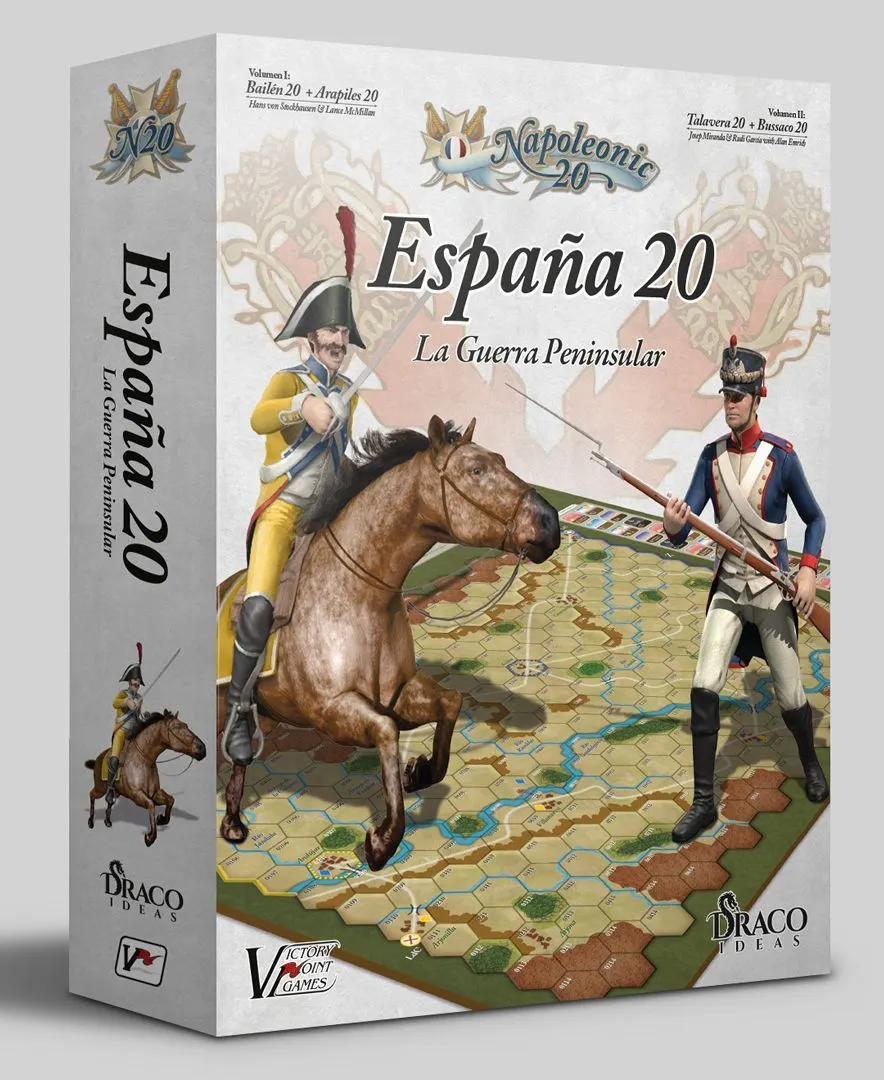
Rules assistance for España 20: La Guerra Peninsular
Plain-language explanations of turns, card effects and disputed situations, with official source references and saved question history.
For 2 players
What would you like to know?
Answers come from the official rulebook, with the page to check.
España 20: La Guerra Peninsular is a board game released in 2017 for 2 players, 60 minutes per game, and ages 13 and up. It was designed by Joseph Miranda, Lance McMillan, Hans von Stockhausen, and R. Nicasio Garcia and its main mechanics are Dice Rolling, Hexagon Grid, and Movement Points.

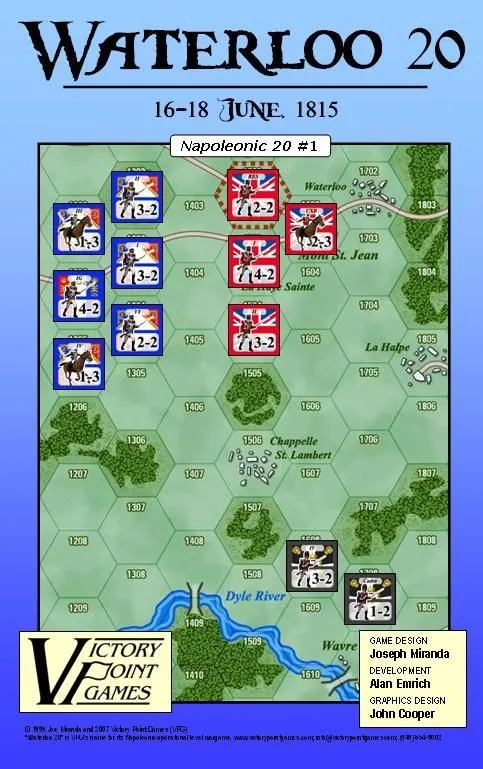
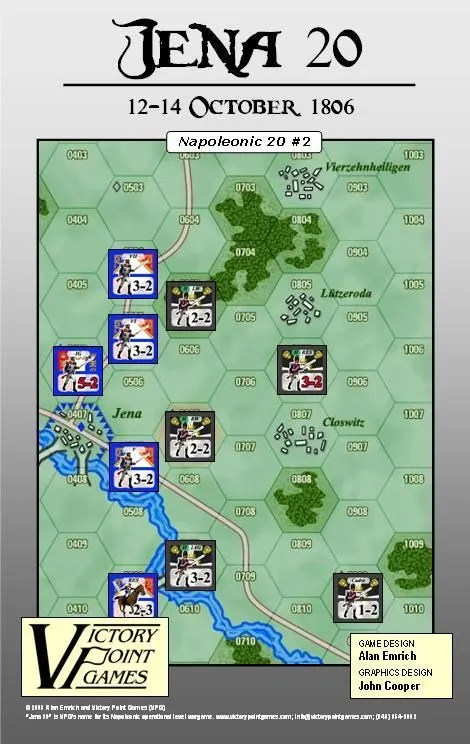
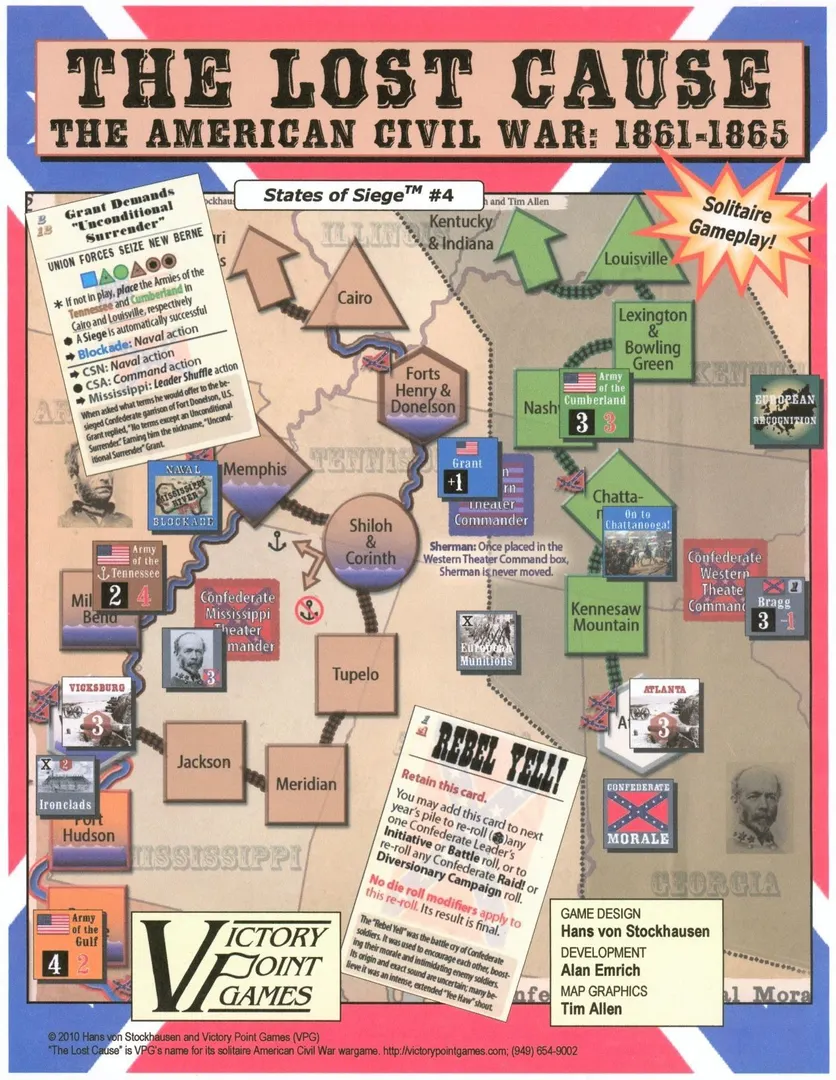
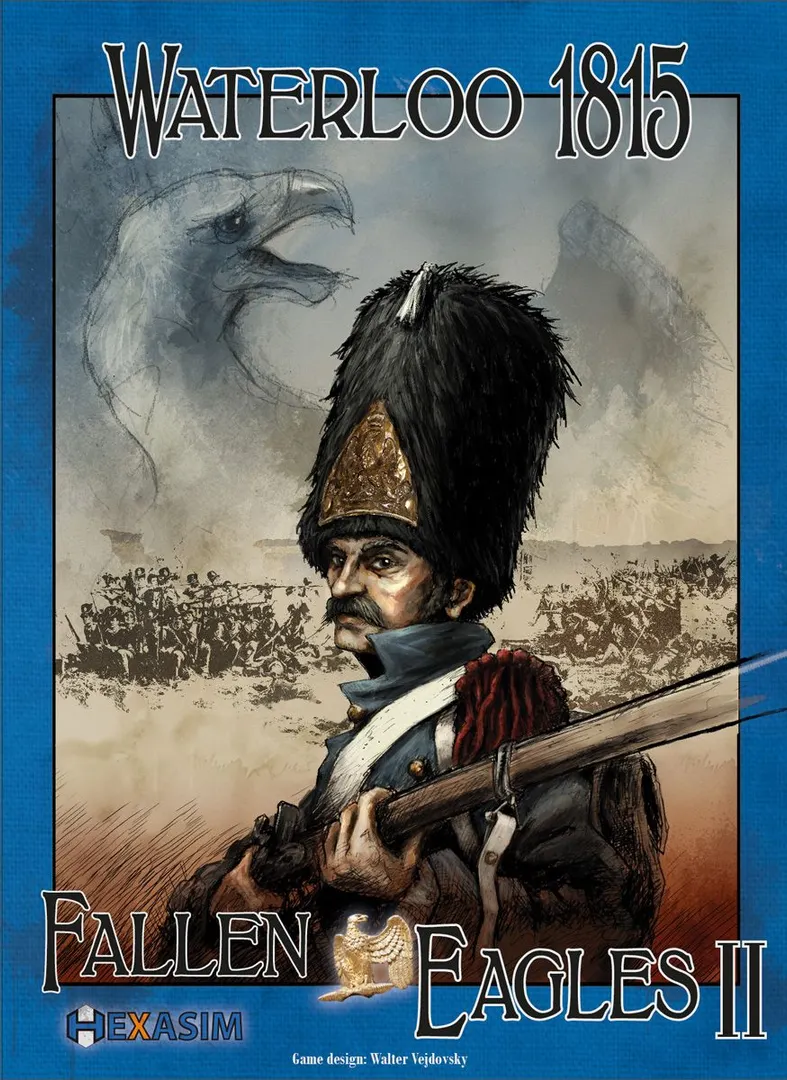

España 20 features four complete games covering key battles fought over control of the Iberian Peninsula: Bailén, Talavera, Arapiles, and Bussaco. Hans von Stockhausen's Bailén 20 (July, 1808) showcases the stunning triumph of General Francisco Castaños’ Spanish army over French General Pierre Dupont’s Corps d’Observation operating in the mountains of Andalusia. This game challenges both players: The Spanish must struggle to coordinate the actions of their large and enthusiastic but mostly untrained army, while the French must decide whether to try and hold against superior numbers or conduct a fighting withdrawal back to Madrid. With Spanish guerrillas, a baggage train full of looted treasure, and treacherous Swiss mercenaries who might change sides in the middle of the battle, Bailén 20 offers players plenty of military adventure. Considered one of Wellington’s finest battles, Arapiles 20 (July, 1812) from Lance McMillan focuses on the hard-fought meeting engagement between his veteran British forces and Mareschal Marmont’s French army in the hills south of Salamanca. With two armies of equal strength, victory requires careful planning, precise maneuvers, and exact timing to take advantage of the opportunities offered by unexpected events. Will the British player be able to pounce on a fleeting French blunder to win the day (as happened historically), or will the French be able to simply bludgeon his opponent into submission? In Arapiles 20, the outcome of this famous battle is in your hands. Rudi Garcia's Talavera 20 recreates the major battle which occurred near the city of Talavera de la Reina on 27 to 28 July 1809. One player commands the French army under Napoleon's brother, Joseph, the self-proclaimed King of Spain, and the other commands the combined allied armies of Great Britain (under Sir Arthur Wellesley) and Spain (under Captain-General Gregorio de la Cuesta). After his attempt to liberate Madrid from the French was repulsed, Cuesta's army fell back to Talavera, which was covered by the British. Starting with a daring night attack, Joseph repeatedly attempted to push the allies out of their superb defensive positions, to no avail. As the French, can you find and exploit a weak spot in the allied lines? As the allies, can you hold your shaky alliance together and fend off the French (all the while keeping a nervous eye out for a second French army that might unexpectedly show up behind your armies)? Bussaco 20: Second Edition, from designer Lance McMillan, features the battle occurring on 26 September 1810, during the early stages of the French invasion of Portugal. One player commands the French army of Marshal André Masséna, while the other controls Sir Arthur Wellesley, Viscount of Wellington's combined British and reconstituted Portuguese army. Historically, a distracted Masséna launched a series of uncoordinated frontal assaults straight up a steep ridge into the teeth of the British defenses, suffering heavy losses before Wellington elected to disengage and fall back to Lisbon. Can you as Masséna avoid the same mistakes, or as Wellington can you use your superior position to achieve a decisive victory?
España 20: La Guerra Peninsular supports 2 players according to the catalogue. This is the publisher’s listed player count, so the game is designed for exactly that number of participants. Variants for other group sizes, if any, are described in the rulebook of your edition, so check it before setting up a different configuration.
The listed playing time for España 20: La Guerra Peninsular is 60 minutes. This is the publisher’s estimate for a full game. The actual duration depends on the group, the player count and familiarity with the rules: first sessions usually run longer, while experienced groups often finish faster. Setup and teaching time are not included in this estimate.
The catalogue lists España 20: La Guerra Peninsular for ages 13 and up. This is the publisher’s recommendation and reflects reading demands, rule complexity and small components rather than theme alone. Younger players can often join with help from an adult, so check the age guidance on your edition and consider your group’s experience with board games.
España 20: La Guerra Peninsular has a complexity rating of 2.7 out of 5 from BoardGameGeek players, which makes it a medium-light game. The rating reflects how much rules knowledge, planning and decision-making a typical game demands. Expect a longer first teach for heavier games, and use a preparation guide before game night.
España 20: La Guerra Peninsular belongs to these categories: Wargame and Napoleonic. Its main mechanics are Dice Rolling, Hexagon Grid, and Movement Points. Categories describe the theme and setting of a game, while mechanics describe what players actually do on their turns. Each mechanic links to a catalogue hub with similar games, which helps when you want something comparable.
The credited designers of España 20: La Guerra Peninsular are: Joseph Miranda, Lance McMillan, Hans von Stockhausen, and R. Nicasio Garcia. These credits come from the published game data and name the people responsible for the game’s design, not its illustrators or publishers. Designer pages on MeepleRules collect other titles by the same designers, which helps when you enjoy a game and want to find similar ones.
The catalogue lists España 20: La Guerra Peninsular as a base game. It can be played on its own with the components in the box and does not require any other title. Expansions, if any exist, add new content or rules on top of it and are listed separately in the catalogue with a link back to this base game.