

- BGG rank
- BGG #17,992
- BGG rating
- 7.4
A Recipe for Death
- 5–7 players
- 120–240 min
- Complexity 1.3/5
- 2016
2016
Rules assistance for Expedition of Death
Plain-language explanations of turns, card effects and disputed situations, with official source references and saved question history.
What would you like to know?
Answers come from the official rulebook, with the page to check.
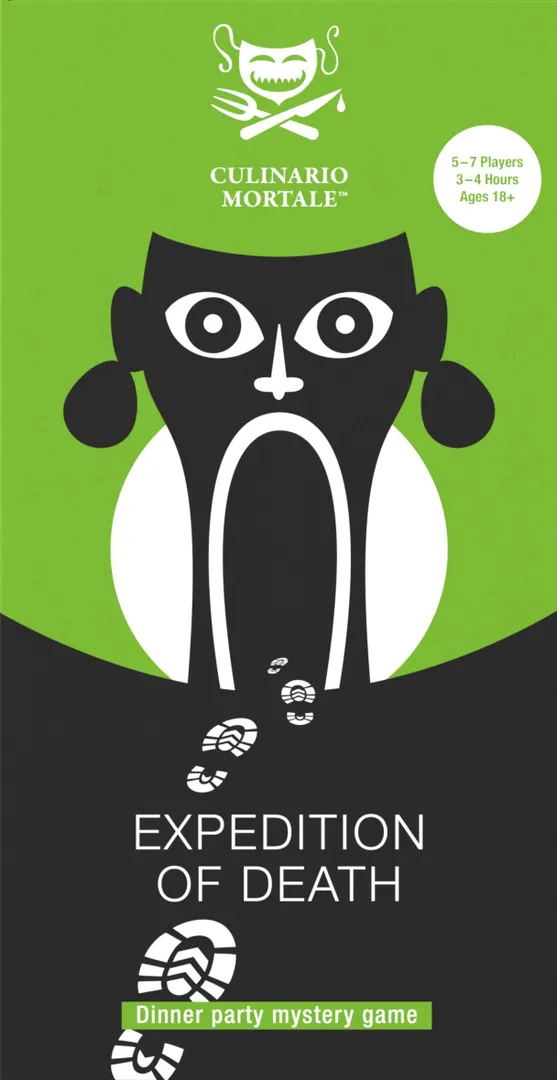
Expedition of Death is a board game released in 2016 for 5–7 players, 120–240 minutes per game, and ages 18 and up. It was designed by Florian Bischoff, Takeshi Otani, and Jens Kauffmann and its main mechanics are Storytelling, Role Playing, and Hidden Roles.






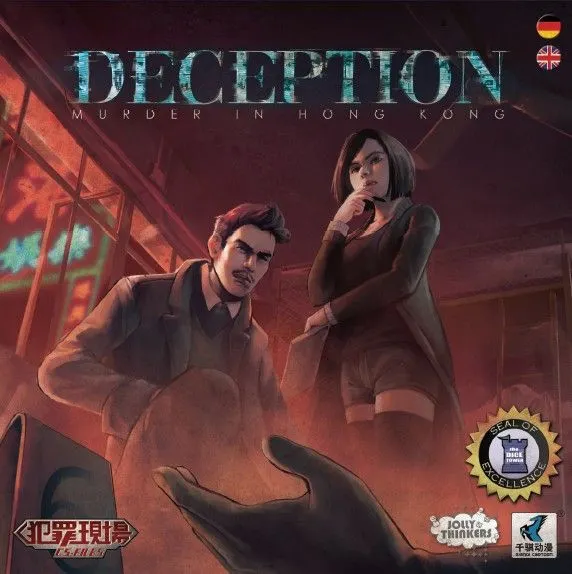

This expedition in the Peruvian jungle uncovered a real sensation – The royal priestesses’ burial chamber. But while the excavation team were still busy celebrating their success in the evening, the famous archaeology professor Mary Stonerock was found dead. You had expected this expedition to be nothing less than an archaeological miracle. For two months, you’ve all been in the Peruvian rainforest looking for the remains of the Moche people, an advanced South American civilization that preceded the Incas and has hardly been studied. You knew you were on the right path, as you had found countless small vases, tools and other artifacts over the past few days. Late in the afternoon, you finally found the tomb of the priestesses. This important find would have been another milestone in the career of Mary Stonerock, the US’s youngest full professor of archaeology. Mary decided to celebrate the find with a hearty feast and an evening of drinking. You raised a toast to your joint success and speculated as to what the tomb, to be opened the next day, might contain. But the evening took a tragic turn when Christian discovered Mary’s body at around midnight in the entrance of her tent. Director Gustavo Navarro has since notified the police using the camp’s radio. They are due to arrive at the remote excavation site in a few hours. Until they are here, you are all on your own in solving the mystery. What happened? How could this expedition have ended so tragically? What is a murder mystery game? You and your guests slip into the roles of the main suspects of an exciting murder case. The objective of the game is to convict the perpetrator – one of the people sitting with you at the table. This can only be achieved if the players discuss the course of events amongst themselves and compare their experiences of what happened. But be careful: Each character (including you!) has their own dark secrets which they’d be better off keeping to themselves. You all gather in the wake of the crime and attempt to piece together your memories, with the aim of identifying the perpetrator. In each round, you recall more and more about the circumstances of the crime, as each round deals with a different period of time from the evening the crime was committed. At the end, everyone votes on who should be handed over to the police as the suspect. Culinario Mortale is a highly interactive game. There are only a few rules, and no pre-prepared dialogue. The focus is on working through the puzzles and discussing the events together. Alongside a well-structured game manual, each game contains game booklets for between five and eight characters (the number of players for each game can be found on the packaging and here on our website). In the game booklets, each guest will find their personal clues and a description of their role. Each game booklet also includes a brief overview of how the game works. As such, all players can jump right in. The support code included with your Culinario Mortale game will allow you to download the role descriptions in advance from our website in PDF format, and easily send them to your guests via email. GAME CONTENT: 1 Game Manual, 7 Game Booklets, 1 Incident Booklet (includes of prologue, incidents, solution), 7 name badges, 1 support code — description from the publisher.
Expedition of Death supports 5–7 players according to the catalogue. This range comes from the publisher’s listed player count, so the game can be set up for any group size within it. Some setups, rules and scoring details may still vary by player count, so check your edition’s rulebook for the exact configuration.
The listed playing time for Expedition of Death is 120–240 minutes. This is the publisher’s estimate for a full game. The actual duration depends on the group, the player count and familiarity with the rules: first sessions usually run longer, while experienced groups often finish faster. Setup and teaching time are not included in this estimate.
The catalogue lists Expedition of Death for ages 18 and up. This is the publisher’s recommendation and reflects reading demands, rule complexity and small components rather than theme alone. Younger players can often join with help from an adult, so check the age guidance on your edition and consider your group’s experience with board games.
Expedition of Death has a complexity rating of 1.0 out of 5 from BoardGameGeek players, which makes it a light game. The rating reflects how much rules knowledge, planning and decision-making a typical game demands. Expect a longer first teach for heavier games, and use a preparation guide before game night.
Expedition of Death belongs to these categories: Deduction, Murder / Mystery, and Real-time. Its main mechanics are Storytelling, Role Playing, and Hidden Roles. Categories describe the theme and setting of a game, while mechanics describe what players actually do on their turns. Each mechanic links to a catalogue hub with similar games, which helps when you want something comparable.
The credited designers of Expedition of Death are: Florian Bischoff, Takeshi Otani, and Jens Kauffmann. These credits come from the published game data and name the people responsible for the game’s design, not its illustrators or publishers. Designer pages on MeepleRules collect other titles by the same designers, which helps when you enjoy a game and want to find similar ones.
The catalogue lists Expedition of Death as a base game. It can be played on its own with the components in the box and does not require any other title. Expansions, if any exist, add new content or rules on top of it and are listed separately in the catalogue with a link back to this base game.