
- BGG rank
- BGG #2,191
- BGG rating
- 7.2
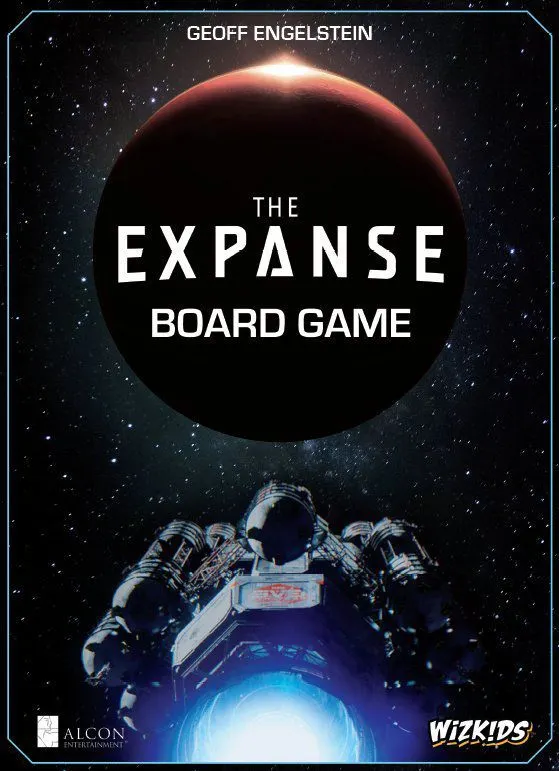
The Expanse Board Game
- 2–4 players
- 60 min
- Complexity 2.8/5
- 2017
2016
Rules assistance for Forged in Steel
Plain-language explanations of turns, card effects and disputed situations, with official source references and saved question history.
For 2 players
What would you like to know?
Answers come from the official rulebook, with the page to check.
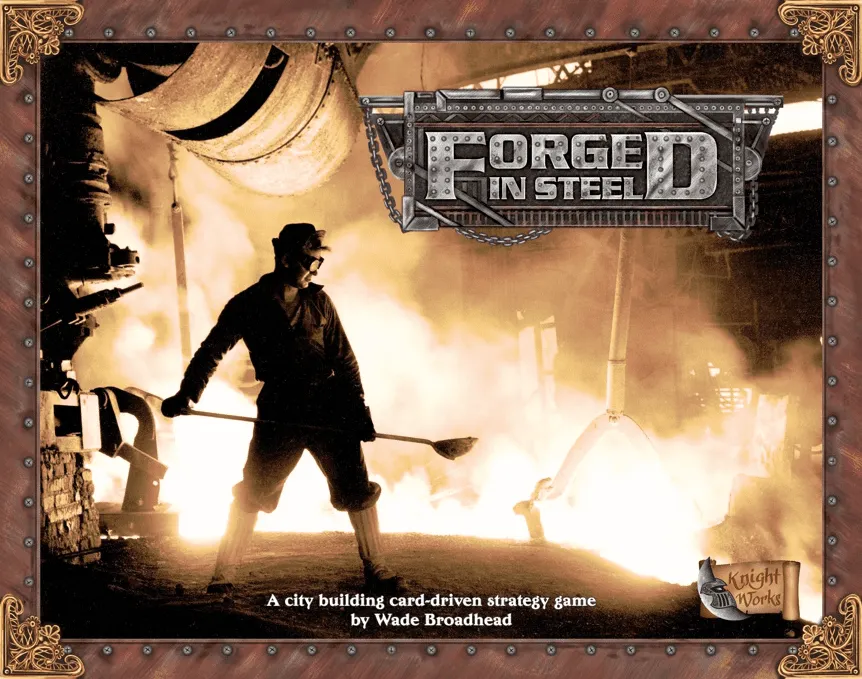
Forged in Steel is a board game released in 2016 for 2–4 players, 60–120 minutes per game, and ages 13 and up. It was designed by Wade Broadhead and its main mechanics are Variable Player Powers, Hand Management, and Take That.







In the multiplayer card-driven, city-building strategy game Forged in Steel, players take on the role of a prominent family in a burgeoning Colorado county in 1900 as turbulent social and technological changes are about to reshape the way all Americans live. Each family seeks to control one of four sectors (mining, industry, city, or commercial) while also striving to be Mayor to control the appointment of other players to offices. The game takes place over three eras (turns/decades), each with multiple phases in which players are dealt eight cards — all with historic black-and-white photos from Colorado — and must discard one and bank two for their final turn. Cards are used to either play Municipal Muscle points to build, buy, or seize structures, or used for the "event" listed on every card. Cards can also be used to set yearly "Headlines" or "Themes" which evoke a movement in American society or technology and change VP awards or other variables in the game. Structures are scored by multiplying the amount the sector tracks have advanced by the number of buildings owned. Different tracks progress differently. Finally, players can build parks, civic buildings, hospitals, and police stations. These buildings in turn affect further play and cause neighborhoods to have more political votes at turn's end, increase VPs for proximity, or protect against certain negative cards. Forged in Steel is an organic building game in that all builds change the landscape and players may build only adjacent to where others have built "the grid/network". At turn's end, the game decides how many immigrants come seeking jobs based on how many factories and commercial buildings were built that turn. Too many? Unrest grows and there could be a riot, undermining all of your recent city-building efforts. The National Guard will step in to help you, of course, but they are usually outnumbered, and there's often fighting in the streets, so be wary of not contributing to the "Unrest Track". Can your family negotiate the turbulent changes of the early 1900s and become the local political and economic powerhouse? From the New Deal, Women's Suffrage, City Beautiful and Spanish Flu, to sidewalks and paved streets, all aspects of a 1900s western American city are incorporated, and players will learn about the rise of those developments that changed cities, labor, industry, and society forever.
Forged in Steel supports 2–4 players according to the catalogue. This range comes from the publisher’s listed player count, so the game can be set up for any group size within it. Some setups, rules and scoring details may still vary by player count, so check your edition’s rulebook for the exact configuration.
The listed playing time for Forged in Steel is 60–120 minutes. This is the publisher’s estimate for a full game. The actual duration depends on the group, the player count and familiarity with the rules: first sessions usually run longer, while experienced groups often finish faster. Setup and teaching time are not included in this estimate.
The catalogue lists Forged in Steel for ages 13 and up. This is the publisher’s recommendation and reflects reading demands, rule complexity and small components rather than theme alone. Younger players can often join with help from an adult, so check the age guidance on your edition and consider your group’s experience with board games.
Forged in Steel has a complexity rating of 3.5 out of 5 from BoardGameGeek players, which makes it a medium-weight game. The rating reflects how much rules knowledge, planning and decision-making a typical game demands. Expect a longer first teach for heavier games, and use a preparation guide before game night.
Forged in Steel belongs to these categories: Economic, Territory Building, and American West. Its main mechanics are Variable Player Powers, Hand Management, and Take That. Categories describe the theme and setting of a game, while mechanics describe what players actually do on their turns. Each mechanic links to a catalogue hub with similar games, which helps when you want something comparable.
The credited designers of Forged in Steel are: Wade Broadhead. These credits come from the published game data and name the people responsible for the game’s design, not its illustrators or publishers. Designer pages on MeepleRules collect other titles by the same designers, which helps when you enjoy a game and want to find similar ones.
The catalogue lists Forged in Steel as a base game. It can be played on its own with the components in the box and does not require any other title. Expansions, if any exist, add new content or rules on top of it and are listed separately in the catalogue with a link back to this base game.