

- BGG rank
- BGG #1,120
- BGG rating
- 7.2
Akrotiri
- 2 players
- 45 min
- Complexity 2.6/5
- 2014
2017
Rules assistance for Gentes
Plain-language explanations of turns, card effects and disputed situations, with official source references and saved question history.
For 1 player
What would you like to know?
Answers come from the official rulebook, with the page to check.
Gentes is a board game released in 2017 for 1–4 players, 90 minutes per game, and ages 12 and up. It was designed by Stefan Risthaus and its main mechanics are Hand Management, Set Collection, and Income.
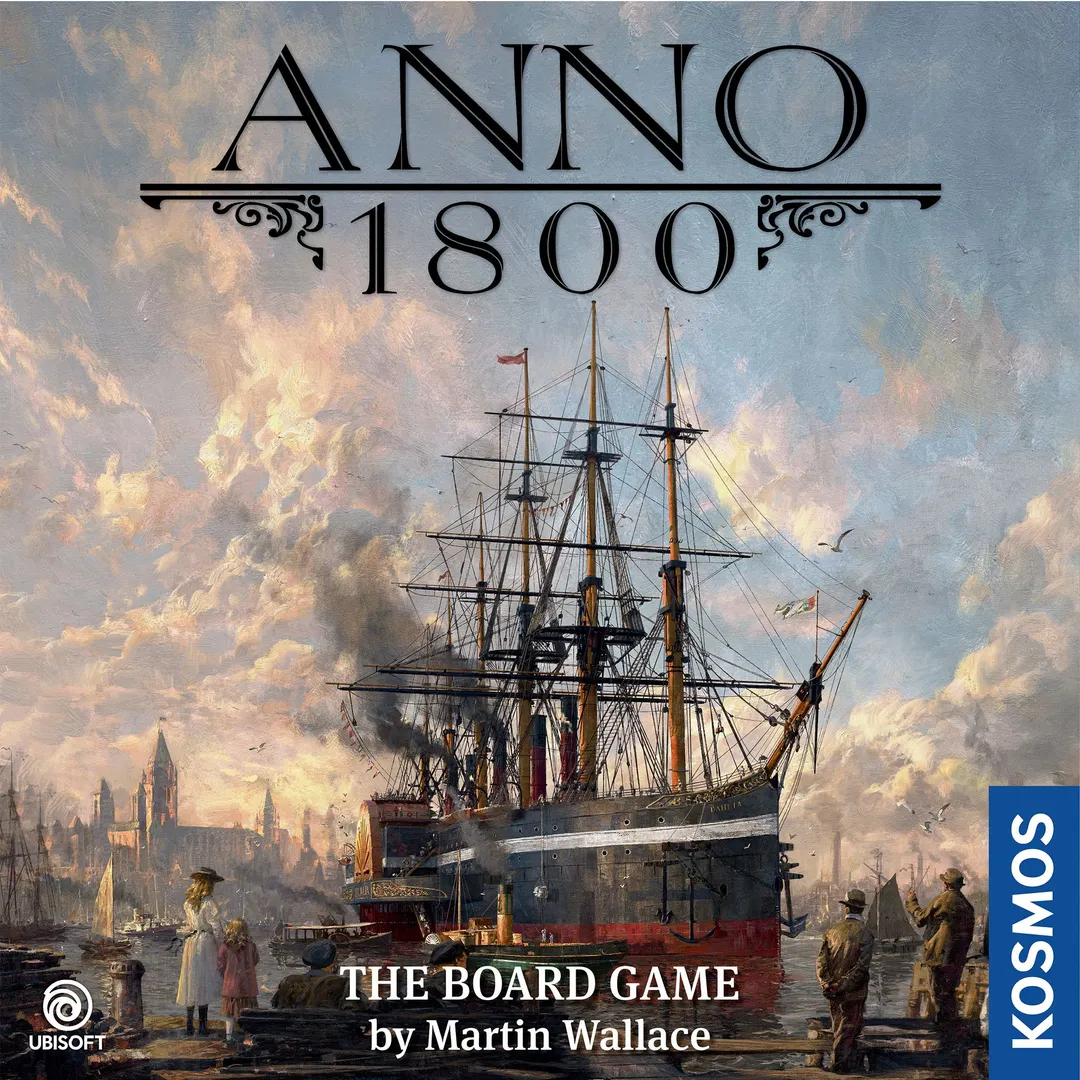




Gentes is an interesting civilization game with an innovative timing mechanism. "Gentes" is a pleonasm of the Latin plural word for greater groups of human beings (e.g., tribes, nations, people; singular: "gens"). In this game, players take the role of an ancient people who are attempting to develop by building monuments and colonizing or founding new cities in the Mediterranean sea. The game is played in six rounds, each consisting of two phases: action phase, and tidying up. There are three eras — rounds 1-2, 3-4, 5-6 — with new monument cards entering the game at the beginning of rounds 1, 3 and 5. Each player has a personal player mat with a time track for action markers and sand timer markers. In the action phase of a round, the players take their turns in clockwise order, conducting one action per turn. Each action requires an action marker from the main board that is placed on the time track. Depending on the information on the action marker, you have to also pay some money or take sand timers that are placed on the time track. When you have no free spaces on your time track, you must pass for the remainder of the round. Therefore, the number of actions per player in a single round may vary significantly if, for example, you choose double sand timers instead of two single ones or take action markers that require more money but fewer sand timers. Single sand timers are dropped in the tidying up phase, while double sand timers are flipped to become single sand timer markers and stay for another round. The actions are: Buy new cards from the common display Build monuments (playing cards from your hand to your personal display for victory points and new options) Train/Educate your people Build/found cities Take money To play a card, you must meet the requirements printed on that card, such as having specific persons on your personal board (e.g., two priests and four soldiers). These requirements are why training — i.e., getting specific people — is important, but that is not that easy because there are six different types of people — three on the left and three on the right side of your personal player board — and you have only six spaces in total for the two types in the same line. If you have three merchants, for example, you move your marker for counting merchants three spaces toward the side of the soldiers and thus you have only three spaces left for soldiers. By educating a fourth soldier and moving your soldier marker forward to its fourth space, you automatically lose one merchant because that marker is pushed back to its second space. It is crucial to generate additional actions by using the specific functions of monuments in your display and cities you have built. Cities are expensive, but they create benefits at the end of each round or provide new options for taking an action without acquiring an action marker, gaining only a sand timer marker instead. Try to have a steady income to avoid wasting actions to take money. Pay attention to the display of common cards, which is new in every single game, because the monument cards are shuffled randomly within the decks of eras I, II and III. Collect identical achievement symbols on the cards to benefit from the increasing victory points for a series of symbols. Build cities to enlarge your options! The differences between the Deluxified and regular edition: Includes "New Cities" Expansion A foil stamped box 6 oversized meeples 24 normal sized meeples 89 metal coins 28 wood action tokens 21 wood lock tokens 60 wood hourglass tokens 4 dual layered player boards 4 custom shaped score tokens folded space custom insert 1 drawstring bag 1 upgraded round token
Gentes supports 1–4 players according to the catalogue. This range comes from the publisher’s listed player count, so the game can be set up for any group size within it. Some setups, rules and scoring details may still vary by player count, so check your edition’s rulebook for the exact configuration.
The listed playing time for Gentes is 90 minutes. This is the publisher’s estimate for a full game. The actual duration depends on the group, the player count and familiarity with the rules: first sessions usually run longer, while experienced groups often finish faster. Setup and teaching time are not included in this estimate.
The catalogue lists Gentes for ages 12 and up. This is the publisher’s recommendation and reflects reading demands, rule complexity and small components rather than theme alone. Younger players can often join with help from an adult, so check the age guidance on your edition and consider your group’s experience with board games.
Gentes has a complexity rating of 3.2 out of 5 from BoardGameGeek players, which makes it a medium-weight game. The rating reflects how much rules knowledge, planning and decision-making a typical game demands. Expect a longer first teach for heavier games, and use a preparation guide before game night.
Gentes belongs to these categories: Ancient and Civilization. Its main mechanics are Hand Management, Set Collection, and Income. Categories describe the theme and setting of a game, while mechanics describe what players actually do on their turns. Each mechanic links to a catalogue hub with similar games, which helps when you want something comparable.
The credited designers of Gentes are: Stefan Risthaus. These credits come from the published game data and name the people responsible for the game’s design, not its illustrators or publishers. Designer pages on MeepleRules collect other titles by the same designers, which helps when you enjoy a game and want to find similar ones.
The catalogue lists Gentes as a base game. It can be played on its own with the components in the box and does not require any other title. Expansions, if any exist, add new content or rules on top of it and are listed separately in the catalogue with a link back to this base game.