
- BGG rank
- BGG #11,396
- BGG rating
- 7.1
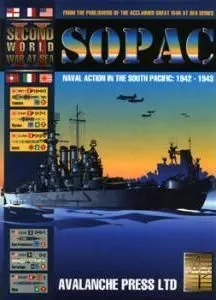
SOPAC: Naval Action in the South Pacific 1942–1943
- 2 players
- 240 min
- Complexity 3.1/5
- 1999
1999
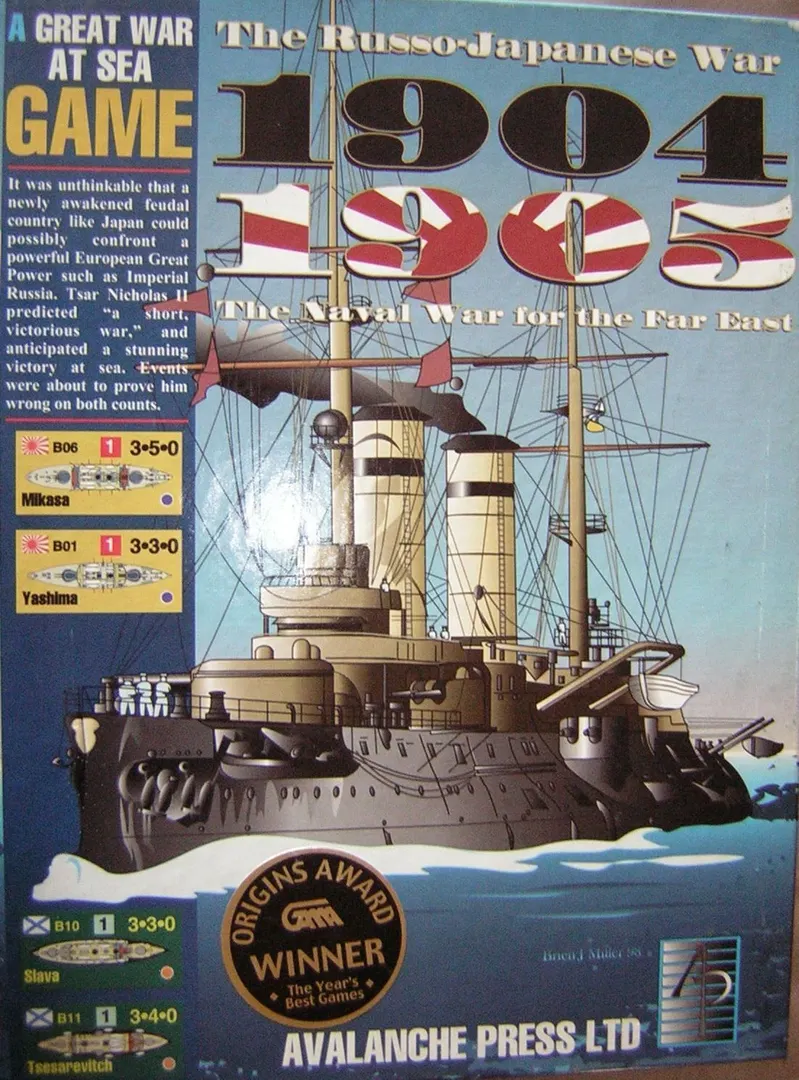
Rules assistance for Great War at Sea: 1904-1905, The Russo-Japanese War
Plain-language explanations of turns, card effects and disputed situations, with official source references and saved question history.
For 2 players
What would you like to know?
Answers come from the official rulebook, with the page to check.
Great War at Sea: 1904-1905, The Russo-Japanese War is a board game released in 1999 for 2–4 players, 30 minutes per game, and ages 12 and up. It was designed by Michael Bennighof, Brian L. Knipple, and Joe Keller and its main mechanics are Dice Rolling and Hexagon Grid.








From the original company website entry: Japan entered the modern age in 1868, with a new young emperor determined to make his island nation a world power. After decades of steady progress, Japan began its own practice of colonialism, defeating China in 1894. As the Japanese began to infiltrate the semi-independent Kingdom of Korea, they ran into Russian agents doing the same. Despite Japanese offers to negotiate, the Russian Tsar Nicholas II was set on war. Great War at Sea: 1904-1905, The Russo-Japanese War covers the naval side of this turn-of-the-century conflict, which opened with a Japanese surprise attack on the Russian Pacific Fleet’s base at Port Arthur in northern China. There are 19 scenarios, or game situations, provided, including the climactic Battle of Tsushima. There’s also a campaign game, in which players can “game” the entire naval war. The Russian fleet is a mixed bag of modern battleships and ancient ironclads better suited for a museum. The Pacific Fleet that begins the game in the Far East has modern ships stationed at Port Arthur and a cruiser squadron in Vladivostok. Between them lies Korea, occupied by Japan. The Russian strategic situation is difficult. The Japanese have a better fleet; though not as large, their armored cruisers outclass their Russian counterparts and their torpedo boats are more numerous and more effective. They are also better-led after the death of the Russian Admiral Makarov. The map covers the Japanese home islands and the seas around them. As with other games in the series, it’s divided into zones approximately 31 nautical miles across. Fleets attempt to locate one another on this map. When contact is made, play moves to a tactical map where ships manuever and fight. There are special overlays for Port Arthur and Chemulpo, so players can use the actual terrain of these key coastal zones. The original 1999 game included: 210 Counters One 25"x30" strategic map One 25"x25" tactical map 16 page Rulebook 12 page Scenario book The game is being re-implemented in 2013 as Great War at Sea: Russo-Japanese War with a revised map, updated counters, new scenario book and new box.
Great War at Sea: 1904-1905, The Russo-Japanese War supports 2–4 players according to the catalogue. This range comes from the publisher’s listed player count, so the game can be set up for any group size within it. Some setups, rules and scoring details may still vary by player count, so check your edition’s rulebook for the exact configuration.
The listed playing time for Great War at Sea: 1904-1905, The Russo-Japanese War is 30 minutes. This is the publisher’s estimate for a full game. The actual duration depends on the group, the player count and familiarity with the rules: first sessions usually run longer, while experienced groups often finish faster. Setup and teaching time are not included in this estimate.
The catalogue lists Great War at Sea: 1904-1905, The Russo-Japanese War for ages 12 and up. This is the publisher’s recommendation and reflects reading demands, rule complexity and small components rather than theme alone. Younger players can often join with help from an adult, so check the age guidance on your edition and consider your group’s experience with board games.
Great War at Sea: 1904-1905, The Russo-Japanese War has a complexity rating of 2.5 out of 5 from BoardGameGeek players, which makes it a medium-light game. The rating reflects how much rules knowledge, planning and decision-making a typical game demands. Expect a longer first teach for heavier games, and use a preparation guide before game night.
Great War at Sea: 1904-1905, The Russo-Japanese War belongs to these categories: Wargame, Nautical, and Post-Napoleonic. Its main mechanics are Dice Rolling and Hexagon Grid. Categories describe the theme and setting of a game, while mechanics describe what players actually do on their turns. Each mechanic links to a catalogue hub with similar games, which helps when you want something comparable.
The credited designers of Great War at Sea: 1904-1905, The Russo-Japanese War are: Michael Bennighof, Brian L. Knipple, and Joe Keller. These credits come from the published game data and name the people responsible for the game’s design, not its illustrators or publishers. Designer pages on MeepleRules collect other titles by the same designers, which helps when you enjoy a game and want to find similar ones.
The catalogue lists Great War at Sea: 1904-1905, The Russo-Japanese War as a base game. It can be played on its own with the components in the box and does not require any other title. Expansions, if any exist, add new content or rules on top of it and are listed separately in the catalogue with a link back to this base game.