
- BGG rank
- BGG #1,934
- BGG rating
- 7.3
Magic Realm
- 1–16 players
- 60–240 min
- Complexity 4.6/5
- 1979
1982
Rules assistance for Gunslinger
Plain-language explanations of turns, card effects and disputed situations, with official source references and saved question history.
For 2 players
What would you like to know?
Answers come from the official rulebook, with the page to check.
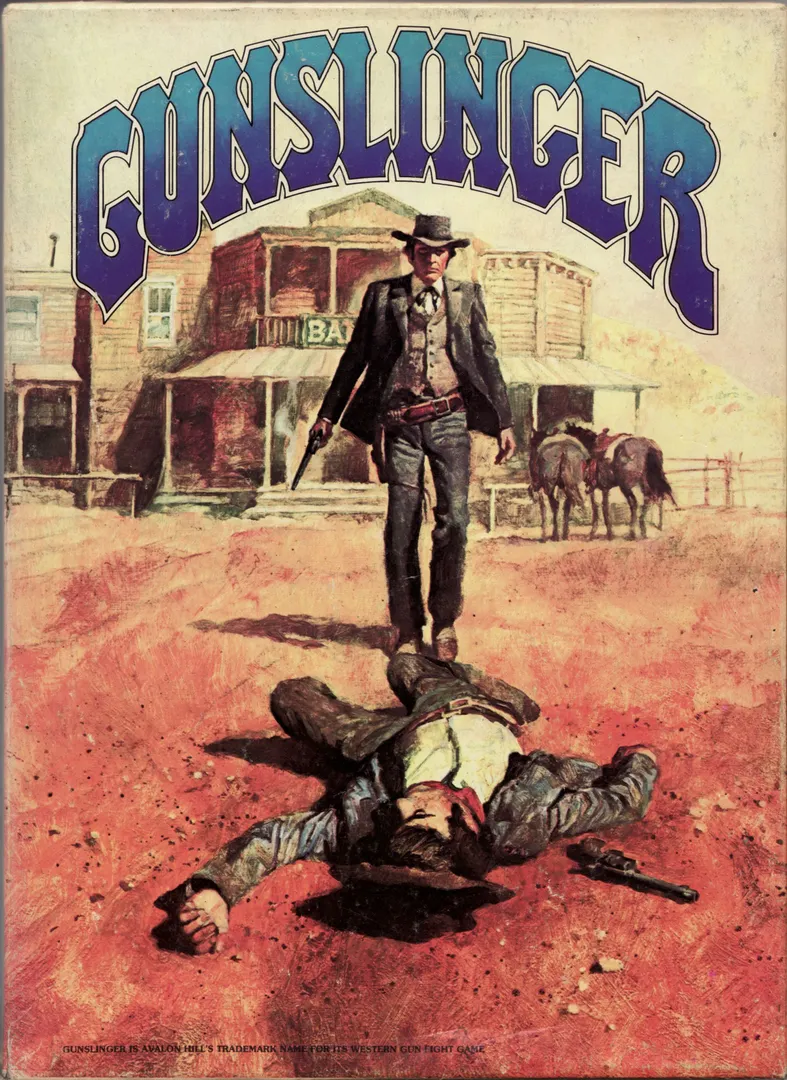
Gunslinger is a board game released in 1982 for 2–7 players, 90 minutes per game, and ages 12 and up. It was designed by Richard Hamblen and its main mechanics are Variable Player Powers, Variable Set-up, and Simultaneous Action Selection.







"Fill Yore Hand ..." with Gunslinger, the game of western gunfights. In Gunslinger, you play the part of a western character who is caught in a sudden gunfight, and you face the split-second decisions and incidents of the showdown as bullets start to fly. Gunslinger is based on a quick and easy game system that recreates the split-second nature of gunplay. Each turn the players secretly play cards to define exactly what they will do during the next two seconds in the game. Then they step through these actions on the playing map, resolving each shot in the split-second when it takes place. Gunslinger resolves combat quickly and easily. The attacker draws a result card that shows exactly where the shot hits, which combines with his/her weapon to determine the damage inflicted. This recreates the critical differences between weapons: Winchesters, Shotguns, Buffalo rifles, Colt's "Peacemaker", Smith & Wesson's breakopen guns and Remington's Derringer are a few of the guns in the game. Gunslinger includes eight two-sided boards (a total of sixteen map faces) portraying town and countryside terrain at a scale of six feet per hex. These boards can be assembled in varying ways to create a vast number of different maps that are used in the gunfights. The terrain includes gullies, hills, trees, watering troughs, wells, hitching posts and the interiors of buildings. Gunslinger presents 26 different gunfights and several hundred variations, including both historical gunfights and made-up situations. Wild Bill Hickok, Billy the Kid, Wyatt Earp, and John Wesley Hardin are just a few of the real gunslingers of history who appear in re-creations of the gunfights that made them famous. Indian raids, barroom brawls and poker games are just a few of the hypothetical situations. Component List (From box back, augmented with detail from Wayne's Books page) Rules 8x two-sided mapboards Result card deck (108) Pad of personal history sheets Countersheet 60 round (people) 112 medium square (objects) 96 small square (tactical) 9 large (horses) Action Cards (130) 7x standard sets of 12 each 4x B1 7x B2 7x B3 5x B4 5x B5 5x B6 5x B7 4x B8 4x B9 "Second Floor" player-aid cards x4
Gunslinger supports 2–7 players according to the catalogue. This range comes from the publisher’s listed player count, so the game can be set up for any group size within it. Some setups, rules and scoring details may still vary by player count, so check your edition’s rulebook for the exact configuration.
The listed playing time for Gunslinger is 90 minutes. This is the publisher’s estimate for a full game. The actual duration depends on the group, the player count and familiarity with the rules: first sessions usually run longer, while experienced groups often finish faster. Setup and teaching time are not included in this estimate.
The catalogue lists Gunslinger for ages 12 and up. This is the publisher’s recommendation and reflects reading demands, rule complexity and small components rather than theme alone. Younger players can often join with help from an adult, so check the age guidance on your edition and consider your group’s experience with board games.
Gunslinger has a complexity rating of 3.3 out of 5 from BoardGameGeek players, which makes it a medium-weight game. The rating reflects how much rules knowledge, planning and decision-making a typical game demands. Expect a longer first teach for heavier games, and use a preparation guide before game night.
Gunslinger belongs to these categories: Fighting, Wargame, and American West. Its main mechanics are Variable Player Powers, Variable Set-up, and Simultaneous Action Selection. Categories describe the theme and setting of a game, while mechanics describe what players actually do on their turns. Each mechanic links to a catalogue hub with similar games, which helps when you want something comparable.
The credited designers of Gunslinger are: Richard Hamblen. These credits come from the published game data and name the people responsible for the game’s design, not its illustrators or publishers. Designer pages on MeepleRules collect other titles by the same designers, which helps when you enjoy a game and want to find similar ones.
The catalogue lists Gunslinger as a base game. It can be played on its own with the components in the box and does not require any other title. Expansions, if any exist, add new content or rules on top of it and are listed separately in the catalogue with a link back to this base game.