
- BGG rank
- BGG #6,701
- BGG rating
- 7.0
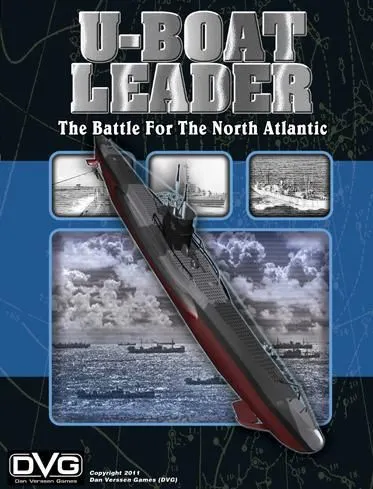
U-Boat Leader
- 1 player
- 90 min
- Complexity 2.5/5
- 2011
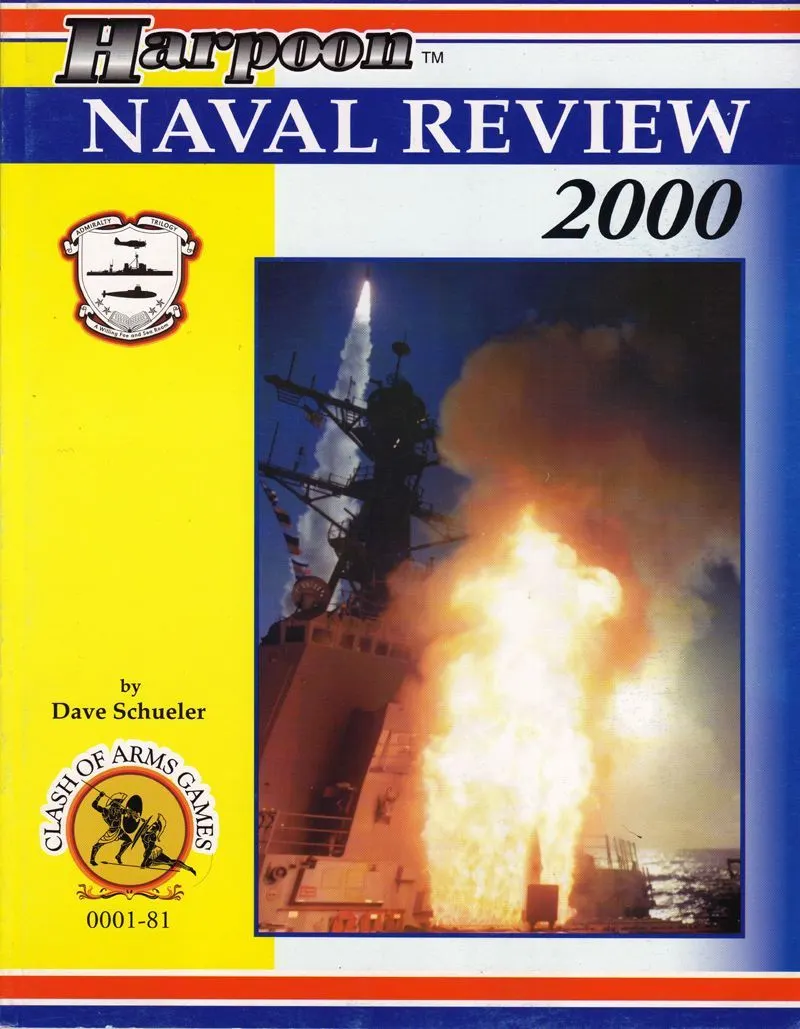
Rules assistance for Harpoon Naval Review 2000
Plain-language explanations of turns, card effects and disputed situations, with official source references and saved question history.
What would you like to know?
Answers come from the official rulebook, with the page to check.
Harpoon Naval Review 2000 is an expansion for Harpoon 4: Modern Tactical Naval Warfare released in 2000 180 minutes per game. It was designed by Dave Schueler, Bill Madison, Chris Carlson, Adrian Davis, Mal Wright, David Manley, Stuart Machin, and Stephen Jolly and its main mechanics are Dice Rolling, Paper-and-Pencil, and Simulation.
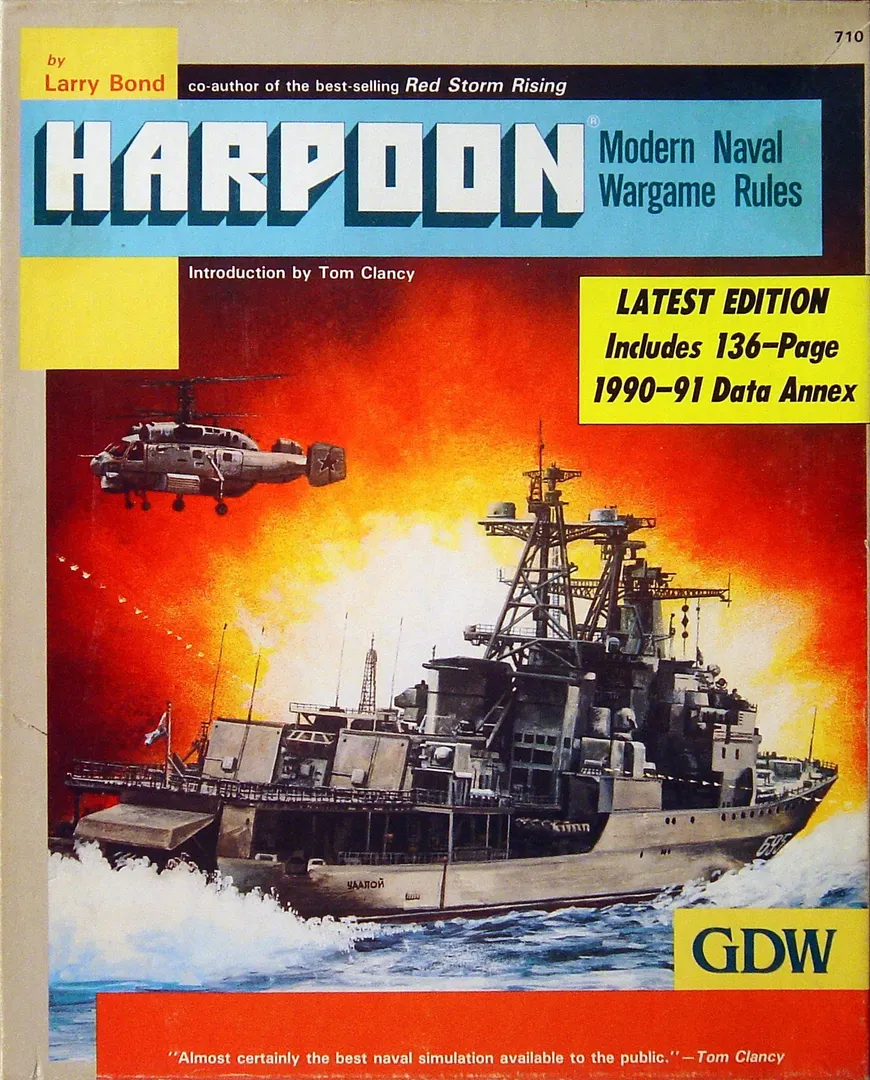



From the Clash of Arms Games web Harpoon Naval Review 2000 provides detailed scenarios that allow you to explore conflicts in the Taiwan Strait, the Indian Ocean, South America, the Mediterranean, and the Baltic. Harpoon Naval Review 2000 also includes articles on current naval events around the world, optional rules for logistics and endurance, along with ship and aircraft forms for the scenarios. Harpoon Naval Review 2000 has 72 pages, containing: * Articles on: The Navies of South America A Royal Navy for the 21st Century 38 Ship Forms- Littoral Warfare * 4 Aircraft Forms * Optional Rules for Naval Logistics, Repairs, and Endurance * TEN Detailed Scenarios * 5 Stand-alone: Blow in the Baltic - Russia vs. Germany Assault on a Queen - Libya vs. Great Britain Conflict of Interest - India vs. China and Pakistan Fish Wars, Round 2 - Canada vs. Spain Action in the Adriatic - NATO vs. Yugoslavia * 5 Theme Related: One China - 3 concerning China vs. USA and Taiwan The Second War of the Pacific - 2 with Peru and Bolivia vs. Chile
The listed playing time for Harpoon Naval Review 2000 is 180 minutes. This is the publisher’s estimate for a full game. The actual duration depends on the group, the player count and familiarity with the rules: first sessions usually run longer, while experienced groups often finish faster. Setup and teaching time are not included in this estimate.
Harpoon Naval Review 2000 belongs to these categories: Wargame, Miniatures, and Nautical. Its main mechanics are Dice Rolling, Paper-and-Pencil, and Simulation. Categories describe the theme and setting of a game, while mechanics describe what players actually do on their turns. Each mechanic links to a catalogue hub with similar games, which helps when you want something comparable.
The credited designers of Harpoon Naval Review 2000 are: Dave Schueler, Bill Madison, Chris Carlson, Adrian Davis, Mal Wright, David Manley, Stuart Machin, and Stephen Jolly. These credits come from the published game data and name the people responsible for the game’s design, not its illustrators or publishers. Designer pages on MeepleRules collect other titles by the same designers, which helps when you enjoy a game and want to find similar ones.
The catalogue lists Harpoon Naval Review 2000 as an expansion for Harpoon 4: Modern Tactical Naval Warfare. Expansions add new content, rules or scenarios to the base game and usually cannot be played on their own, so you need Harpoon 4: Modern Tactical Naval Warfare to use it. Check that your edition of Harpoon 4: Modern Tactical Naval Warfare is compatible, as some expansions were revised between editions.