- BGG rating
- 8.4
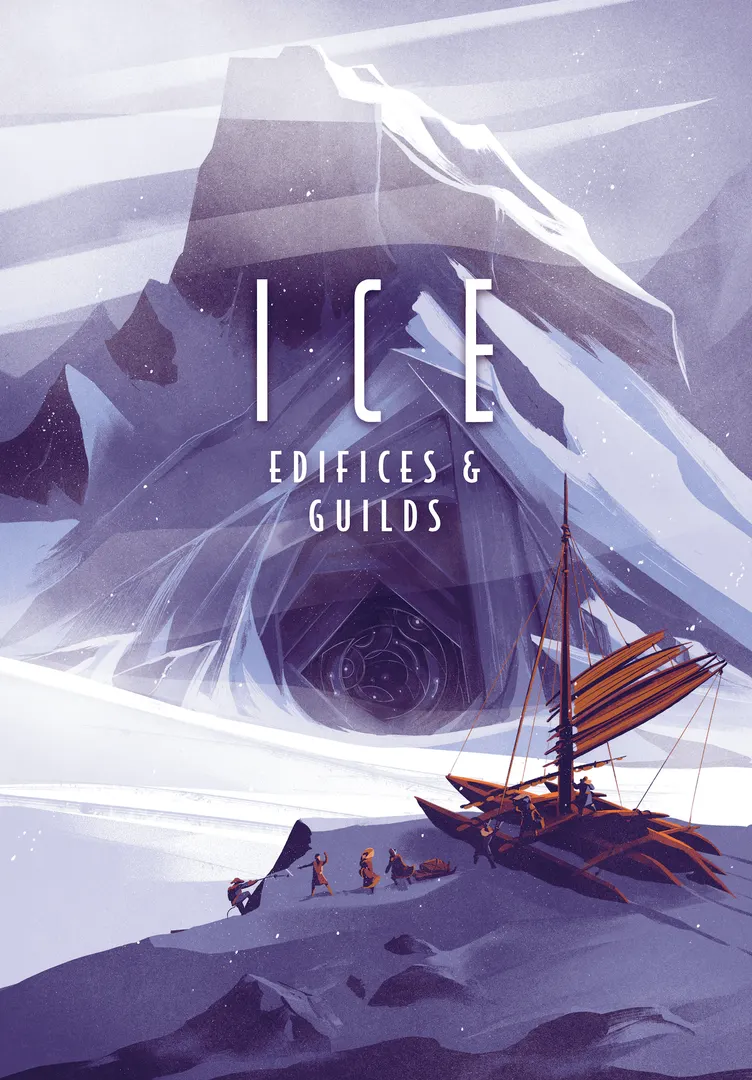
I C E: Edifices & Guilds
1–5 players90–120 min2025
Complexity 3.0/5
2026
Rules assistance for I C E: Second Edition
Plain-language explanations of turns, card effects and disputed situations, with official source references and saved question history.
What would you like to know?
Answers come from the official rulebook, with the page to check.
Earn the most Renown Points after Day 4; tied players share victory.
About 12 min · 8 steps
Step 1 of 8
It depends on player count: six with two players, five with three or four, and four with five. A Planning token adds one for that day.
No. They normally accompany your Leader only when it moves, up to three for free; Navigators have exceptions.
It reduces by one the Anima needed to trigger an Artifact effect, or can pay for a Request when flipped. A Study token alone cannot trigger an effect.
Only if exactly one tile covers it. You cannot excavate a tile covered by two or more tiles, or one covered by a tile that is itself partially covered.
No. They move to your Ship’s Hold and no longer provide their effects, but can still count for Decrees at game end.
Day 1 has no validation; validate one or two Requests on Days 2 and 3, and any payable number on Day 4.
I C E: Second Edition is a board game released in 2026 for 1–5 players, 75–120 minutes per game, and ages 14 and up. It was designed by Sams and Bragou and its main mechanics are Modular Board, Action Points, and Auction: Turn Order Until Pass. MeepleRules offers a rules assistant for I C E: Second Edition that explains turns, card effects and disputed situations in plain language.

2–5 players35–60 min2026

1–4 players60–90 min2027
1–4 players30–180 min2026
2–6 players90–180 min2027
1–4 players90–150 min2025
1–4 players120–150 min2022

1–5 players60–90 min2023

2–5 players40–80 min2025

2–4 players30–60 min2019

3–5 players60–180 min2014

3 players180 min2016
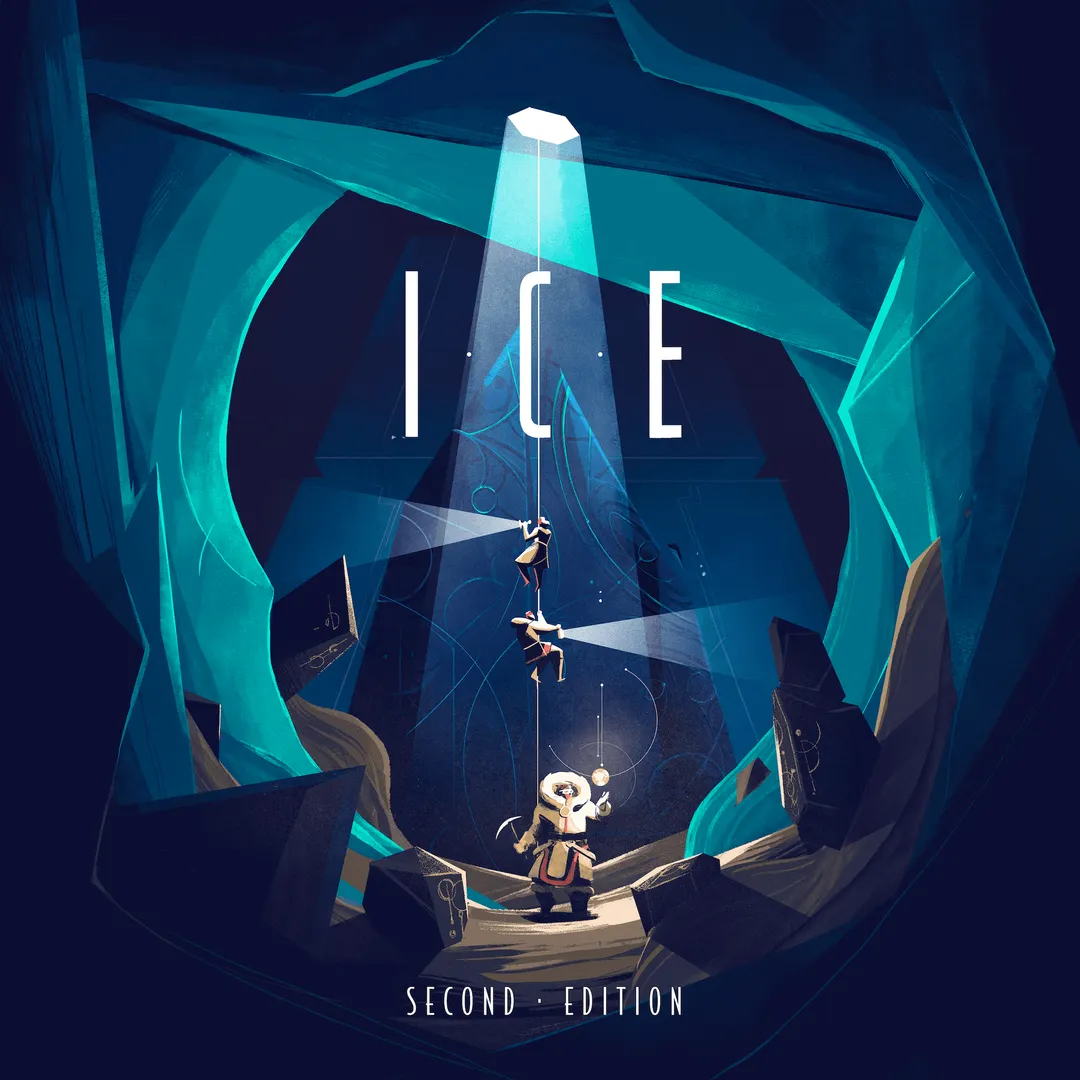
Ice as far as the eye can see. In this frozen world, swept by blizzards, a lone city clings to life. Every year during the summer season, the City's guilds organize expeditions. Their destination: the Valley of the Nuuka, where vestiges of an antediluvian civilization might be buried. Looking for answers, prestige or riches, every guild has its own motivations. I·C·E is a game of exploration, 3D tile mining, and collection. Players are archeologists exploring tiles that they can remove. Archeologists dig these tiles in order to collect artifacts which gave them reputation points. There are 3 levels of tiles in the game. The first one corresponds to the ice sheet level. The second and third represent surface and deep artifact levels. The bottom layer level is the City of Azulia. The ice sheet tiles removed by a player can be played as a helping action for him. The edifice tiles are game changing rules and represent legacy material to discover as we go along. The game stops when a first edifice tile is fully discovered. Then players count their reputation points, which determine the winner. The goal is to validate Requests and score Decrees from the City to get the highest number of Renown points when the fourth Day is over. —description from the publisher
Use the rules assistant for I C E: Second Edition to describe a turn, card effect or disputed situation. Get a plain-language explanation with official source references, then return to the question in your saved history. Select your edition when available so the sources match your game.
Ask about the rulesI C E: Second Edition supports 1–5 players according to the catalogue. This range comes from the publisher’s listed player count, so the game can be set up for any group size within it. Some setups, rules and scoring details may still vary by player count, so check your edition’s rulebook for the exact configuration.
The listed playing time for I C E: Second Edition is 75–120 minutes. This is the publisher’s estimate for a full game. The actual duration depends on the group, the player count and familiarity with the rules: first sessions usually run longer, while experienced groups often finish faster. Setup and teaching time are not included in this estimate.
The catalogue lists I C E: Second Edition for ages 14 and up. This is the publisher’s recommendation and reflects reading demands, rule complexity and small components rather than theme alone. Younger players can often join with help from an adult, so check the age guidance on your edition and consider your group’s experience with board games.
I C E: Second Edition has a complexity rating of 3.0 out of 5 from BoardGameGeek players, which makes it a medium-weight game. The rating reflects how much rules knowledge, planning and decision-making a typical game demands. Expect a longer first teach for heavier games, and use a preparation guide before game night.
I C E: Second Edition belongs to these categories: Exploration and Science Fiction. Its main mechanics are Modular Board, Action Points, and Auction: Turn Order Until Pass. Categories describe the theme and setting of a game, while mechanics describe what players actually do on their turns. Each mechanic links to a catalogue hub with similar games, which helps when you want something comparable.
The credited designers of I C E: Second Edition are: Sams and Bragou. These credits come from the published game data and name the people responsible for the game’s design, not its illustrators or publishers. Designer pages on MeepleRules collect other titles by the same designers, which helps when you enjoy a game and want to find similar ones.
The catalogue lists I C E: Second Edition as a base game. It can be played on its own with the components in the box and does not require any other title. Expansions, if any exist, add new content or rules on top of it and are listed separately in the catalogue with a link back to this base game.


