
- BGG rank
- BGG #6,107
- BGG rating
- 8.4
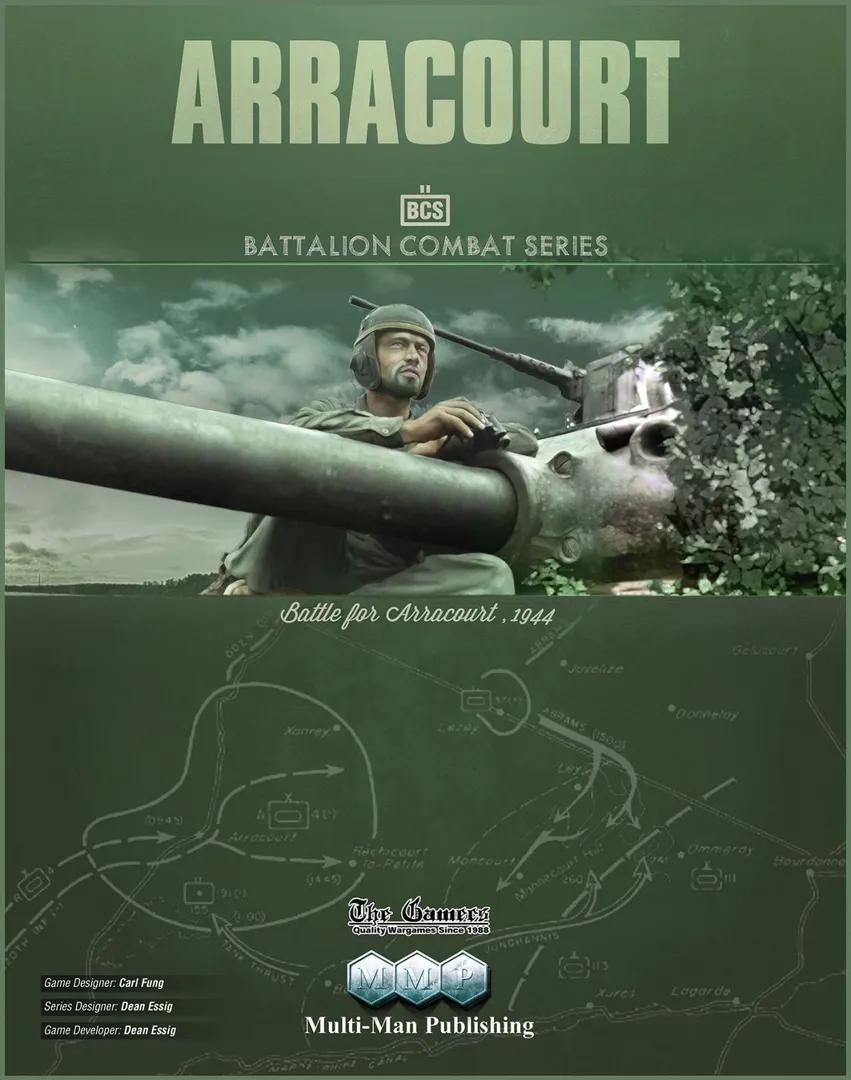
Arracourt
- 2 players
- 120 min
- Complexity 3.9/5
- 2022
2020
Rules assistance for Iron Curtain: Central Europe, 1945-1989
Plain-language explanations of turns, card effects and disputed situations, with official source references and saved question history.
For 1 player
What would you like to know?
Answers come from the official rulebook, with the page to check.
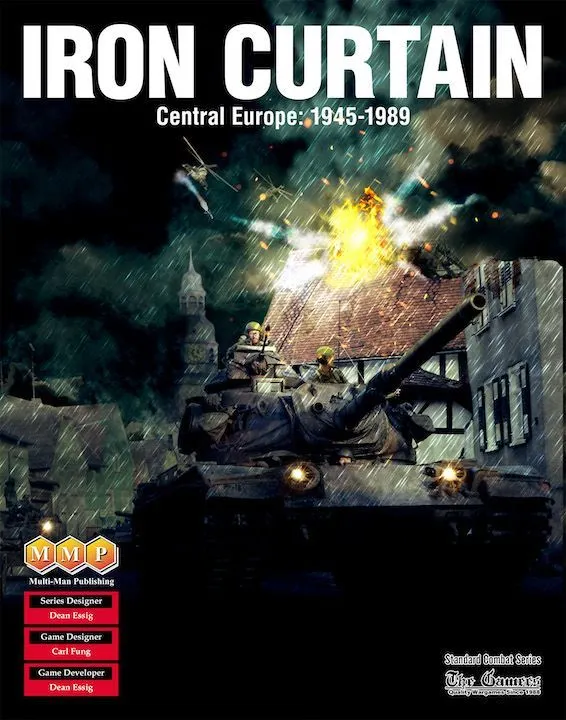
Iron Curtain: Central Europe, 1945-1989 is a board game released in 2020 for 1–2 players. It was designed by Dean Essig and Carl Fung and its main mechanics are Dice Rolling and Hexagon Grid.



Iron Curtain: Central Front, 1945-1989 is the 23rd game in the Standard Combat Series (SCS), and covers the potential "hot" war erupting between the East and the West at the flashpoint along the intra-German border established at the close of World War II. Scenarios examine the forces available over the entire 44-year period with snapshots in 1945, 1962, 1975, 1983, and 1989. The resulting force ratios not only change with weapon and OOB evolution but as a product of the tumultuous effects of the culture. In addition to the typical Warsaw Pact-invades-NATO situations, the game provides for three NATO offensive scenarios. The 1945 Churchill plan to continue WW2 before the Soviets could consolidate their gains (Operation UNTHINKABLE), the mishaps of 1983 that could have launched an offensive in error, and allowing the West to capitalize on the dissolution of the Warsaw Pact nations in 1989. Every game is different because while the units set up in their peace-time housing areas, each side gets an unpredictable amount of time to "run up" before the war actually begins while tension rises. The result will allow each side to move to deployment areas (or not) as the fates decree with all combinations of total surprise to total preparedness possible between them. Iron Curtain is a fast-paced game of what is assumed to be a month of intensive combat where both sides race to fulfill their objectives before a cease-fire ends hostilities. All the developments of modern warfare over this epoch are included: nuclear and chemical warfare, modern near-nuclear aviation effects, airmobile forces, attack helicopters, airborne mech forces, amphibious operations, and even the ill-fated Pentomic Division structure. It is your turn to decide the fate of Europe. Scenarios (all are a maximum of 10 turns): • Hot Time in the Town of Berlin—1945 Western Allies Offensive • Don’t Fence Me In—1945 Soviet Offensive • If I Had a Hammer—1962 Soviet Offensive • Bohemian Rhapsody—1975 Soviet Offensive • Eye of the Tiger—1983 Soviet Offensive • It’s a Mistake—1983 NATO Offensive • Everybody Wants to Rule the World—1989 Soviet Offensive • We Didn’t Start the Fire—1989 NATO Offensive Game Inventory: • One 8-page Standard Combat Series rulebook (Version 1.8) • One 52-page Iron Curtain game-specific rulebook • one 22" x 34" full color mapsheet • Four dual-side printed countersheets (1120 1/2" counters) • two full-color Player Displays • two full-color 2-sided Game Charts & Tables • box and 6-sided dice
Iron Curtain: Central Europe, 1945-1989 supports 1–2 players according to the catalogue. This range comes from the publisher’s listed player count, so the game can be set up for any group size within it. Some setups, rules and scoring details may still vary by player count, so check your edition’s rulebook for the exact configuration.
Iron Curtain: Central Europe, 1945-1989 has a complexity rating of 2.7 out of 5 from BoardGameGeek players, which makes it a medium-light game. The rating reflects how much rules knowledge, planning and decision-making a typical game demands. Expect a longer first teach for heavier games, and use a preparation guide before game night.
Iron Curtain: Central Europe, 1945-1989 belongs to these categories: Wargame and Modern Warfare. Its main mechanics are Dice Rolling and Hexagon Grid. Categories describe the theme and setting of a game, while mechanics describe what players actually do on their turns. Each mechanic links to a catalogue hub with similar games, which helps when you want something comparable.
The credited designers of Iron Curtain: Central Europe, 1945-1989 are: Dean Essig and Carl Fung. These credits come from the published game data and name the people responsible for the game’s design, not its illustrators or publishers. Designer pages on MeepleRules collect other titles by the same designers, which helps when you enjoy a game and want to find similar ones.
The catalogue lists Iron Curtain: Central Europe, 1945-1989 as a base game. It can be played on its own with the components in the box and does not require any other title. Expansions, if any exist, add new content or rules on top of it and are listed separately in the catalogue with a link back to this base game.