
- BGG rank
- BGG #6,107
- BGG rating
- 8.4
Arracourt
- 2 players
- 120 min
- Complexity 3.9/5
- 2022
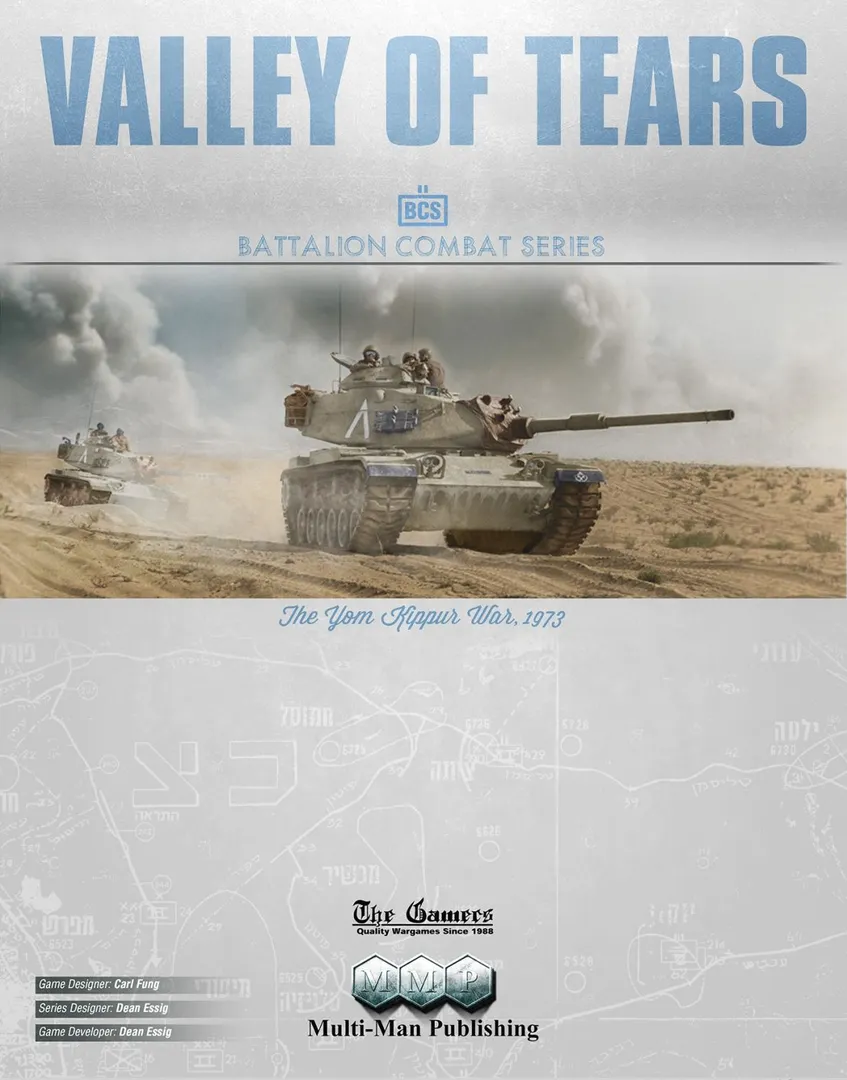
2023
Rules assistance for Valley of Tears: The Yom Kippur War, 1973
Plain-language explanations of turns, card effects and disputed situations, with official source references and saved question history.
For 1 player
What would you like to know?
Answers come from the official rulebook, with the page to check.
Valley of Tears: The Yom Kippur War, 1973 is a board game released in 2023 for 1–4 players. It was designed by Carl Fung and its main mechanics are Dice Rolling, Hexagon Grid, and Simulation.

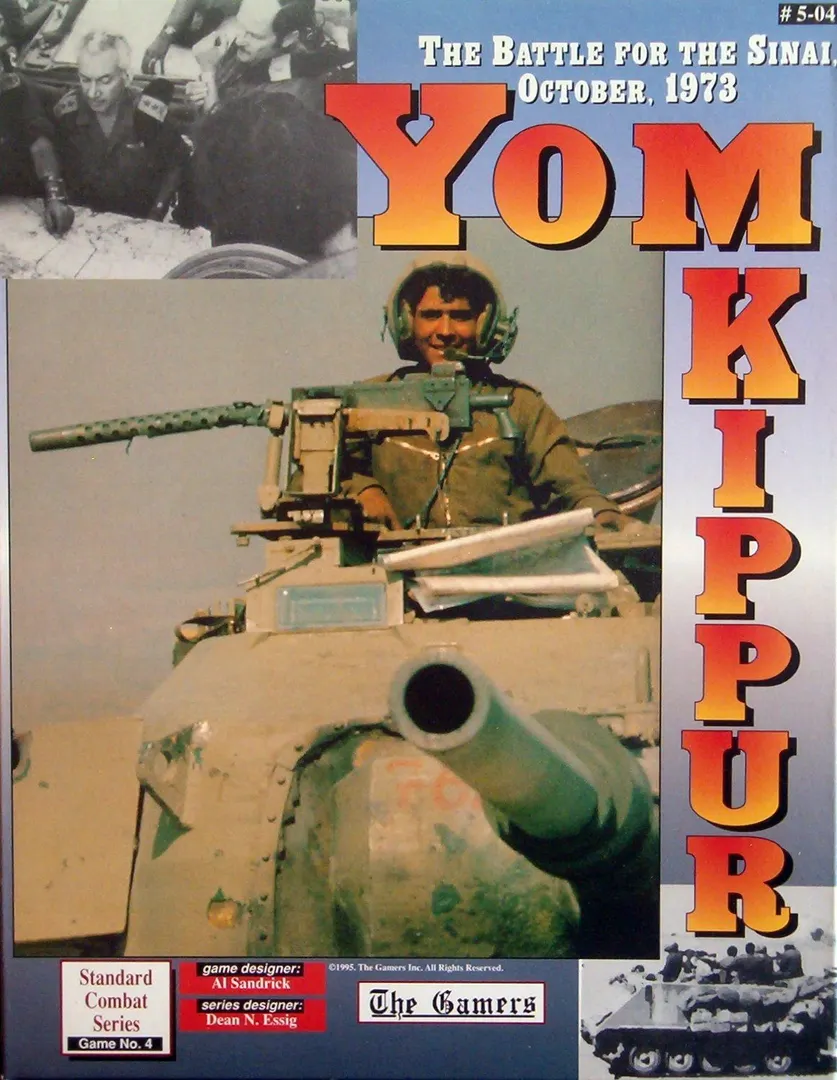
Valley of Tears is a Battalion Combat Series wargame depicting the entire 1973 Yom Kippur war from 6 October 1973 until the ceasefire enforced by the Superpowers and the UN. As the culmination of over 20 years of research in consultation with world-class experts, Valley of Tears shows the Yom Kippur war at a level of detail not yet seen. For the first time ever, for example, the game’s maps were precisely drawn using actual tactical Israeli maps used during the war and include the official code names for hilly defensive positions in both battle areas. Valley of Tears takes the BCS into a whole new level: that of post WW2 operations. For example, its dedicated air warfare system allows BCS players to not only pit F-4 Phantoms against MiG-21 Fishbeds in the contest for air superiority, but also assign the Front’s air units to execute SEAD and Deep Strike (both RAM and DOMINQUE) missions (to suppress the ever present SAM threat and attack enemy air bases/destroy enemy infrastructure, respectively) as well as the traditional (but more effective) BCS Close Air Support missions. The game presents the largest tank battle since WWII, with the Cold War adversaries fighting a proxy war where the latest Centurion and Patton tanks faced off against T-62s following Soviet tactical doctrines. Expecting to have to repeat the war’s of 1967 and 1956, the Israelis were confronted by the then-new and unexpected masses of Sagger missiles and RPG hand-held weapons. It’s your job to win the war, with or against, these new weapons and the much more effective and versatile air war to generate a win without taking excessive casualties making the win Pyrrhic. Can you master the deadly environment and become the victor? Winner of the 2023 Charles S. Roberts Awards for Best Modern Game. Scenarios: The Yom Kippur War: Two Front Campaign (All 4 maps) On the Banks of the Suez: The Sinai Front Campaign (3 maps) Syrians at the Border: Golan Front Campaign (1 map) Dual for the Golan (1 map) Iraqi Intervention (1 map) Aryeh Dov (1 map) Operation Stouthearted Men (less than 1 map) Africa (2 maps) Components: BCS rulebook (v2.0, in full color) Two BCS Charts and Tables (v2.0, in full color) BCS Support rulebook (v2.0, in full color) VoT Game Specific rulebook Israeli Player Booklet Arab Player Booklet Turn Record Track Card Israeli Player Display Card Arab Player Display Card Two Frontal Air Display Cards Four 22” x 34” Full Color Game Maps (Three Sinai, One Golan) 1,400 Counters (Three unit sheets and Two BCS marker sheets) 8 scenarios total, 4 one-map (or smaller) scenarios of 2 to 5 turns. Box and Dice -description from designer
Valley of Tears: The Yom Kippur War, 1973 supports 1–4 players according to the catalogue. This range comes from the publisher’s listed player count, so the game can be set up for any group size within it. Some setups, rules and scoring details may still vary by player count, so check your edition’s rulebook for the exact configuration.
Valley of Tears: The Yom Kippur War, 1973 has a complexity rating of 4.0 out of 5 from BoardGameGeek players, which makes it a heavy game. The rating reflects how much rules knowledge, planning and decision-making a typical game demands. Expect a longer first teach for heavier games, and use a preparation guide before game night.
Valley of Tears: The Yom Kippur War, 1973 belongs to these categories: Wargame and Modern Warfare. Its main mechanics are Dice Rolling, Hexagon Grid, and Simulation. Categories describe the theme and setting of a game, while mechanics describe what players actually do on their turns. Each mechanic links to a catalogue hub with similar games, which helps when you want something comparable.
The credited designers of Valley of Tears: The Yom Kippur War, 1973 are: Carl Fung. These credits come from the published game data and name the people responsible for the game’s design, not its illustrators or publishers. Designer pages on MeepleRules collect other titles by the same designers, which helps when you enjoy a game and want to find similar ones.
The catalogue lists Valley of Tears: The Yom Kippur War, 1973 as a base game. It can be played on its own with the components in the box and does not require any other title. Expansions, if any exist, add new content or rules on top of it and are listed separately in the catalogue with a link back to this base game.