
- BGG rank
- BGG #6,107
- BGG rating
- 8.4
Arracourt
- 2 players
- 120 min
- Complexity 3.9/5
- 2022
2021
Rules assistance for Panzers Last Stand: Battles for Budapest, 1945
Plain-language explanations of turns, card effects and disputed situations, with official source references and saved question history.
For 2 players
What would you like to know?
Answers come from the official rulebook, with the page to check.
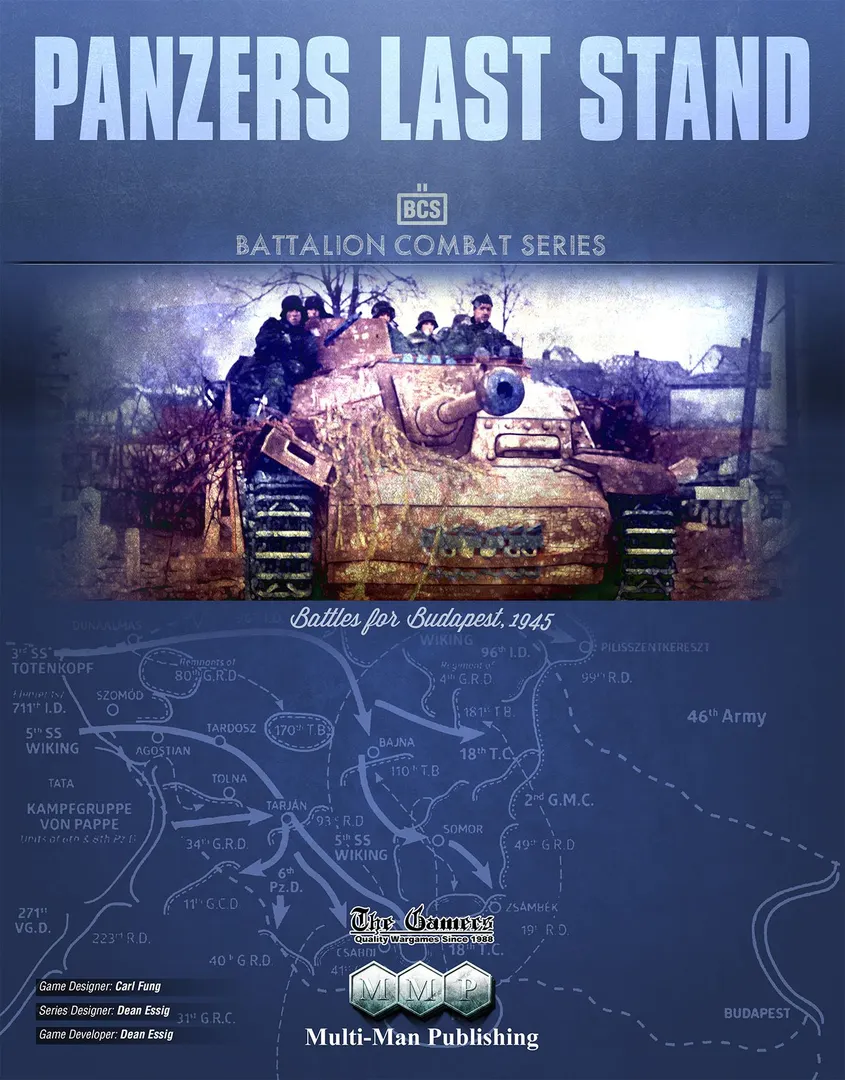
Panzers Last Stand: Battles for Budapest, 1945 is a board game released in 2021 for 2 players and 120–1560 minutes per game. It was designed by Dean Essig and Carl Fung and its main mechanics are Dice Rolling, Hexagon Grid, and Simulation.




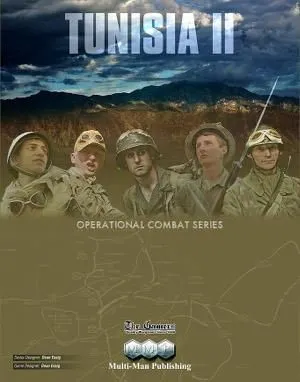
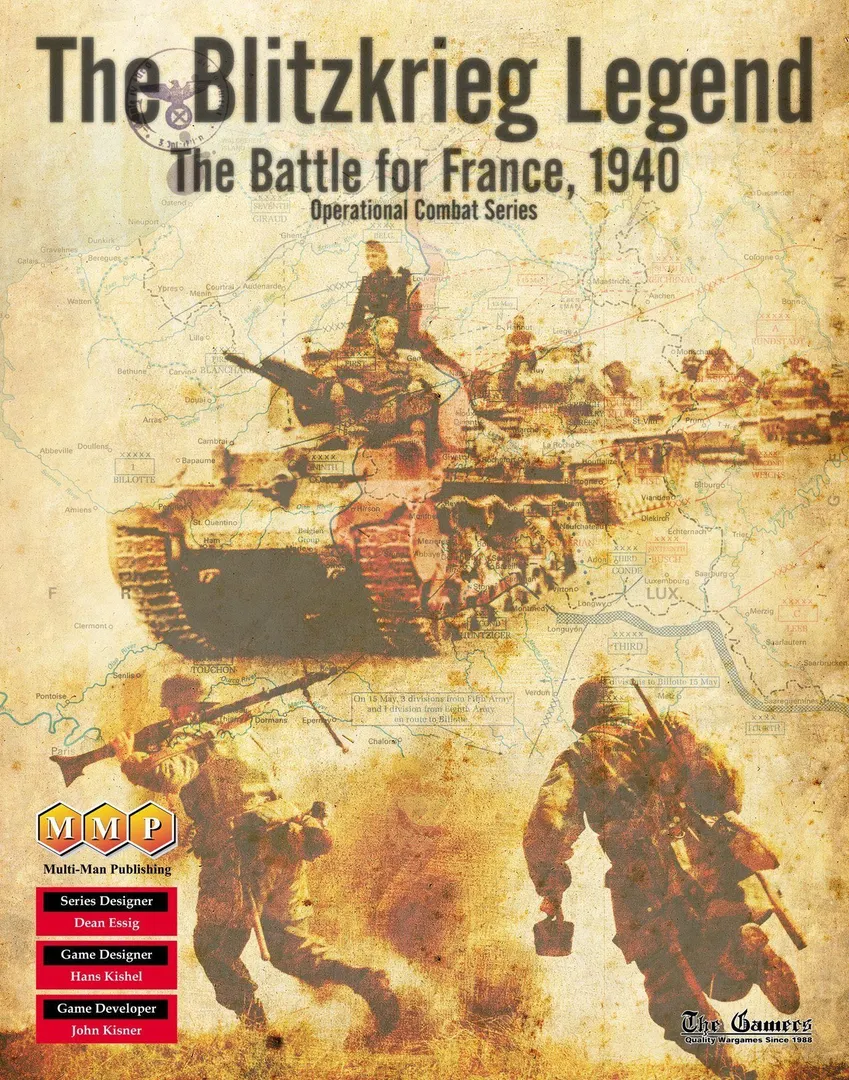
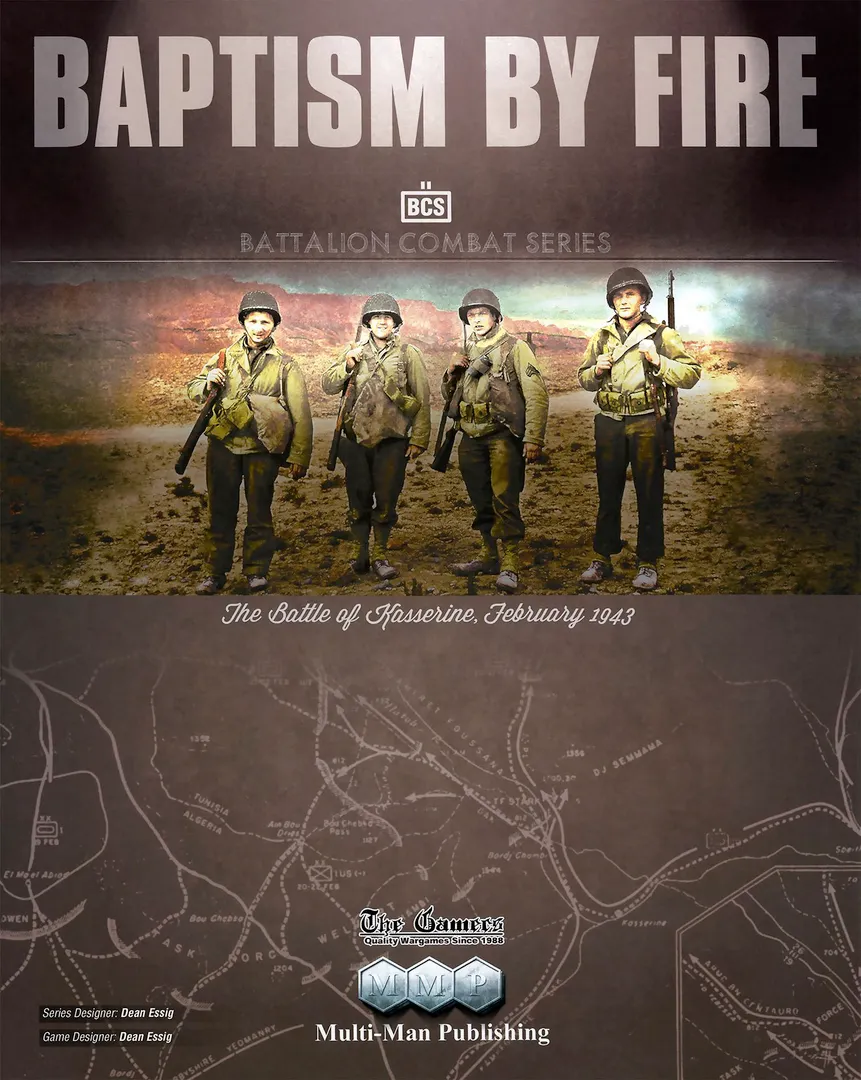

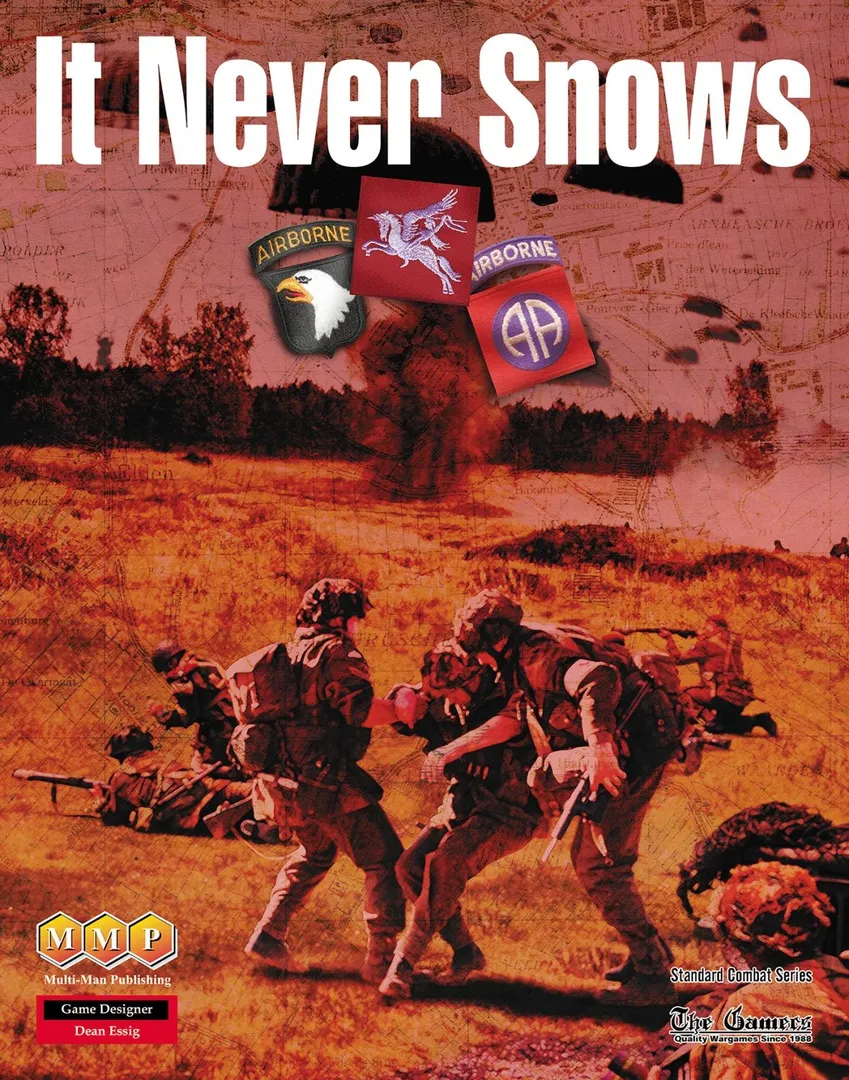
Panzers Last Stand is a Battalion Combat Series game depicting the Axis relief operations of Budapest from January to March 1945 in what became Germany's last major offensives in the war. The campaign game covers the Konrad Operations (I, II, and III) in January 1945. There are scenarios for each of the Konrad Operations as well as Operation Southwind in February and Operation Spring Awakening in March 1945. In the final months of the war, Germany was still full of fight and believed Budapest to be the key to turning the tide. With Budapest fully surrounded by Soviet and former-Axis Romanian forces, the situation in the city was desperate. The Germans devised a plan to relieve Budapest by bringing in the SS-Totenkopf and SS-Wiking Panzer Divisions from Poland to launch a surprise attack before the Soviets closed the ring on the trapped forces in the city. Launched in the wee hours on New Year's Day, 1945, the fate of the Axis hung in the balance. The Soviets, having campaigned continuously from the summer of 1944, fought back viciously and showed their mettle against the elite SS Panzer Divisions. A great proportion of the armored forces for both sides funneled into the Budapest area. All but one of the seven SS Panzer Divisions and half of the Heer Panzer Divisions on the Eastern Front (a full third of all Panzer Divisions total) ultimately fought here. The Soviets committed three Tank, five Mechanized, and one Cavalry Corps to blunt the Axis drive. The battlefield became a graveyard of tanks. The game showcases late-war equipment like the Tiger II, Brummbär, IS-2, and ISU-152 while also including unique units like Cavalry, Assault Pioneers, Soviet Naval Infantry, Hungarian SS, and ad hoc forces mobilized to defend Budapest. Rules covering Danube River crossing, Urban combat, redeployment deception (Maskirovka), and Festung rules highlight this unique and often misunderstood campaign. Scenarios: The Taking of Budapest 123: Full Campaign (4 maps, 26 turns) Operation Konrad I & II (2 maps without Budapest, 10 turns) Operation Konrad I (2 maps without Budapest, 5 turns) Operation Konrad II (1 map without Budapest, 5 turns) Battle for Zamoly (Part of 1 map, 5 turns) Operation Konrad III (2 maps, 10 turns) Battle for Komárom (Part of 2 maps, 17 turns) Days of Battle: Opening Blows to Komárom (Part of 2 maps, 4 turns) Operation Southwind (Part of 2 maps, 8 turns) Operation Spring Awakening (2 maps, 10 turns) Components: BCS rulebook (v2.0, in full color) Two BCS Charts and Tables (v2.0, in full color) BCS Support rulebook (v2.0, in full color) PLS Game Specific rulebook Axis Player Booklet Soviet Player Booklet Turn Record Track Card Axis Player Display Card Soviet Player Display Card Last Blitzkrieg Addenda sheet Four 22” x 34” Full Color Game Maps 1,680 Counters (four sheets of units and two BCS marker sheets) 10 scenarios total, 2 one-map scenarios, 4 are 5 turns or less Box and Dice —description from the publisher
Panzers Last Stand: Battles for Budapest, 1945 supports 2 players according to the catalogue. This is the publisher’s listed player count, so the game is designed for exactly that number of participants. Variants for other group sizes, if any, are described in the rulebook of your edition, so check it before setting up a different configuration.
The listed playing time for Panzers Last Stand: Battles for Budapest, 1945 is 120–1560 minutes. This is the publisher’s estimate for a full game. The actual duration depends on the group, the player count and familiarity with the rules: first sessions usually run longer, while experienced groups often finish faster. Setup and teaching time are not included in this estimate.
Panzers Last Stand: Battles for Budapest, 1945 has a complexity rating of 3.9 out of 5 from BoardGameGeek players, which makes it a heavy game. The rating reflects how much rules knowledge, planning and decision-making a typical game demands. Expect a longer first teach for heavier games, and use a preparation guide before game night.
Panzers Last Stand: Battles for Budapest, 1945 belongs to these categories: Wargame and World War II. Its main mechanics are Dice Rolling, Hexagon Grid, and Simulation. Categories describe the theme and setting of a game, while mechanics describe what players actually do on their turns. Each mechanic links to a catalogue hub with similar games, which helps when you want something comparable.
The credited designers of Panzers Last Stand: Battles for Budapest, 1945 are: Dean Essig and Carl Fung. These credits come from the published game data and name the people responsible for the game’s design, not its illustrators or publishers. Designer pages on MeepleRules collect other titles by the same designers, which helps when you enjoy a game and want to find similar ones.
The catalogue lists Panzers Last Stand: Battles for Budapest, 1945 as a base game. It can be played on its own with the components in the box and does not require any other title. Expansions, if any exist, add new content or rules on top of it and are listed separately in the catalogue with a link back to this base game.