
- BGG rating
- 7.3
Key West: Mafiosi expansion
- 3–5 players
- 60 min
- 2011
2010
Rules assistance for Key West
Plain-language explanations of turns, card effects and disputed situations, with official source references and saved question history.
What would you like to know?
Answers come from the official rulebook, with the page to check.
Key West is a board game released in 2010 for 3–5 players, 60 minutes per game, and ages 12 and up. It was designed by Martin Schlegel and its main mechanics are Auction / Bidding and Action Points.







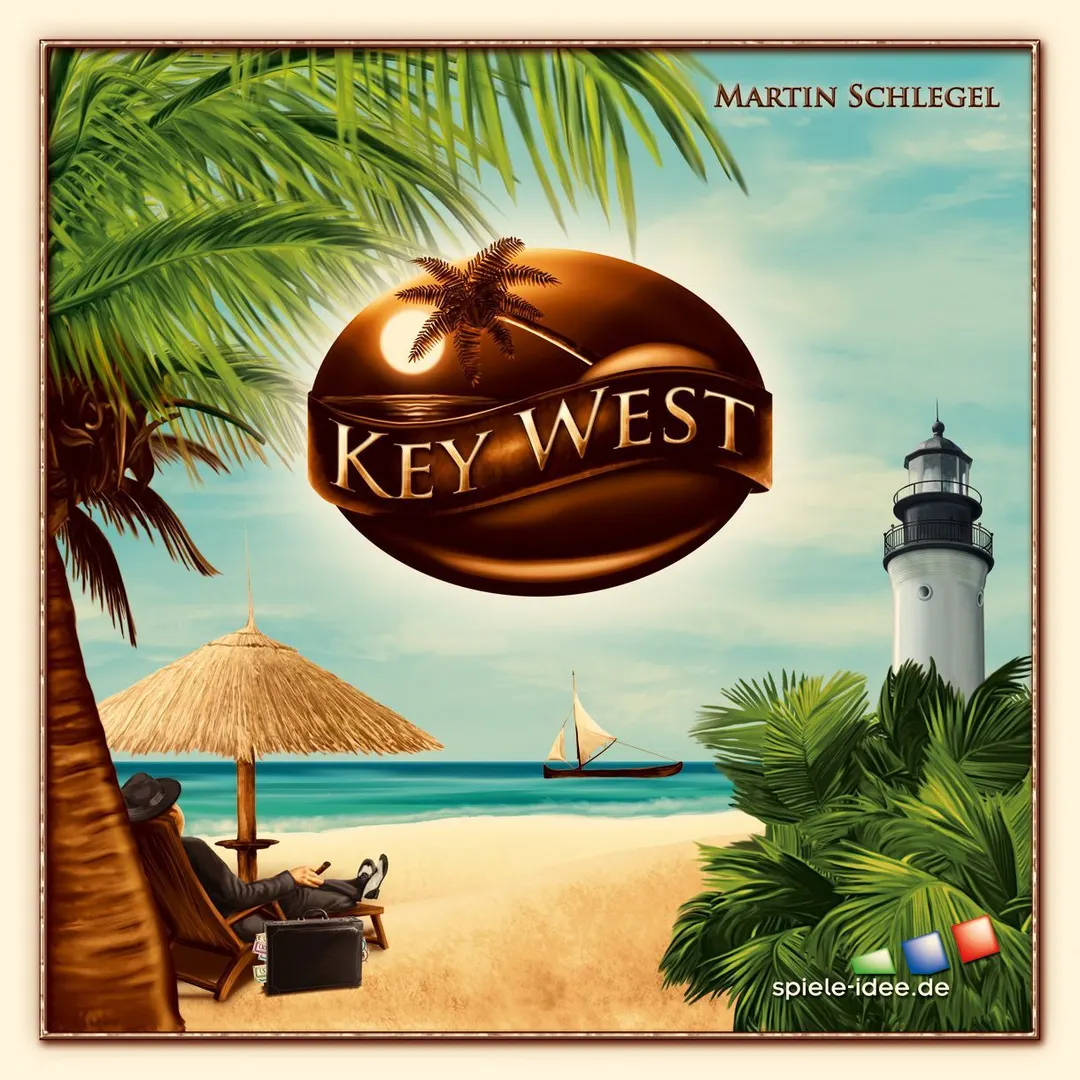
Crystal blue seas, tropical heat and crazy nightclubs are Key West, the extreme tip of the Florida Keys and a paradise for people who enjoy a wild and thrilling existence, including people like the writer Ernest Hemingway who was attracted by more than just the sea and the bars. How will you make your way there? You might make good money with hotels, but first bridges must be built so that tourists, artists and business people of all kinds can flock to the islands. Plantations and cigar factories can show lush profits as well. Adventurers are attracted out to sea, where they dive for sunken shipwrecks and treasures. But the bottom line in Key West is that wanting everything is never a good goal. Don't get bogged down; stay cool and plan your actions like a pro. Key West is set in the 1930s and depicts the economic development of the Florida Keys. Players build hotels, maintain fruit plantations, buy cigar factories (both producing and selling), ensure that bridges are built, and search the deeps for treasure and wrecks. It features an original and surprising auction mechanism from Martin Schlegel. The game is divided into two parts: first bidding, then actions. At the beginning of each of the eight rounds, there is a offers phase, in which players bid to secure Key West cards, which represent, for example, ownership of bridges and plantations and other benefits for the subsequent actions round. Individual actions are a finite and players will need to approach them tactically. It often won't be possible to do everything one wants and what not to do an agonizing decision. Both experienced players and families will find something to like in Key West. There are seven different paths for generating victory points, but those who try to get involved everywhere won't succeed. The focus should be on three or four programs. In the next game one can try a different set. As there are thus many combinations, the intentions is that matters stay fresh for many re-playings. An Essen 2010 game. See you at spiele-idee.de Hall 4 Booth 414 Source: based on publisher blurb
Key West supports 3–5 players according to the catalogue. This range comes from the publisher’s listed player count, so the game can be set up for any group size within it. Some setups, rules and scoring details may still vary by player count, so check your edition’s rulebook for the exact configuration.
The listed playing time for Key West is 60 minutes. This is the publisher’s estimate for a full game. The actual duration depends on the group, the player count and familiarity with the rules: first sessions usually run longer, while experienced groups often finish faster. Setup and teaching time are not included in this estimate.
The catalogue lists Key West for ages 12 and up. This is the publisher’s recommendation and reflects reading demands, rule complexity and small components rather than theme alone. Younger players can often join with help from an adult, so check the age guidance on your edition and consider your group’s experience with board games.
Key West has a complexity rating of 2.6 out of 5 from BoardGameGeek players, which makes it a medium-light game. The rating reflects how much rules knowledge, planning and decision-making a typical game demands. Expect a longer first teach for heavier games, and use a preparation guide before game night.
Key West belongs to these categories: Economic and Adventure. Its main mechanics are Auction / Bidding and Action Points. Categories describe the theme and setting of a game, while mechanics describe what players actually do on their turns. Each mechanic links to a catalogue hub with similar games, which helps when you want something comparable.
The credited designers of Key West are: Martin Schlegel. These credits come from the published game data and name the people responsible for the game’s design, not its illustrators or publishers. Designer pages on MeepleRules collect other titles by the same designers, which helps when you enjoy a game and want to find similar ones.
The catalogue lists Key West as a base game. It can be played on its own with the components in the box and does not require any other title. Expansions, if any exist, add new content or rules on top of it and are listed separately in the catalogue with a link back to this base game.
