

- BGG rank
- BGG #2,670
- BGG rating
- 7.0
Rise and Decline of the Third Reich
- 2–6 players
- 240–720 min
- Complexity 4.3/5
- 1974
1978
Rules assistance for Kharkov: The Soviet Spring Offensive, 1942
Plain-language explanations of turns, card effects and disputed situations, with official source references and saved question history.
For 2 players
What would you like to know?
Answers come from the official rulebook, with the page to check.
Kharkov: The Soviet Spring Offensive, 1942 is a board game released in 1978 for 2 players, 240 minutes per game, and ages 12 and up. It was designed by Stephen B. Patrick and its main mechanics are Dice Rolling, Grid Movement, and Hexagon Grid.







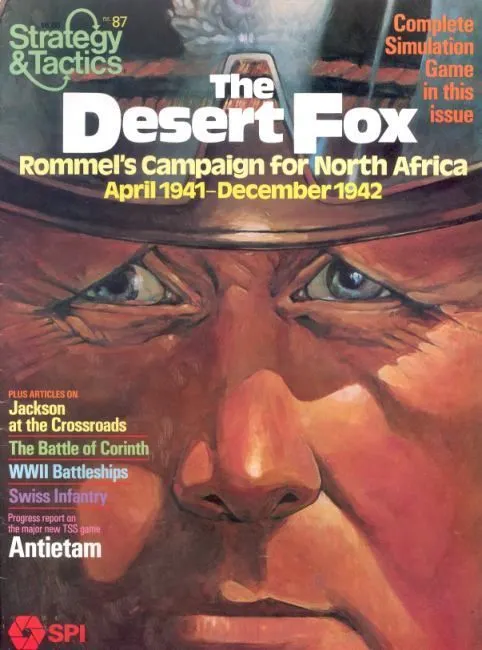

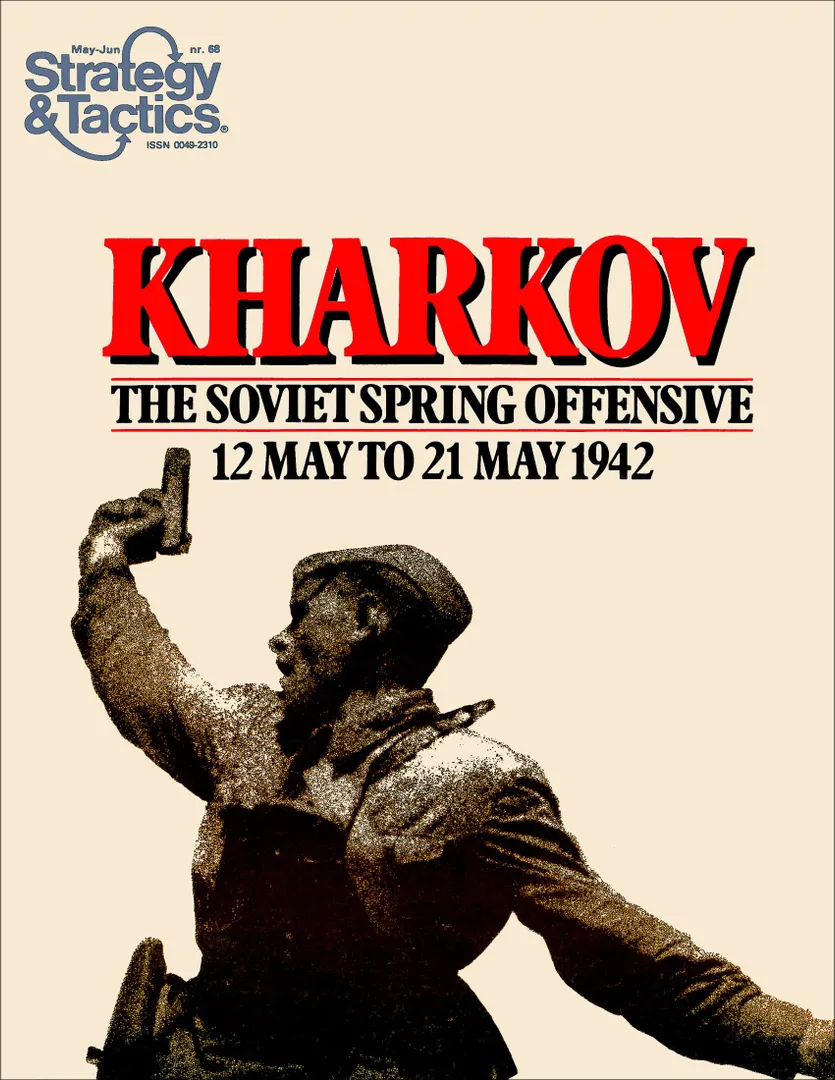
"Kharkov: The Soviet Spring Offensive 12 May to 21 May 1942", is a brigade/Division level simulation of the Spring 1942 Soviet strategic offensive. The Second Battle of Kharkov or Operation Fredericus was an Axis counter-offensive in the region around Kharkov against the Red Army Izium bridgehead offensive conducted 12–28 May 1942, on the Eastern Front during World War II. Its objective was to eliminate the Izium bridgehead over Seversky Donets or the "Barvenkovo bulge" which was one of the Soviet offensive's staging areas. After a winter counter-offensive that drove German troops away from Moscow but depleted the Red Army's reserves, the Kharkov offensive was a new Soviet attempt to expand upon their strategic initiative, although it failed to secure a significant element of surprise. On 12 May 1942, both the Soviet Southwestern and Southern Fronts under the command of Marshal Semyon Timoshenko launched an offensive against the German 6th Army from a salient established during the winter counter-offensive. After a promising start, the offensive was stopped on 15 May by massive airstrikes. Critical Soviet errors by several staff officers and by Joseph Stalin, who failed to accurately estimate the 6th Army's potential and overestimated their own newly raised forces, facilitated a German pincer attack on 17 May which cut off three Soviet field armies from the rest of the front by 22 May. Hemmed into a narrow area, the 250,000-strong Soviet force inside the pocket was exterminated from all sides by German armored, artillery and machine gun firepower as well as 7,700 tonnes of air-dropped bombs. After six days of encirclement, Soviet resistance ended as their troops were killed or taken prisoner. The battle was an overwhelming German victory, with 280,000 Soviet casualties compared to just 20,000 for the Germans and their allies. The German Army Group South pressed its advantage, encircling the Soviet 28th Army on 13 June in Operation Wilhelm and pushing back the 38th and 9th Armies on 22 June in Operation Fridericus II as preliminary operations to Case Blue, which was launched on 28 June as the main German offensive on the Eastern Front in 1942. Kharkov uses the Panzergruppe Guderian system. Situation on the Soviet counter-offensive in Summer 1942. Makes use of untried Soviet units - neither player knows their strength until they enter combat for the first time. Unlike PGG, there are no '0' strength units. Originally published in Strategy & Tactics magazine #68, May/June 1978. Game Scale: Game Turn: 1 day Hex: 4.2 miles / 6.9 Kilometers Units: Regiment to Division Game Inventory: One 22 x 32" four color mapsheet One dual-side printed countersheet (200 1/2" counters) One 8-page rulebook One 6-sided dice Solitaire Playability: Medium Complexity Level: Medium Players: 2 or more Playing Time: 4-15
Kharkov: The Soviet Spring Offensive, 1942 supports 2 players according to the catalogue. This is the publisher’s listed player count, so the game is designed for exactly that number of participants. Variants for other group sizes, if any, are described in the rulebook of your edition, so check it before setting up a different configuration.
The listed playing time for Kharkov: The Soviet Spring Offensive, 1942 is 240 minutes. This is the publisher’s estimate for a full game. The actual duration depends on the group, the player count and familiarity with the rules: first sessions usually run longer, while experienced groups often finish faster. Setup and teaching time are not included in this estimate.
The catalogue lists Kharkov: The Soviet Spring Offensive, 1942 for ages 12 and up. This is the publisher’s recommendation and reflects reading demands, rule complexity and small components rather than theme alone. Younger players can often join with help from an adult, so check the age guidance on your edition and consider your group’s experience with board games.
Kharkov: The Soviet Spring Offensive, 1942 has a complexity rating of 2.6 out of 5 from BoardGameGeek players, which makes it a medium-light game. The rating reflects how much rules knowledge, planning and decision-making a typical game demands. Expect a longer first teach for heavier games, and use a preparation guide before game night.
Kharkov: The Soviet Spring Offensive, 1942 belongs to these categories: Wargame and World War II. Its main mechanics are Dice Rolling, Grid Movement, and Hexagon Grid. Categories describe the theme and setting of a game, while mechanics describe what players actually do on their turns. Each mechanic links to a catalogue hub with similar games, which helps when you want something comparable.
The credited designers of Kharkov: The Soviet Spring Offensive, 1942 are: Stephen B. Patrick. These credits come from the published game data and name the people responsible for the game’s design, not its illustrators or publishers. Designer pages on MeepleRules collect other titles by the same designers, which helps when you enjoy a game and want to find similar ones.
The catalogue lists Kharkov: The Soviet Spring Offensive, 1942 as a base game. It can be played on its own with the components in the box and does not require any other title. Expansions, if any exist, add new content or rules on top of it and are listed separately in the catalogue with a link back to this base game.