
- BGG rank
- BGG #13,015
- BGG rating
- 6.3
Ruins of Mars
- 1–4 players
- 60–120 min
- Complexity 2.0/5
- 2021

2015
Rules assistance for King of New Tokyo
Plain-language explanations of turns, card effects and disputed situations, with official source references and saved question history.
What would you like to know?
Answers come from the official rulebook, with the page to check.
King of New Tokyo is a board game released in 2015 for 3–4 players. It was designed by Don Riddle and its main mechanics are Push Your Luck, Player Elimination, and Dice Rolling.

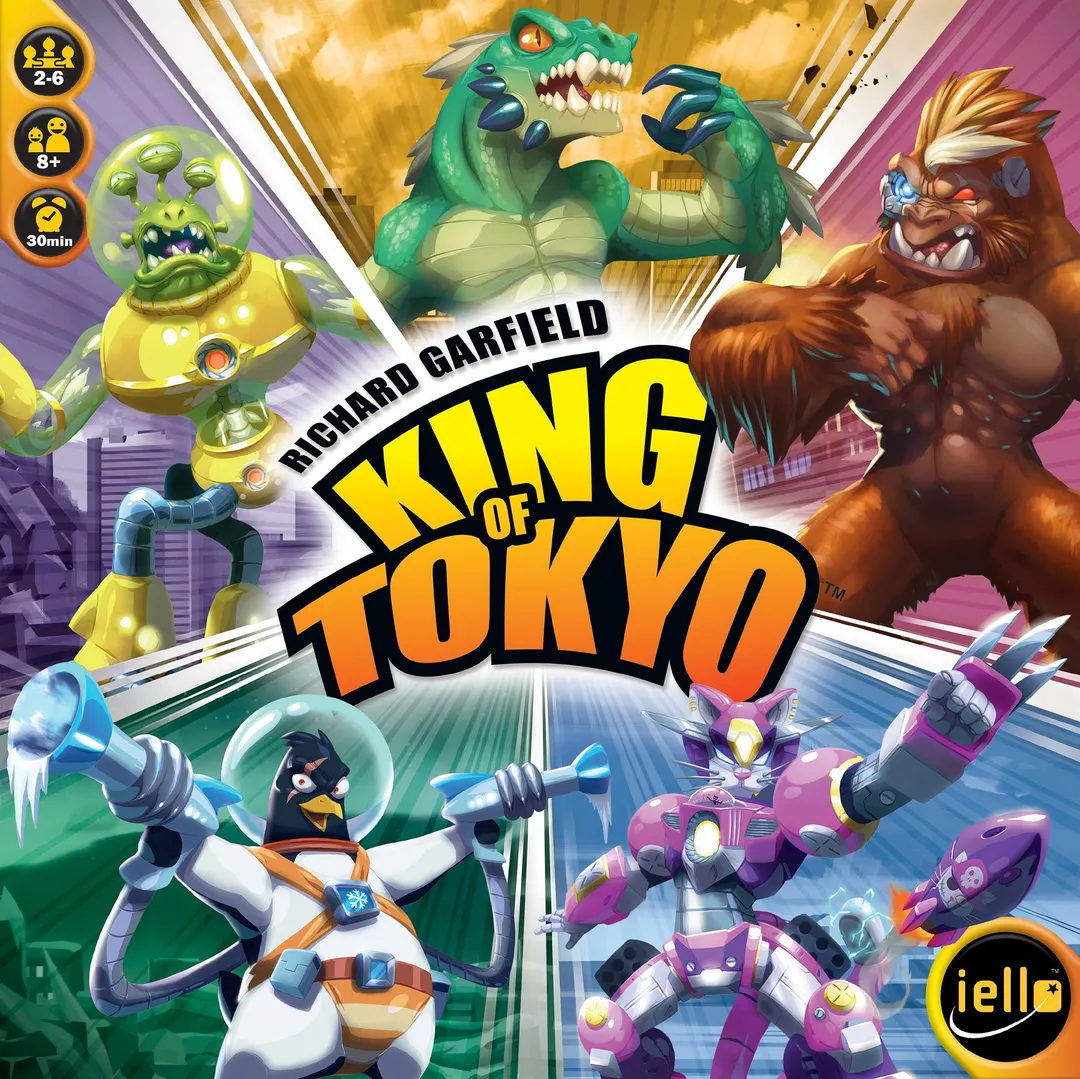





This is a version of the popular classic monster brawl game using only the components from a "piecepack". Players will roll the 4 piecepack dice trying to knock each other out, or to simply remain "king of the hill" long enough to score the right combination of coins and tiles to win!
King of New Tokyo supports 3–4 players according to the catalogue. This range comes from the publisher’s listed player count, so the game can be set up for any group size within it. Some setups, rules and scoring details may still vary by player count, so check your edition’s rulebook for the exact configuration.
King of New Tokyo belongs to these categories: Fantasy and Fighting. Its main mechanics are Push Your Luck, Player Elimination, and Dice Rolling. Categories describe the theme and setting of a game, while mechanics describe what players actually do on their turns. Each mechanic links to a catalogue hub with similar games, which helps when you want something comparable.
The credited designers of King of New Tokyo are: Don Riddle. These credits come from the published game data and name the people responsible for the game’s design, not its illustrators or publishers. Designer pages on MeepleRules collect other titles by the same designers, which helps when you enjoy a game and want to find similar ones.
The catalogue lists King of New Tokyo as a base game. It can be played on its own with the components in the box and does not require any other title. Expansions, if any exist, add new content or rules on top of it and are listed separately in the catalogue with a link back to this base game.