
- BGG rank
- BGG #11,006
- BGG rating
- 7.0
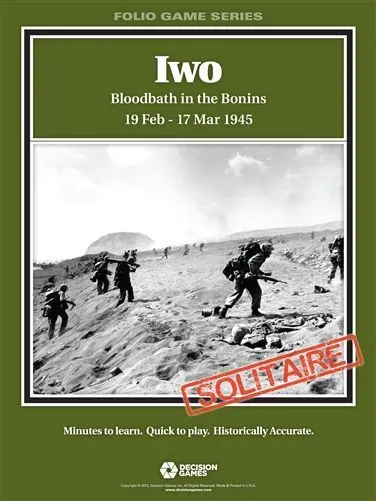
Iwo: Bloodbath in the Bonins 19 Feb – 17 Mar 1945
- 1–2 players
- 60–120 min
- Complexity 2.5/5
- 2013
2012
Rules assistance for Koniggratz: Blood & Iron Triumphant
Plain-language explanations of turns, card effects and disputed situations, with official source references and saved question history.
For 1 player
What would you like to know?
Answers come from the official rulebook, with the page to check.
Koniggratz: Blood & Iron Triumphant is a board game released in 2012 for 1–2 players. It was designed by Chris Perello and its main mechanics are Hexagon Grid.
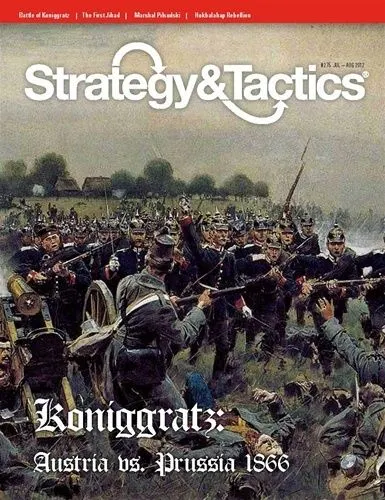
(from S&T press website:) On 3 July 1866 the armies of Austria-Hungary and Prussia met west of the Bohemian fortress of Königgrätz (now Hradec Králové). The battle was the culmination of a quarter-century of political and military maneuvering by Otto von Bismarck, aimed at enabling Prussia to supplant Austria-Hungary as the dominant state of the coalescing German nation. The battle is presented using the folio line’s Musket & Saber system: brigade-sized units, one-fifth-mile hexes, 90-minute turns, 280 counters. The Austro-Hungarian army, chastened by a week of minor defeats, was entrenched a long line covering the fortress of Königgrätz. It occupied a central position facing three converging Prussian armies. To win, the Prussians must sweep the Austrians off the field (as they did historically), while the Austrians must maintain a presence on the field to justify their continued claim to political primacy. The game emphasizes the differences between the armies in doctrine, weapons and morale. The Prussian triumph was born of more than just the famous needle-gun: their infantry used flexible organization and tactics to mass men quickly at the decisive point, while the Austrians used a throwback to Napoleonic column formations due to a misreading of the lesson from an earlier engagement. The Prussian artillery is outclassed by the superb Austrian guns, but can be dangerous if used properly. The Austrian cavalry is superior as well, but horsed charges were already an anachronism. In the end the battle came down to crucial command decisions, giving both players an opportunity to win. Components: One 22" x 34" map & 280 counters Magazine: Strategy & Tactics #275
Koniggratz: Blood & Iron Triumphant supports 1–2 players according to the catalogue. This range comes from the publisher’s listed player count, so the game can be set up for any group size within it. Some setups, rules and scoring details may still vary by player count, so check your edition’s rulebook for the exact configuration.
Koniggratz: Blood & Iron Triumphant has a complexity rating of 3.5 out of 5 from BoardGameGeek players, which makes it a medium-weight game. The rating reflects how much rules knowledge, planning and decision-making a typical game demands. Expect a longer first teach for heavier games, and use a preparation guide before game night.
Koniggratz: Blood & Iron Triumphant belongs to these categories: Wargame. Its main mechanics are Hexagon Grid. Categories describe the theme and setting of a game, while mechanics describe what players actually do on their turns. Each mechanic links to a catalogue hub with similar games, which helps when you want something comparable.
The credited designers of Koniggratz: Blood & Iron Triumphant are: Chris Perello. These credits come from the published game data and name the people responsible for the game’s design, not its illustrators or publishers. Designer pages on MeepleRules collect other titles by the same designers, which helps when you enjoy a game and want to find similar ones.
The catalogue lists Koniggratz: Blood & Iron Triumphant as a base game. It can be played on its own with the components in the box and does not require any other title. Expansions, if any exist, add new content or rules on top of it and are listed separately in the catalogue with a link back to this base game.