- BGG rating
- 6.9
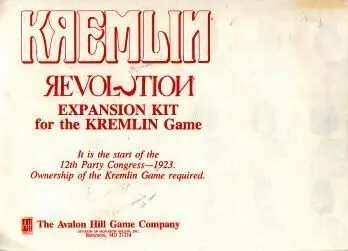
Kremlin: Revolution
- 3–6 players
- 90 min
- Complexity 2.1/5
- 1989
1986
Rules assistance for Kremlin
Plain-language explanations of turns, card effects and disputed situations, with official source references and saved question history.
For 3 players
What would you like to know?
Answers come from the official rulebook, with the page to check.
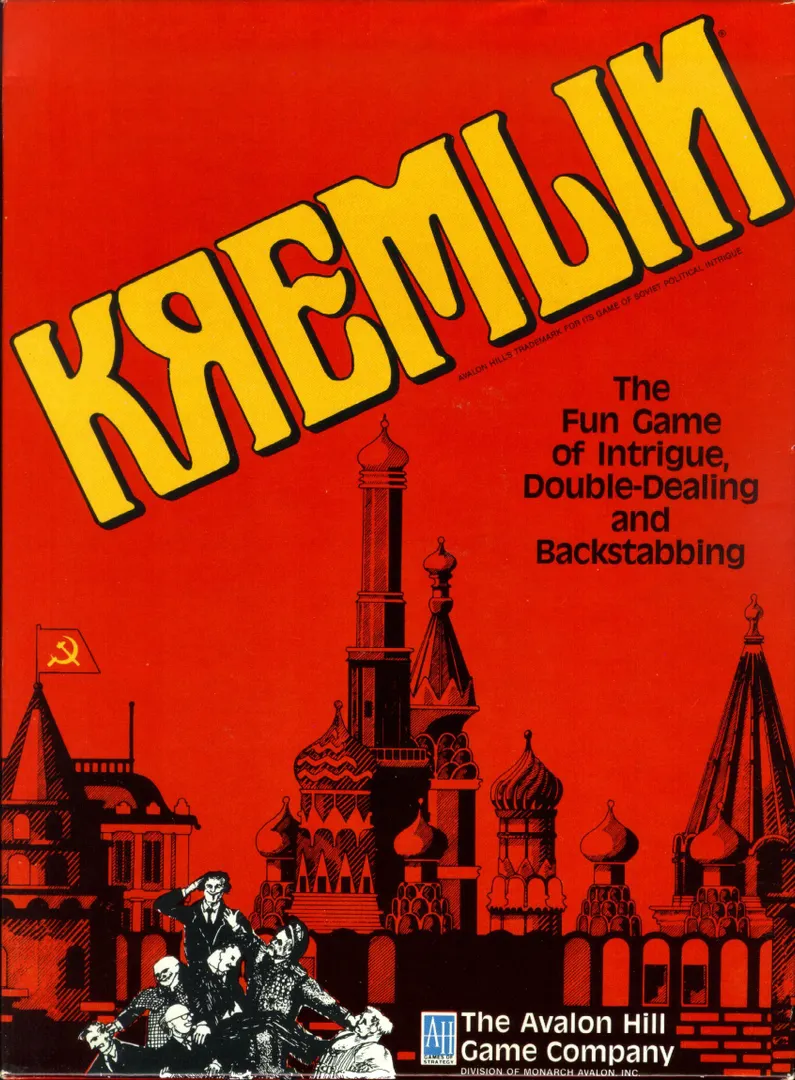
Kremlin is a board game released in 1986 for 3–6 players, 75 minutes per game, and ages 12 and up. It was designed by Urs Hostettler and its main mechanics are Secret Unit Deployment and Voting.



A game of political intrigue set in the Soviet Politburo of the early 20th century, with a satirical edge. With politicians like Eduard Boremtodev, Nikolai Shootemdedsky and Natasha Nogoodnik vying for control of the party, you know the battle will be an entertaining one. At the start of the game, a number of politician cards are laid out to fill the positions of the politburo. Players then secretly note influence on ten politicians they hope to control during the game, indicated by a number from 1 to 10. Gameplay is not clockwise, but proceeds phase by phase with the politician holding the relevant office performing the appropriate action by the player who reveals the greatest influence on the politician in question. Players attempt to remove politicians opposed to their interests by purging, exiling them to Siberia or by demoting them within the Politburo. One’s own preferred politicians can be promoted or pardoned of their previous ‘sins’. But each action a politician takes causes him (or in one case, her) to age by one or more years (a measure of the aging effect of the stress of the job). Each turn, politburo members face a health check which can result in the politician becoming ill, or even dying. The 'older' a politician gets the more likely it is that he (or she) will become ill. At the end of each turn, the Party Chief must be healthy enough to wave to the crowd at the October parade. Controlling a politician who succeeds at this three times makes you the winner. The original Fata Morgana edition included rules requiring the players to hold funeral speeches for deceased party chairmen and drinking vodka with it, for instance. The later Avalon Hill edition scrapped these rules and gave the game a less satirical and more serious tone. Jolly Roger reimplemented an edition providing three different KREMLIN games in one box -See Kremlin (Fourth Edition)-: 1: The 'original' with fictional politicians, set in a USSR where KGB investigations send those found guilty to Siberia. This version will have victory conditions based on the original Fata Morgana rules. 2: A version inspired by the Avalon Hill variant titled 'Revolution'. Set in the 1920s, it uses historical politicians as well as fictional politicians. It's a more violent game as those arrested by the KGB are shot and removed from the game 3: A new version, set in the modern USSR and Russia, an era of entrenched bureaucracy and alternatives for escaping KGB persecution. This version introduces the concept of "Going into Exile" to avoid Siberia. It also includes modern politicians from the 1960s onwards, whether it is Kosygin or Putin and Gorbachev.
Kremlin supports 3–6 players according to the catalogue. This range comes from the publisher’s listed player count, so the game can be set up for any group size within it. Some setups, rules and scoring details may still vary by player count, so check your edition’s rulebook for the exact configuration.
The listed playing time for Kremlin is 75 minutes. This is the publisher’s estimate for a full game. The actual duration depends on the group, the player count and familiarity with the rules: first sessions usually run longer, while experienced groups often finish faster. Setup and teaching time are not included in this estimate.
The catalogue lists Kremlin for ages 12 and up. This is the publisher’s recommendation and reflects reading demands, rule complexity and small components rather than theme alone. Younger players can often join with help from an adult, so check the age guidance on your edition and consider your group’s experience with board games.
Kremlin has a complexity rating of 2.9 out of 5 from BoardGameGeek players, which makes it a medium-light game. The rating reflects how much rules knowledge, planning and decision-making a typical game demands. Expect a longer first teach for heavier games, and use a preparation guide before game night.
Kremlin belongs to these categories: Political and Negotiation. Its main mechanics are Secret Unit Deployment and Voting. Categories describe the theme and setting of a game, while mechanics describe what players actually do on their turns. Each mechanic links to a catalogue hub with similar games, which helps when you want something comparable.
The credited designers of Kremlin are: Urs Hostettler. These credits come from the published game data and name the people responsible for the game’s design, not its illustrators or publishers. Designer pages on MeepleRules collect other titles by the same designers, which helps when you enjoy a game and want to find similar ones.
The catalogue lists Kremlin as a base game. It can be played on its own with the components in the box and does not require any other title. Expansions, if any exist, add new content or rules on top of it and are listed separately in the catalogue with a link back to this base game.