
- BGG rating
- 8.1
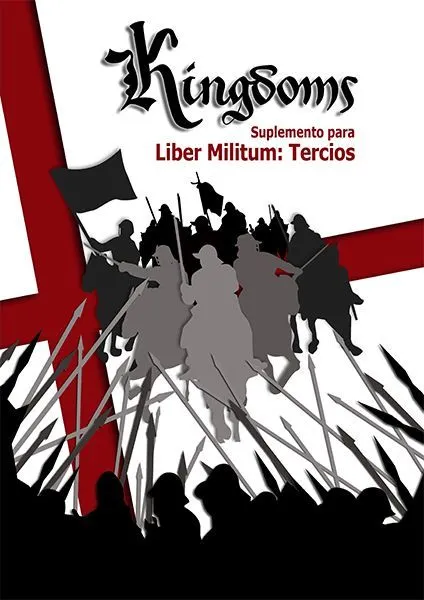
Kingdoms: Expansion for Liber Militum – Tercio
- 2–6 players
- 120 min
- 2015
2015
Rules assistance for Liber Militum: Tercios
Plain-language explanations of turns, card effects and disputed situations, with official source references and saved question history.
For 2 players
What would you like to know?
Answers come from the official rulebook, with the page to check.
Liber Militum: Tercios is a board game released in 2015 for 2–6 players, 90–180 minutes per game, and ages 12 and up. Its main mechanics are Dice Rolling, Simulation, and Campaign / Battle Card Driven.


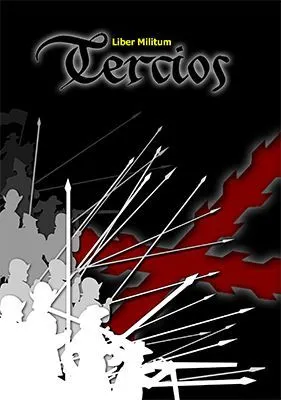
From the publisher: Liber Militum Tercios is a new historical wargame that will allow us to recreate the great battles of the Thirty Years’ War. The game was developed by El Kraken Released, team, and is edited by Design & Edits WxW Co. There are 2 different versions of Tercios: Liber Militum: The full version Brevis Editio: Short Version, synthesized and free. Portada-Brevis-EditioTercios is not intended for any specific miniatures scale. All rule design effort was put on allowing the player to adapt the game to any different model basing and scales.. However, we do recommend certain model sizes for units on the rules, but others could be used without compromising playability. Geometry dependence has been avoided as much as possible. The number of miniatures that is necessary to represent a unit is subject to the sole discretion of the Army Collector, it is up to everyone to decide how many models will be enough to identify our troops. Even so, we suggest certain number in the rules, but just for guidance. Tercios is a large scale wargame, since each unit in the game represents huge formations that often comprised more than a thousand men. This is why it is a game with more abstraction than others, because at this scale of war reenactment, individual soldier actions has no consecuences, it matters as a whole.. The gameplay is based upon orders execution, that are deployed at a planning phase. Command cards are used (there are 5 different cards), that are placed face down next to our units, and prepare our troops for different tasks: to run, to shoot, charge the enemy or resist stoically. Units activation is alternated between players. The very command cards allow us to keep track of which units have been activated. The fact that the turns are not complete for a single player, but alternated between the two players, make the game a fluid dynamic experience. Once all the command cards have been executed, the turn will be finished and we will be ready to start a new one. Cards also allow us to react, under certain circumstances, to enemy activity, what makes commands a complex tactical resource.. Deepening in the mastering of good decisions during the planning phase and managing the unexpected is a challenge for the player; reflective strategic fund is stimulated, what makes the experience very intuitive and agile.. Not knowing what cards your opponent has set and choosing the order of activation for your units, makes a very realistic simulation of the uncertainties of a real battle and delivers an increasing thrill, as the turns pass by.. As usual in wargames, actions are resolved by rolling dices. Tercios proposes a very simple system using six-sided dice; no need to do complex calculations, or having to learn a host of special rules. For a player with minimum experience (or without) it will be a matter of minutes to become familiar with the system.
Liber Militum: Tercios supports 2–6 players according to the catalogue. This range comes from the publisher’s listed player count, so the game can be set up for any group size within it. Some setups, rules and scoring details may still vary by player count, so check your edition’s rulebook for the exact configuration.
The listed playing time for Liber Militum: Tercios is 90–180 minutes. This is the publisher’s estimate for a full game. The actual duration depends on the group, the player count and familiarity with the rules: first sessions usually run longer, while experienced groups often finish faster. Setup and teaching time are not included in this estimate.
The catalogue lists Liber Militum: Tercios for ages 12 and up. This is the publisher’s recommendation and reflects reading demands, rule complexity and small components rather than theme alone. Younger players can often join with help from an adult, so check the age guidance on your edition and consider your group’s experience with board games.
Liber Militum: Tercios has a complexity rating of 2.5 out of 5 from BoardGameGeek players, which makes it a medium-light game. The rating reflects how much rules knowledge, planning and decision-making a typical game demands. Expect a longer first teach for heavier games, and use a preparation guide before game night.
Liber Militum: Tercios belongs to these categories: Wargame, Miniatures, and Renaissance. Its main mechanics are Dice Rolling, Simulation, and Campaign / Battle Card Driven. Categories describe the theme and setting of a game, while mechanics describe what players actually do on their turns. Each mechanic links to a catalogue hub with similar games, which helps when you want something comparable.
The catalogue lists Liber Militum: Tercios as a base game. It can be played on its own with the components in the box and does not require any other title. Expansions, if any exist, add new content or rules on top of it and are listed separately in the catalogue with a link back to this base game.