

- BGG rank
- BGG #13,583
- BGG rating
- 6.2
Hands
- 3–8 players
- 20 min
- Complexity 1.3/5
- 2015
2010
Rules assistance for Lino
Plain-language explanations of turns, card effects and disputed situations, with official source references and saved question history.
For 2 players
What would you like to know?
Answers come from the official rulebook, with the page to check.
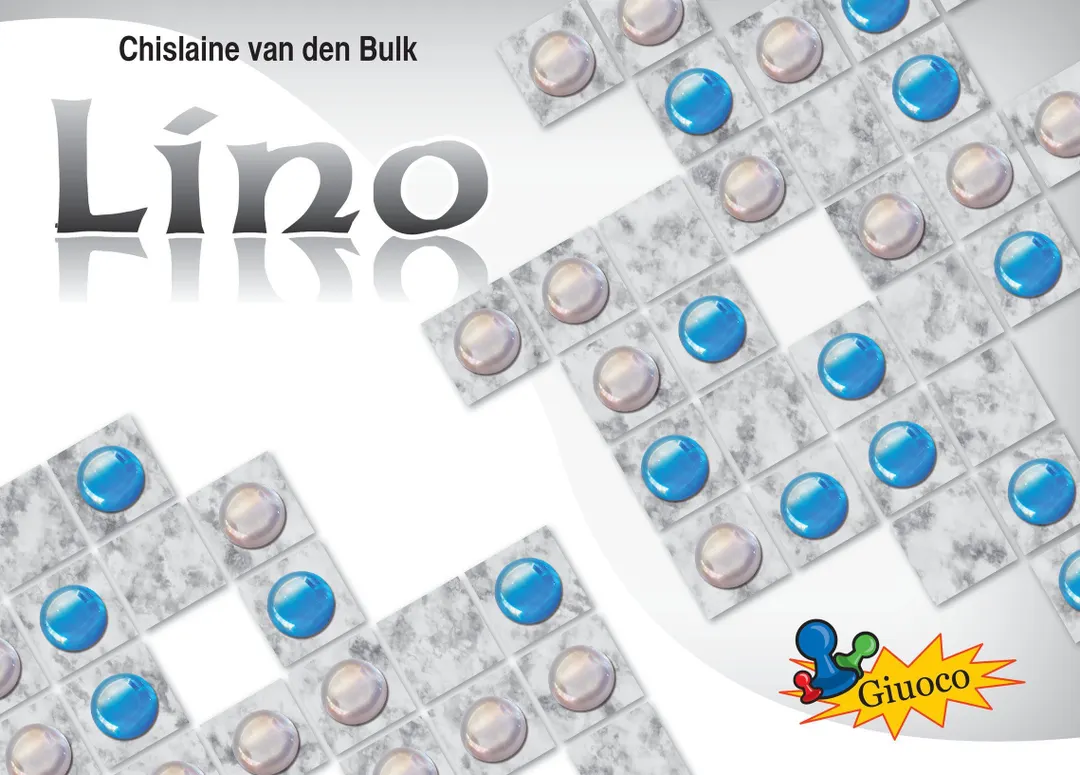
Lino is a board game released in 2010 for 2 players, 20 minutes per game, and ages 8 and up. It was designed by Chislaine van den Bulk and its main mechanics are Pattern Building.

Each player in turn places a stone on the playing field on any free tile of their choice. Players can gain points during the game by ending a row and at the end of the game for each row of 4 or more stones of their own colour. The player with the most points wins. There is also a game variant with bonus points for the experienced player. Ihr legt abwechselnd einen Spielstein auf ein freies Feld des Spielfeldes. Immer wenn ihr dadurch eine Reihe komplettiert, bekommt ihr sofort Siegpunkte. Am Spielende erhaltet ihr zusätzliche Siegpunkte, für jede Reihe in der 4 oder mehr eigene Spielsteine auf direkt benachbarten Feldern liegen. Für erfahrene Spieler gibt es auch noch eine Variante mit Bonuspunkten. Sur le plateau de jeu variable, les joueurs posent à tour de rôle une pierre sur une case libre. Les joueurs gagnent des points pendant le jeu lorsqu’ils ferment une rangée et à la fin du jeu ils reçoivent des points lorsqu’ils ont aligné 4 pierres ou plus de leur couleur. Celui qui obtient le plus de points remporte la partie. Pour les joueurs avancés, il y a aussi un jeu avec des points bonus. Op het variabele speelveld leggen de spelers om de beurt een steen op een vrij legveld. Zij verdienen tijdens het spel punten voor het afsluiten van een rij en aan het eind van het spel punten voor 4 of meer stenen op een rij van de eigen kleur. Wie de meeste punten haalt, wint het spel. Voor de liefhebbers is er ook nog een spel met bonuspunten.
Lino supports 2 players according to the catalogue. This is the publisher’s listed player count, so the game is designed for exactly that number of participants. Variants for other group sizes, if any, are described in the rulebook of your edition, so check it before setting up a different configuration.
The listed playing time for Lino is 20 minutes. This is the publisher’s estimate for a full game. The actual duration depends on the group, the player count and familiarity with the rules: first sessions usually run longer, while experienced groups often finish faster. Setup and teaching time are not included in this estimate.
The catalogue lists Lino for ages 8 and up. This is the publisher’s recommendation and reflects reading demands, rule complexity and small components rather than theme alone. Younger players can often join with help from an adult, so check the age guidance on your edition and consider your group’s experience with board games.
Lino has a complexity rating of 2.4 out of 5 from BoardGameGeek players, which makes it a medium-light game. The rating reflects how much rules knowledge, planning and decision-making a typical game demands. Expect a longer first teach for heavier games, and use a preparation guide before game night.
Lino belongs to these categories: Abstract Strategy. Its main mechanics are Pattern Building. Categories describe the theme and setting of a game, while mechanics describe what players actually do on their turns. Each mechanic links to a catalogue hub with similar games, which helps when you want something comparable.
The credited designers of Lino are: Chislaine van den Bulk. These credits come from the published game data and name the people responsible for the game’s design, not its illustrators or publishers. Designer pages on MeepleRules collect other titles by the same designers, which helps when you enjoy a game and want to find similar ones.
The catalogue lists Lino as a base game. It can be played on its own with the components in the box and does not require any other title. Expansions, if any exist, add new content or rules on top of it and are listed separately in the catalogue with a link back to this base game.