
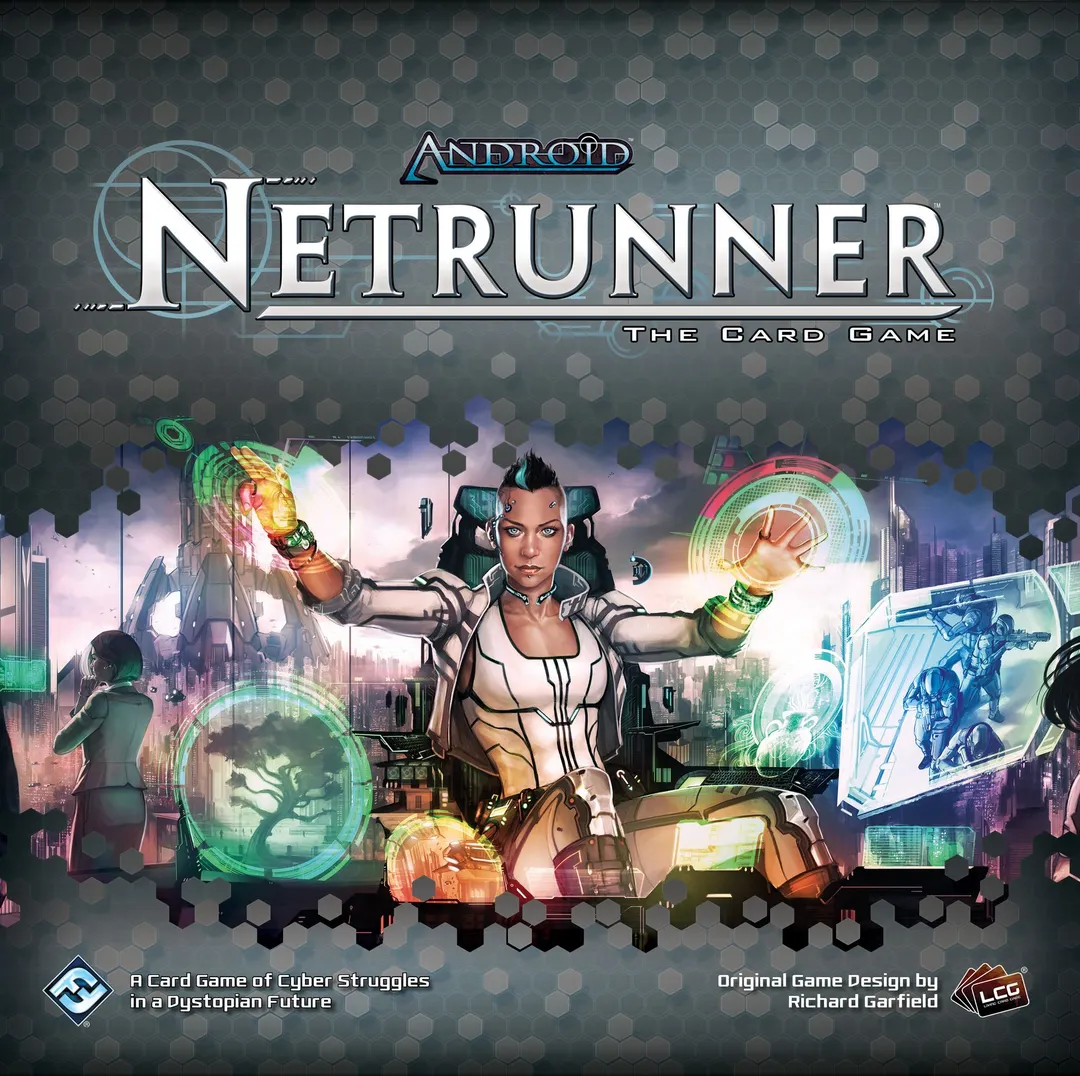
- BGG rank
- BGG #85
- BGG rating
- 7.9
Android: Netrunner
- 2 players
- 45 min
- Complexity 3.4/5
- 2012

Rules assistance for Netrunner: Proteus
Plain-language explanations of turns, card effects and disputed situations, with official source references and saved question history.
What would you like to know?
Answers come from the official rulebook, with the page to check.
Netrunner: Proteus is an expansion for Netrunner released in 1996 for 2 players, 45 minutes per game, and ages 10 and up. It was designed by Richard Garfield and its main mechanics are Dice Rolling and Action Points.




PROTEUS, the first expansion for Netrunner, also referred to as v2.1, was released 5 months after the initial release of Netrunner. It added a few interesting mechanics to diversify game play: Runners and some Black Ops could now cause the Corp to accumulate so-called "Bad Publicity" counters. These counters worked like agenda points in that they could not be removed once you had one - but unlike agenda points, having 7 of them would cause the Corp to lose the game. Runners were given a new Resource type that now gave Runners an edge that only the Corp had: "Hidden Resources" would enter the game face down and were not visible to the Corp until their ability was used; typically, this involved trashing the Resource. Some things were also upgraded for the Corp. Many ICE cards featured abilities that allowed the ICE to become more powerful as things developed in the game - and with "World Domination", the Corp could now win the game with a single Agenda. Proteus cards were sold in 15-card Boosters and are now rarities, sought after by many collectors due to its limited print volume. Official Publisher Synopsis from the back of the box: For years the data fort had cycled idle, a derelict from a corporate war. When Max Forward lifted its address, he expected a cakewalk: the fort was old, unmonitored. But then it's not every day that a Runner faces a revolutionary security experiment... Discover the product of the new tech Forward brought to light: ice capable of transmuting into completely different countermeasures; smart icebreakers that can rewrite their own code. Proteus. Whether you're Runner or Corp, expect a few changes. Blurb taken from: http://www.netrunneronline.com/set/proteus/
Netrunner: Proteus supports 2 players according to the catalogue. This is the publisher’s listed player count, so the game is designed for exactly that number of participants. Variants for other group sizes, if any, are described in the rulebook of your edition, so check it before setting up a different configuration.
The listed playing time for Netrunner: Proteus is 45 minutes. This is the publisher’s estimate for a full game. The actual duration depends on the group, the player count and familiarity with the rules: first sessions usually run longer, while experienced groups often finish faster. Setup and teaching time are not included in this estimate.
The catalogue lists Netrunner: Proteus for ages 10 and up. This is the publisher’s recommendation and reflects reading demands, rule complexity and small components rather than theme alone. Younger players can often join with help from an adult, so check the age guidance on your edition and consider your group’s experience with board games.
Netrunner: Proteus has a complexity rating of 3.7 out of 5 from BoardGameGeek players, which makes it a medium-weight game. The rating reflects how much rules knowledge, planning and decision-making a typical game demands. Expect a longer first teach for heavier games, and use a preparation guide before game night.
Netrunner: Proteus belongs to these categories: Card Game, Science Fiction, and Collectible Components. Its main mechanics are Dice Rolling and Action Points. Categories describe the theme and setting of a game, while mechanics describe what players actually do on their turns. Each mechanic links to a catalogue hub with similar games, which helps when you want something comparable.
The credited designers of Netrunner: Proteus are: Richard Garfield. These credits come from the published game data and name the people responsible for the game’s design, not its illustrators or publishers. Designer pages on MeepleRules collect other titles by the same designers, which helps when you enjoy a game and want to find similar ones.
The catalogue lists Netrunner: Proteus as an expansion for Netrunner. Expansions add new content, rules or scenarios to the base game and usually cannot be played on their own, so you need Netrunner to use it. Check that your edition of Netrunner is compatible, as some expansions were revised between editions.