
- BGG rank
- BGG #1,257
- BGG rating
- 7.1
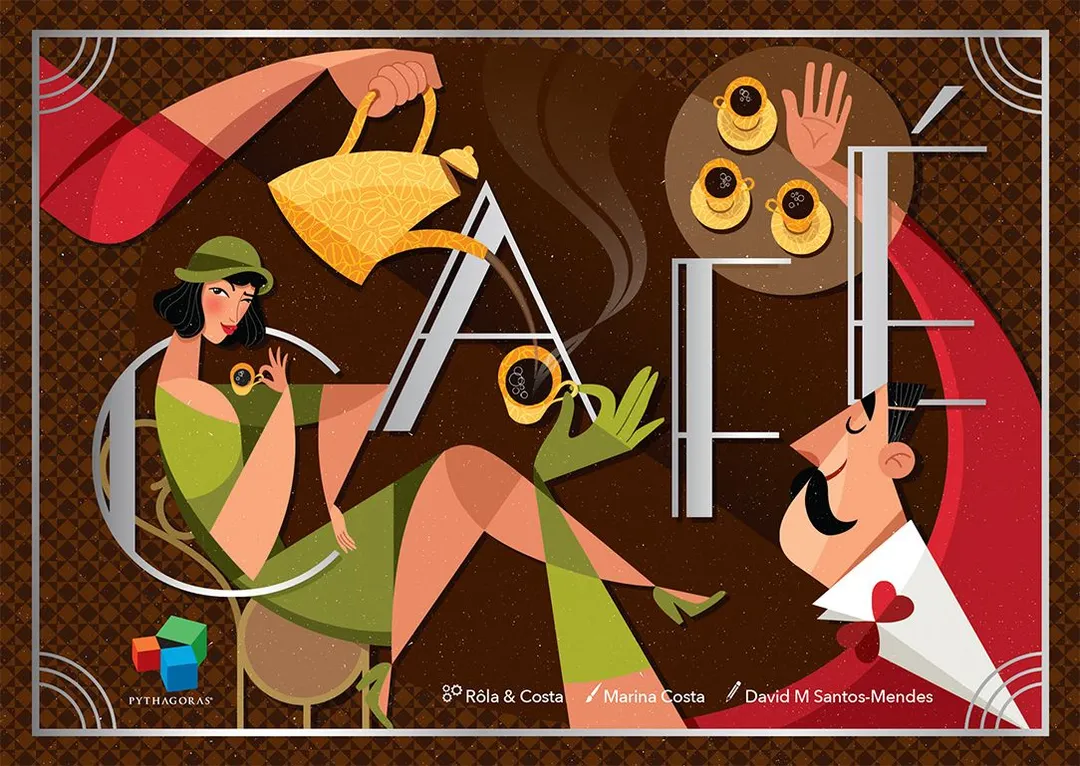
Café
- 1–4 players
- 20–45 min
- Complexity 2.1/5
- 2020
2025
Rules assistance for Oliva
Plain-language explanations of turns, card effects and disputed situations, with official source references and saved question history.
For 1 player
What would you like to know?
Answers come from the official rulebook, with the page to check.
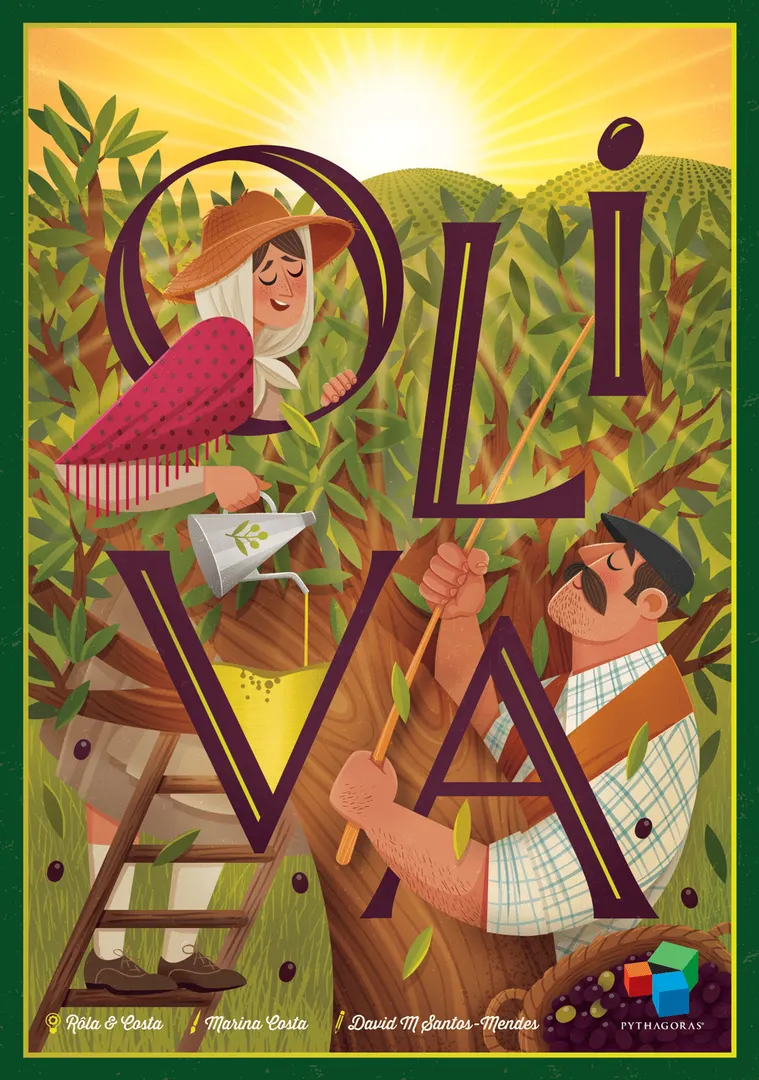
Oliva is a board game released in 2025 for 1–4 players, 25–45 minutes per game, and ages 10 and up. It was designed by Rôla and Costa and its main mechanics are Deck, Bag, and Pool Building.


In Oliva, you take on the role of a farmer competing to become the most successful olive oil producer in the region. By managing your farm, you harvest olives, press them into olive oil, and sell your products to various markets worldwide. During your turn, you select and reveal action cards to perform their corresponding actions. Your actions become more powerful based on the cards visible on all players' boards. Oliva is played over a certain number of rounds based on the player count. After the final round is completed, the farmer with the most victory points is the winner. The significance of olive oil dates back to Visigothic times, when laws protected olive trees. Arabic influence later expanded olive cultivation, and their word al-zait evolved into the modern terms Azeite in Portuguese and Aceite in Spanish. Portugal's olive oil industry became a major export powerhouse, gaining recognition at the 1889 Paris Exposition. In the 20th century, Portugal began industrializing its olive cultivation methods. The 1950s marked a golden era, with record expansion of olive groves and unprecedented yields, despite the persistence of small-scale local production. Export markets flourished in Asia, the USA, and European markets with Portuguese communities, alongside colonial trade. As industrialization progressed, farmers turned to more profitable crops such as potatoes and wine grapes, leading to a decline in olive cultivation until the early 21st century. Today, the Mediterranean region maintains its reputation for excellence, producing 95% of the world's olive oil. Oliva captures 1950s and 1960s Portuguese olive oil production, featuring water-powered, large stone mills and hand operated presses. The game pays tribute to farmers' expertise and dedication, showcasing traditional methods using sisal mats, stone-carved basins, and furnace-heated water to extract the precious liquid. In North Africa, particularly Morocco and Tunisia, traditional olive oil production excelled during the 1950s, with many small scale producers using age-old pressing techniques passed down through generations. These regions were known for their robust, peppery oils produced from indigenous olive varieties that were well-adapted to the arid Mediterranean climate. Oliva depicts both traditional and modernizing production methods, highlighting the productivity of small olive groves that may still be admired today on Portugal's hillsides. The game reflects Mediterranean olive oil production's scope and quality, as Spain nears Italy's production levels, followed closely by Greece and Turkey.
Oliva supports 1–4 players according to the catalogue. This range comes from the publisher’s listed player count, so the game can be set up for any group size within it. Some setups, rules and scoring details may still vary by player count, so check your edition’s rulebook for the exact configuration.
The listed playing time for Oliva is 25–45 minutes. This is the publisher’s estimate for a full game. The actual duration depends on the group, the player count and familiarity with the rules: first sessions usually run longer, while experienced groups often finish faster. Setup and teaching time are not included in this estimate.
The catalogue lists Oliva for ages 10 and up. This is the publisher’s recommendation and reflects reading demands, rule complexity and small components rather than theme alone. Younger players can often join with help from an adult, so check the age guidance on your edition and consider your group’s experience with board games.
Oliva has a complexity rating of 2.3 out of 5 from BoardGameGeek players, which makes it a medium-light game. The rating reflects how much rules knowledge, planning and decision-making a typical game demands. Expect a longer first teach for heavier games, and use a preparation guide before game night.
Oliva belongs to these categories: Farming. Its main mechanics are Deck, Bag, and Pool Building. Categories describe the theme and setting of a game, while mechanics describe what players actually do on their turns. Each mechanic links to a catalogue hub with similar games, which helps when you want something comparable.
The credited designers of Oliva are: Rôla and Costa. These credits come from the published game data and name the people responsible for the game’s design, not its illustrators or publishers. Designer pages on MeepleRules collect other titles by the same designers, which helps when you enjoy a game and want to find similar ones.
The catalogue lists Oliva as a base game. It can be played on its own with the components in the box and does not require any other title. Expansions, if any exist, add new content or rules on top of it and are listed separately in the catalogue with a link back to this base game.