
- BGG rank
- BGG #21,882
- BGG rating
- 6.6
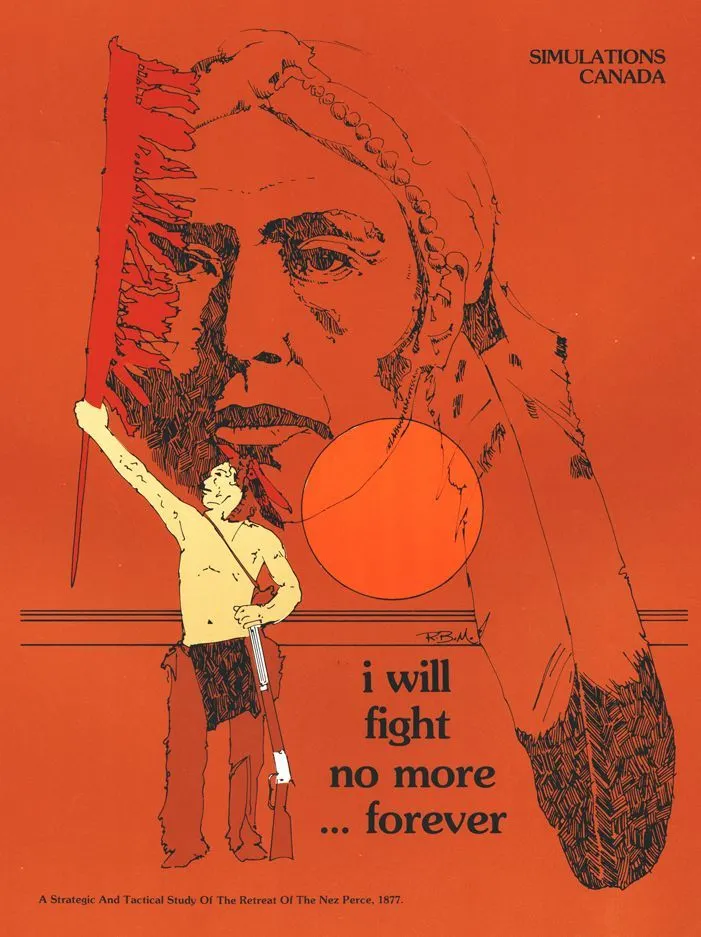
I Will Fight No More... Forever
- 2 players
- 180 min
- Complexity 2.7/5
- 1979

2019
Rules assistance for Once We Moved Like the Wind: The Apache Wars, 1861-1886
Plain-language explanations of turns, card effects and disputed situations, with official source references and saved question history.
For 2 players
What would you like to know?
Answers come from the official rulebook, with the page to check.
Once We Moved Like the Wind: The Apache Wars, 1861-1886 is a board game released in 2019 for 2 players. It was designed by Stephen Newberg and its main mechanics are Area Movement, Dice Rolling, and Simulation.



Their names are virtually synonymous with the long conflicts with the native indigenes of the American West. Cochise, Victoria, Chato, Geronimo. These great war band leaders all come from the various tribes of the Apache, and the Apache Wars dominated the attention of the US government in its westward development for the critical 25 years from the American Civil War to the final capitulation of the natives of the area. What the Game Looks Like: Once We Moved Like the Wind covers these central conflicts of the American South West. The game is played as a series of turns, each of which follows a sequence of play that begins with determining how bad a provocation results in conflict for the turn. The provocation level determines the forces each player will have for the turn and their general placement on the map. Next the Apache player moves the Apache forces and then the Army Player moves the US and Mexican forces. Combat may then occur between opposing player forces that share a location. After any combat is resolved, victory points are counted up and the player with the most for the turn earns one increase in victory level on the Victory Track. Play then repeats for the next turn to the end of the game when the player with the higher level on the Victory track is the winner. Central to the game is that the playing pieces are all wooden blocks with the information about each particular piece only on one side and hence hidden during play from the opposing player until action occurs which must reveal particular blocks. And not all of these blocks are actually opposing forces. For the Apache player in particular, many playing pieces each turn will represent rumors of Apache actions and forces which the Army player must chase down to determine if they are real or false. Similarly, for the Apache player, not knowing which Army pieces represent which forces means not knowing if an opposing group is small enough to attack and win, or is in reality a force big enough to hand out a devastating defeat. Once We Moved Like the Wind is played on a 22”x 22” mounted game board with a scale of about 14 kilometers per centimeter or 22 miles per inch. The terrain represented is divided by a number of features. Overall the area is divided into 4 large Territories: the Arizona Territory & the New Mexico Territory in the US and the Sonora Territory & the Chihuahua Territory in Mexico. Dividing up all of the Territories, and often crossing their borders, are the Areas. These represent sections of land of differing types between which the players move their forces. Product Information: • Complexity: 3 out of 10 • Solitaire Suitability: 5 out of 10 • Time Scale: 3-4 years per turn • Map Scale: Areas covering parts of Arizona, New Mexico, Texas, Sonora and Chihuahua • Unit Scale: A wooden block represents an Army Troop or Apache War Band • Average Time to Play: <2 Hours —description from the publisher
Once We Moved Like the Wind: The Apache Wars, 1861-1886 supports 2 players according to the catalogue. This is the publisher’s listed player count, so the game is designed for exactly that number of participants. Variants for other group sizes, if any, are described in the rulebook of your edition, so check it before setting up a different configuration.
Once We Moved Like the Wind: The Apache Wars, 1861-1886 has a complexity rating of 2.0 out of 5 from BoardGameGeek players, which makes it a medium-light game. The rating reflects how much rules knowledge, planning and decision-making a typical game demands. Expect a longer first teach for heavier games, and use a preparation guide before game night.
Once We Moved Like the Wind: The Apache Wars, 1861-1886 belongs to these categories: Wargame, American West, and Post-Napoleonic. Its main mechanics are Area Movement, Dice Rolling, and Simulation. Categories describe the theme and setting of a game, while mechanics describe what players actually do on their turns. Each mechanic links to a catalogue hub with similar games, which helps when you want something comparable.
The credited designers of Once We Moved Like the Wind: The Apache Wars, 1861-1886 are: Stephen Newberg. These credits come from the published game data and name the people responsible for the game’s design, not its illustrators or publishers. Designer pages on MeepleRules collect other titles by the same designers, which helps when you enjoy a game and want to find similar ones.
The catalogue lists Once We Moved Like the Wind: The Apache Wars, 1861-1886 as a base game. It can be played on its own with the components in the box and does not require any other title. Expansions, if any exist, add new content or rules on top of it and are listed separately in the catalogue with a link back to this base game.