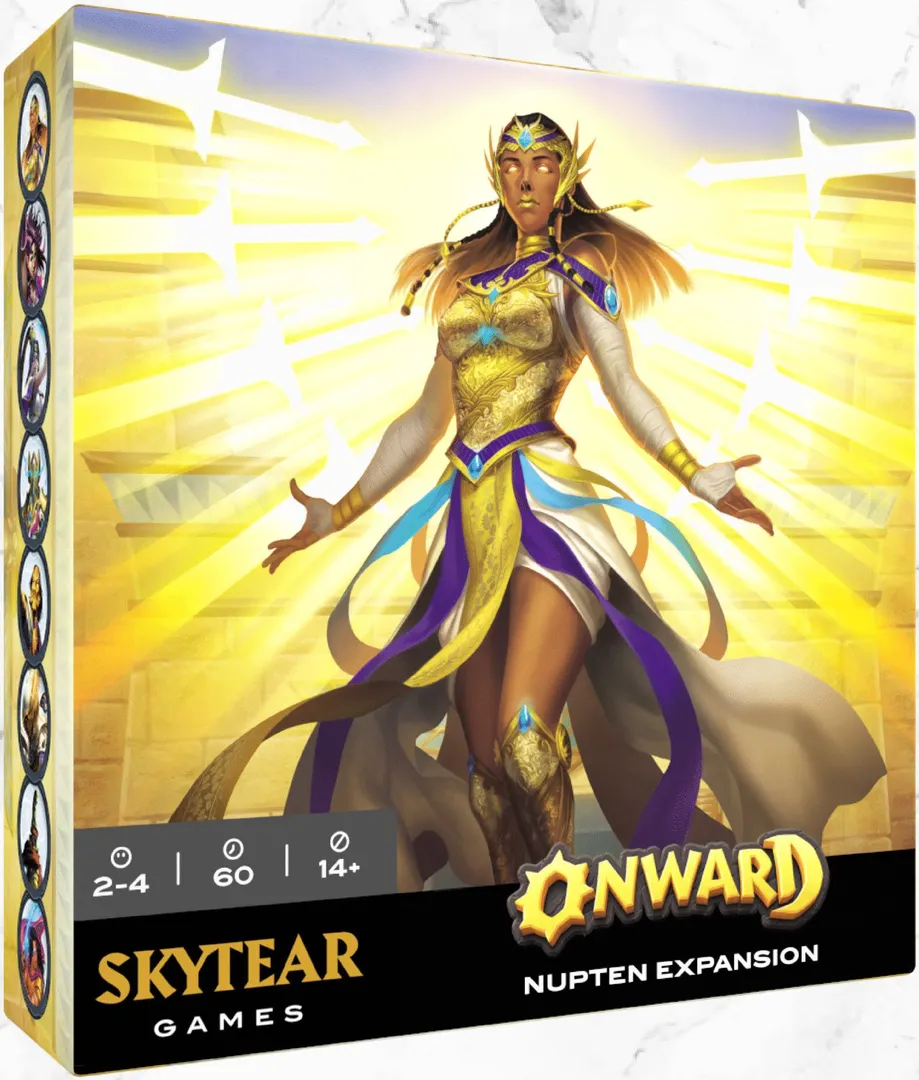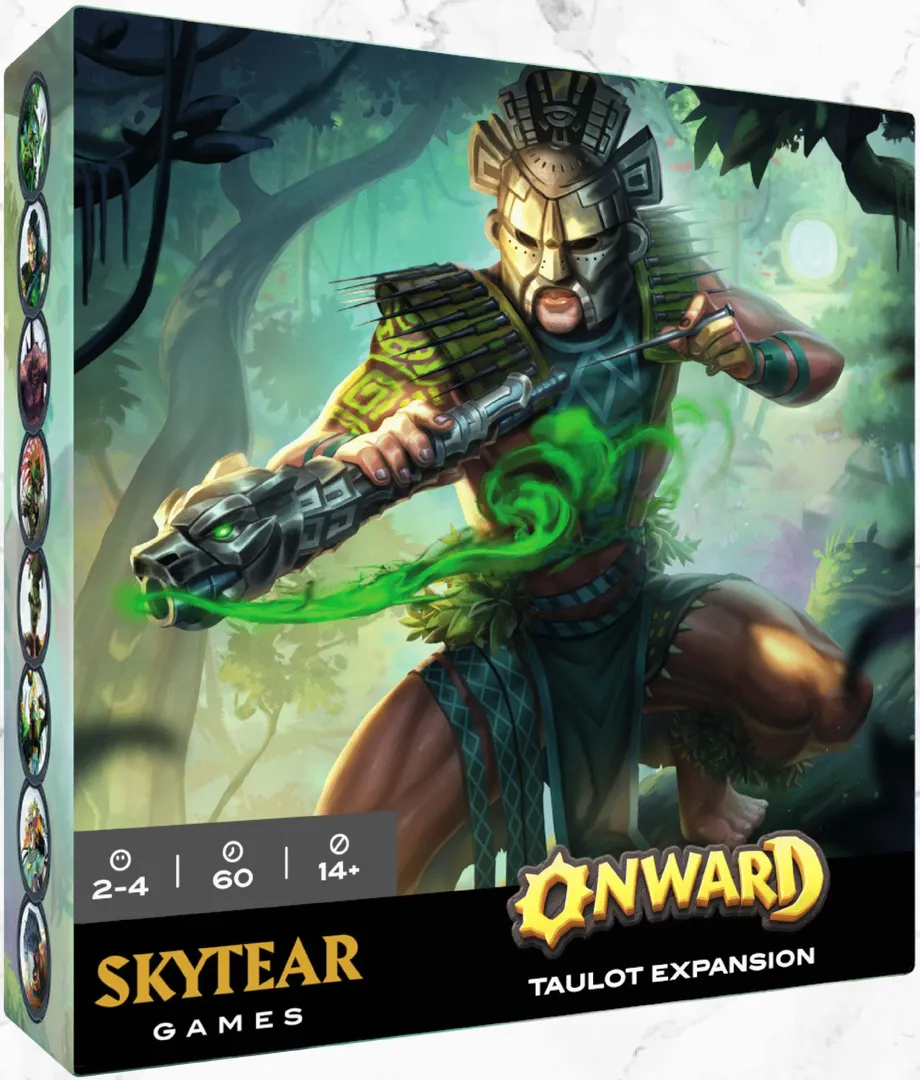
- BGG rating
- 8.4
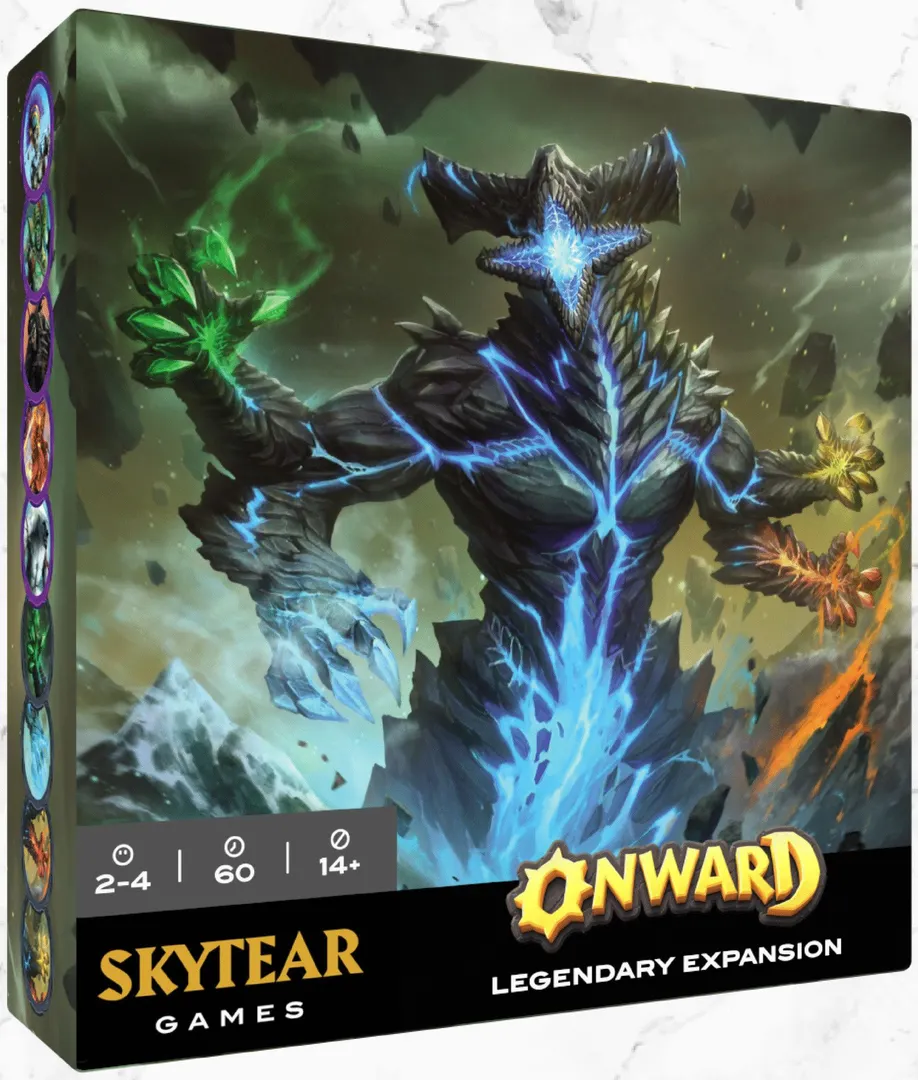
Onward: Legendary Expansion
2–4 players60 min2025
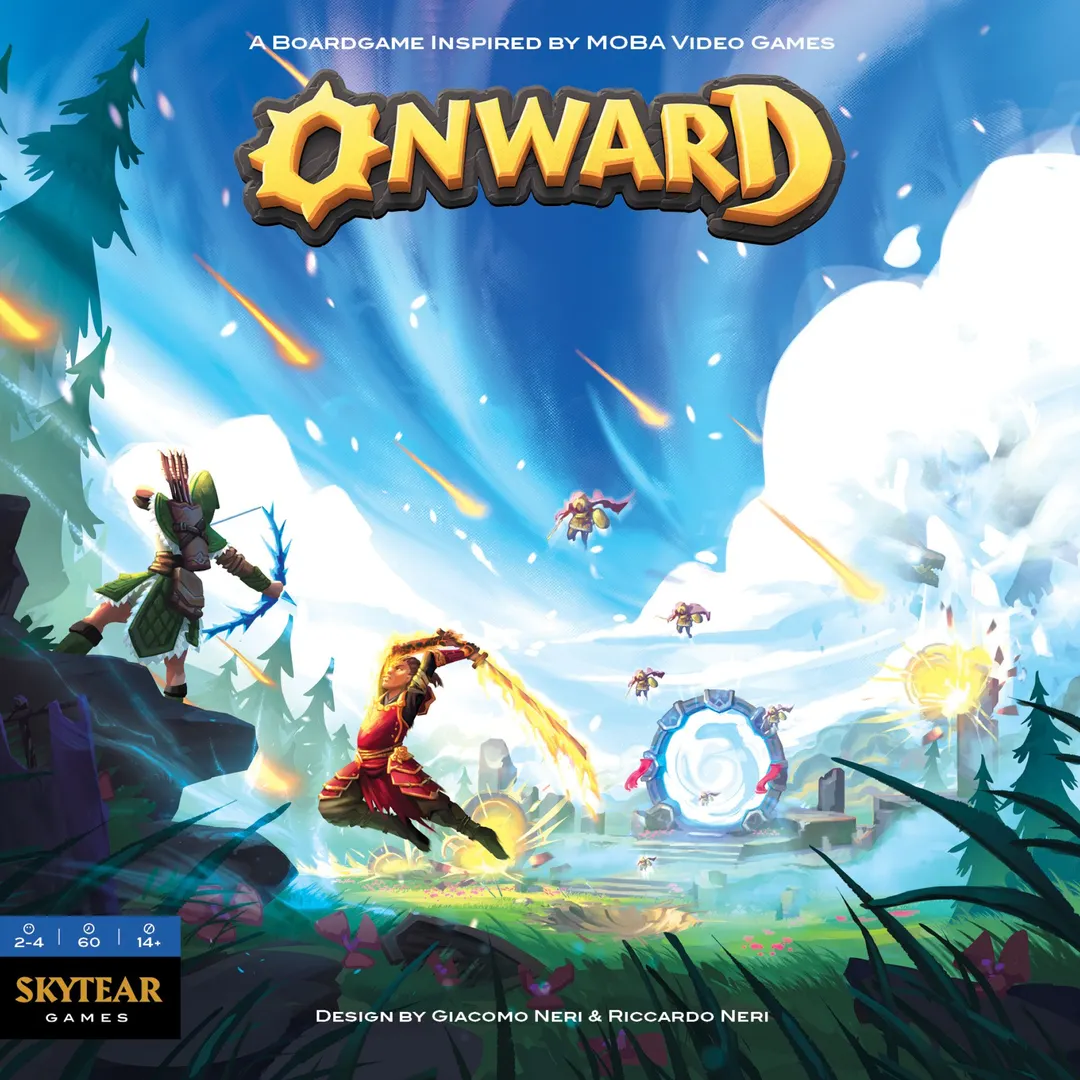
2025
Rules assistance for Onward
Plain-language explanations of turns, card effects and disputed situations, with official source references and saved question history.
What would you like to know?
Answers come from the official rulebook, with the page to check.
Destroy the enemy Nexus to win; if neither Nexus falls by Day 5, the team with more Nexus HP wins. If neither Nexus falls by Day 5 and Nexus HP is tied, the team with priority wins.
About 12 min · 8 steps
Step 1 of 8
The higher-initiative hero acts first; on a tie, the priority team acts first and priority changes.
No. Ranged heroes attack only into adjacent areas; melee heroes attack only in their own area.
Yes. Any friendly hero in play may cast during your turn, including an exhausted hero.
It leaves play, misses its next turn, and later returns through the refresh cycle. The enemy hero that defeated it levels up.
Only if a friendly hero is in that jungle to spot it.
No. Any number of fighters may share an area; enemy towers can block adjacency across their boundary.
Onward is a board game released in 2025 for 2–4 players, 45–90 minutes per game, and ages 14 and up. It was designed by Riccardo Neri and Giacomo Neri and its main mechanics are Area Majority / Influence, Action Points, and Multi-Use Cards. MeepleRules offers a rules assistant for Onward that explains turns, card effects and disputed situations in plain language.

1–3 players30 min2023

1–3 players20–40 min2024
1–4 players60–90 min2026

1–4 players60–120 min2017
1–4 players30–120 min2020
2–5 players45–60 min2023
1–5 players120 min2012
1–6 players60 min2021
1–6 players60 min2022
1–4 players30–90 min2021

1–4 players60–90 min2021
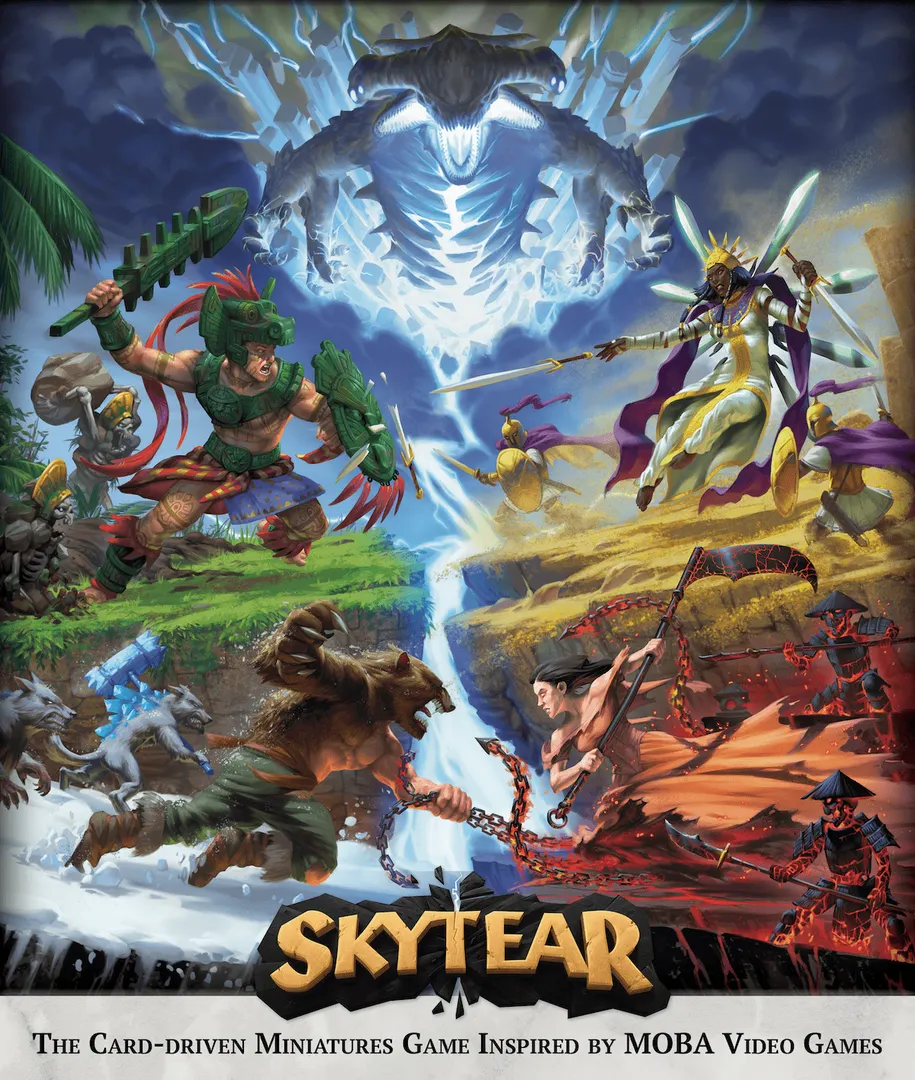
Onward is the spiritual successor to Skytear, the competitive card-driven game inspired by MOBA video games such as League of Legends or DOTA2. Players split into two teams, with each player controlling two or more champions. The goal of the game is to destroy the enemy nexus that is a portal in the enemy base. The game takes 45 to 90 minutes depending on the map that can have two or three lanes. Lanes are corridors connecting the two nexuses and are populated with towers and minions from both teams. Towers are defense structures preventing enemy champions and minions from rushing into the nexus. Minions are weak units that grow in strength as they increase in number. They always try to advance toward the enemy nexus and attack any enemy in their way. Jungles are dangerous areas between lanes where champions can venture to defeat monsters to gain gold and buy powerful items. The river is a central area where your champions can go fight the colossal outsider... or die trying! —description from the publisher
Measured on: Skytear Games English edition (2025)
Use the rules assistant for Onward to describe a turn, card effect or disputed situation. Get a plain-language explanation with official source references, then return to the question in your saved history. Select your edition when available so the sources match your game.
Ask about the rulesOnward supports 2–4 players according to the catalogue. This range comes from the publisher’s listed player count, so the game can be set up for any group size within it. Some setups, rules and scoring details may still vary by player count, so check your edition’s rulebook for the exact configuration.
The listed playing time for Onward is 45–90 minutes. This is the publisher’s estimate for a full game. The actual duration depends on the group, the player count and familiarity with the rules: first sessions usually run longer, while experienced groups often finish faster. Setup and teaching time are not included in this estimate.
The catalogue lists Onward for ages 14 and up. This is the publisher’s recommendation and reflects reading demands, rule complexity and small components rather than theme alone. Younger players can often join with help from an adult, so check the age guidance on your edition and consider your group’s experience with board games.
Onward has a complexity rating of 3.1 out of 5 from BoardGameGeek players, which makes it a medium-weight game. The rating reflects how much rules knowledge, planning and decision-making a typical game demands. Expect a longer first teach for heavier games, and use a preparation guide before game night.
Onward belongs to these categories: Fighting and Miniatures. Its main mechanics are Area Majority / Influence, Action Points, and Multi-Use Cards. Categories describe the theme and setting of a game, while mechanics describe what players actually do on their turns. Each mechanic links to a catalogue hub with similar games, which helps when you want something comparable.
The credited designers of Onward are: Riccardo Neri and Giacomo Neri. These credits come from the published game data and name the people responsible for the game’s design, not its illustrators or publishers. Designer pages on MeepleRules collect other titles by the same designers, which helps when you enjoy a game and want to find similar ones.
The catalogue lists Onward as a base game. It can be played on its own with the components in the box and does not require any other title. Expansions, if any exist, add new content or rules on top of it and are listed separately in the catalogue with a link back to this base game.