
- BGG rank
- BGG #843
- BGG rating
- 7.0
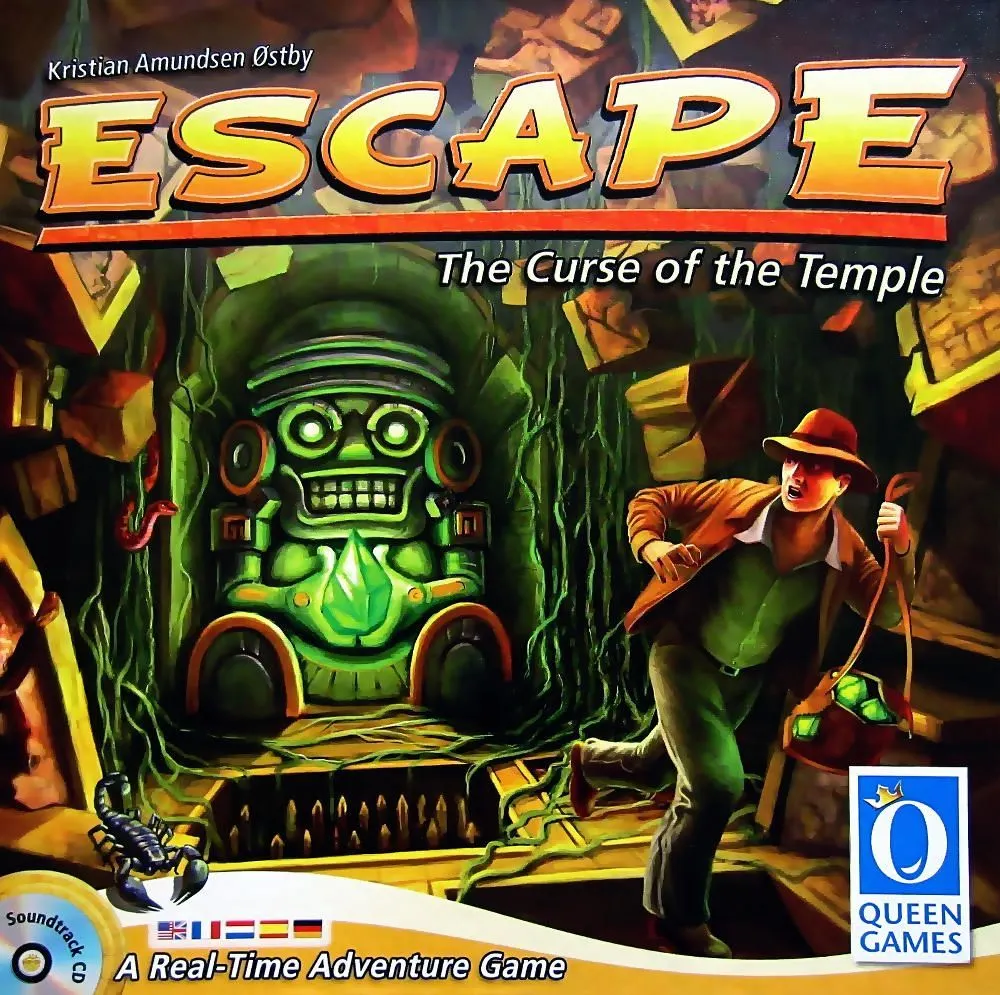
Escape: The Curse of the Temple
- 1–5 players
- 10 min
- Complexity 1.5/5
- 2012
2008
Rules assistance for Paleo
Plain-language explanations of turns, card effects and disputed situations, with official source references and saved question history.
What would you like to know?
Answers come from the official rulebook, with the page to check.
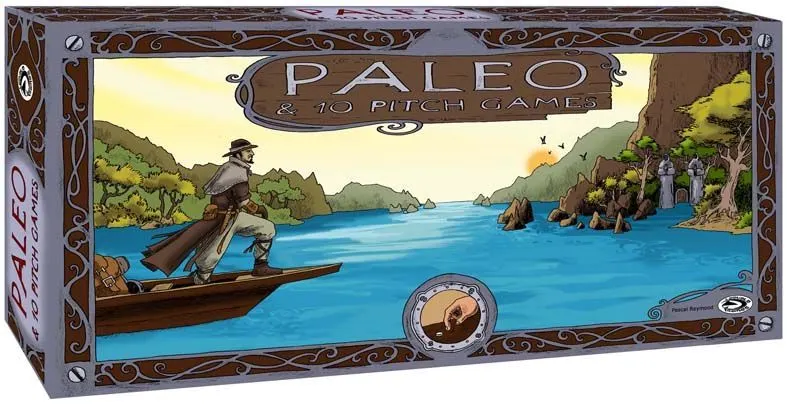
Paleo is a board game released in 2008 for 2–4 players and 30 minutes per game. It was designed by Pascal Reymond.







A strategic game of adventure and dexterity The fabulous city of Paleo was swallowed up by the oceans 5,000 years ago and fell into oblivion. A parchment manuscript has just been discovered, revealing the location of its gates. The city’s immense riches described in the manuscript have inspired much desire and greed. As the head of a team of explorers and mercenaries, you have set up camp in the Paleo Archipelago. But other teams have also arrived at the scene. Protected by your mercenaries, your explorers are ready to launch a search for the keys that will give access to the city. It is up to you to take advantage of the archipelago’s many reefs in order to stay ahead of your competitors. --- In the basic two-player version of Paleo, players set up the 65 x 65 cm board with four central reefs, two sanctuaries for each player in the corners of the board, and five supplemental reefs placed according to various rules. Each player controls a team of five explorers and three mercenaries; you move these pieces by flicking them with your finger as in Crokinole. If your mercenary hits an opponent’s piece, that piece is removed from the board; remove all of the opponent’s pieces, and you win the round and score one point. The explorers are used to enter the opponent’s sanctuaries and recover two keys that then allow the player to enter the gate of Paleo in the center of the board. (Any of your pieces that enters a sanctuary can be exchanged for another piece already captured by the opponent.) This victory is worth two points, and a complete game requires a player to earn four points to win. Rules are included to accommodate three or four players, in addition to rules for ten other games for 2-4 players such as hockey, a kayak race, and Capture the King.
Paleo supports 2–4 players according to the catalogue. This range comes from the publisher’s listed player count, so the game can be set up for any group size within it. Some setups, rules and scoring details may still vary by player count, so check your edition’s rulebook for the exact configuration.
The listed playing time for Paleo is 30 minutes. This is the publisher’s estimate for a full game. The actual duration depends on the group, the player count and familiarity with the rules: first sessions usually run longer, while experienced groups often finish faster. Setup and teaching time are not included in this estimate.
Paleo has a complexity rating of 1.0 out of 5 from BoardGameGeek players, which makes it a light game. The rating reflects how much rules knowledge, planning and decision-making a typical game demands. Expect a longer first teach for heavier games, and use a preparation guide before game night.
Paleo belongs to these categories: Action / Dexterity and Adventure. Categories describe the theme, setting and style of a game rather than its rules. Filter the catalogue by the same category to find similar games when you enjoyed Paleo and want something comparable for your next game night.
The credited designers of Paleo are: Pascal Reymond. These credits come from the published game data and name the people responsible for the game’s design, not its illustrators or publishers. Designer pages on MeepleRules collect other titles by the same designers, which helps when you enjoy a game and want to find similar ones.
The catalogue lists Paleo as a base game. It can be played on its own with the components in the box and does not require any other title. Expansions, if any exist, add new content or rules on top of it and are listed separately in the catalogue with a link back to this base game.