- BGG rating
- 6.9
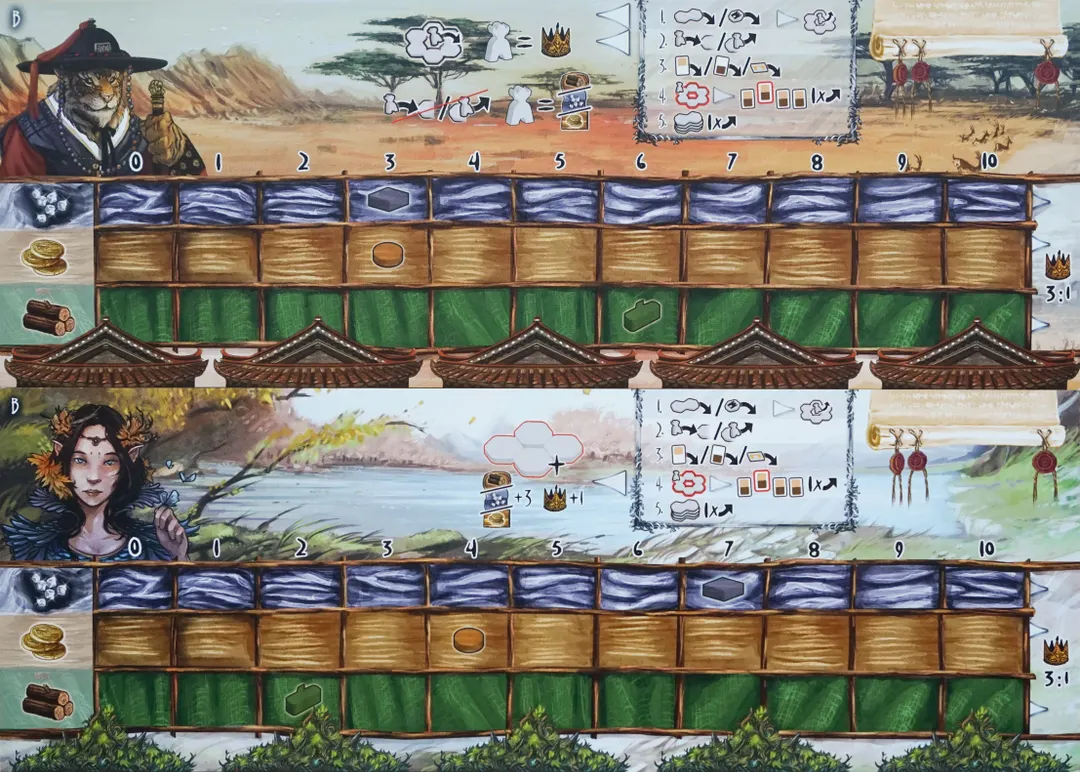
Pandoria: Extra Realms Tableaus
- 2–4 players
- 90–120 min
- 2018
2018
Rules assistance for Pandoria
Plain-language explanations of turns, card effects and disputed situations, with official source references and saved question history.
For 2 players
What would you like to know?
Answers come from the official rulebook, with the page to check.
Pandoria is a board game released in 2018 for 2–4 players, 90–120 minutes per game, and ages 10 and up. It was designed by Bernd Eisenstein and Jeffrey D. Allers and its main mechanics are Variable Player Powers, Hand Management, and Area Majority / Influence.
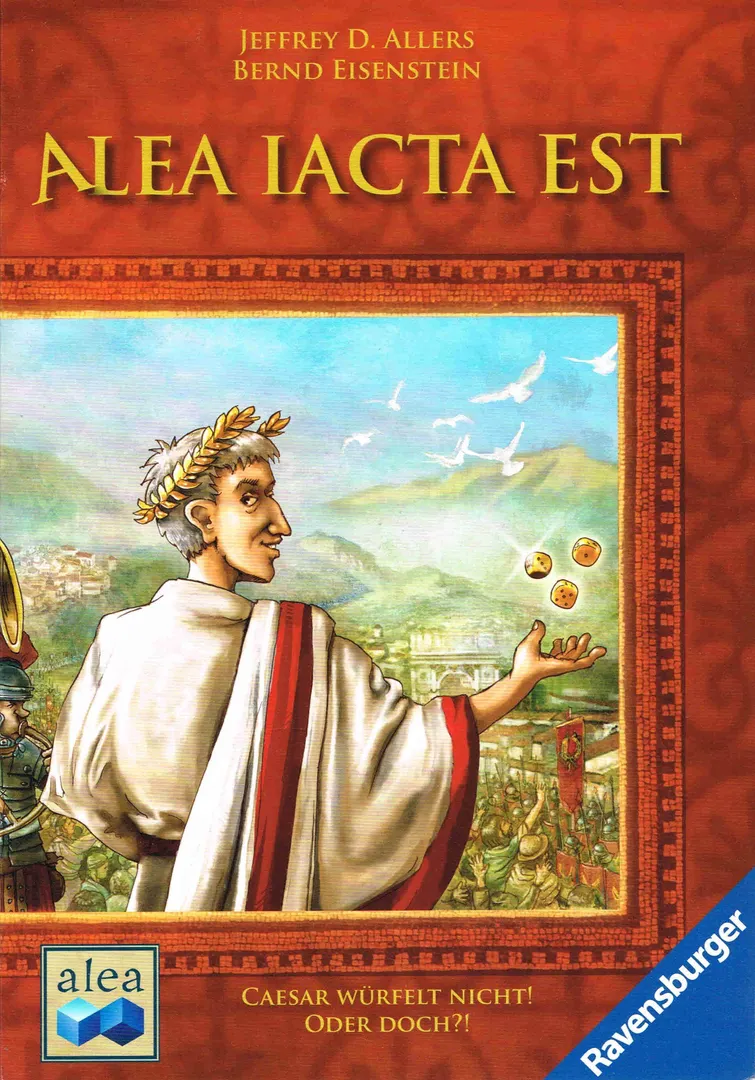



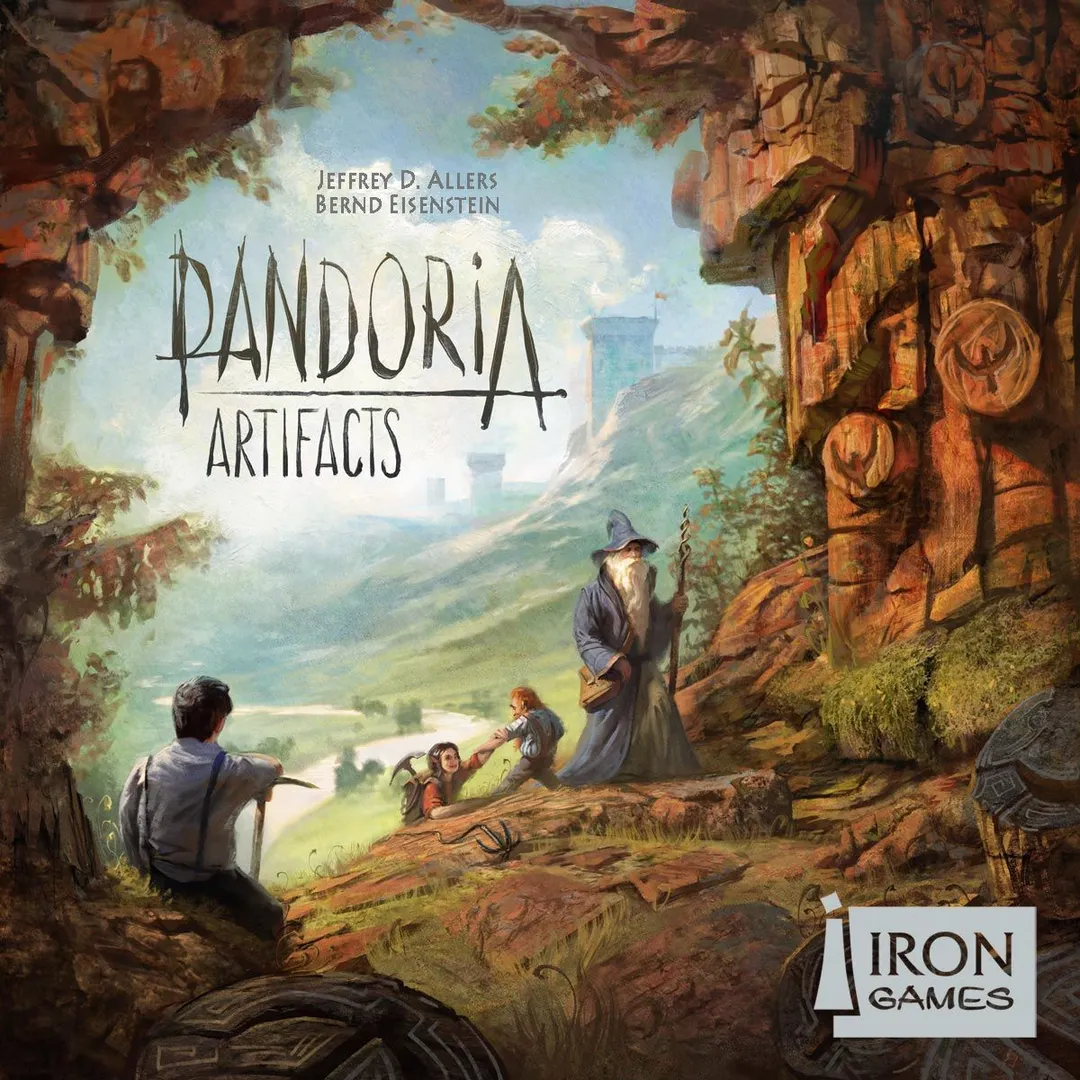
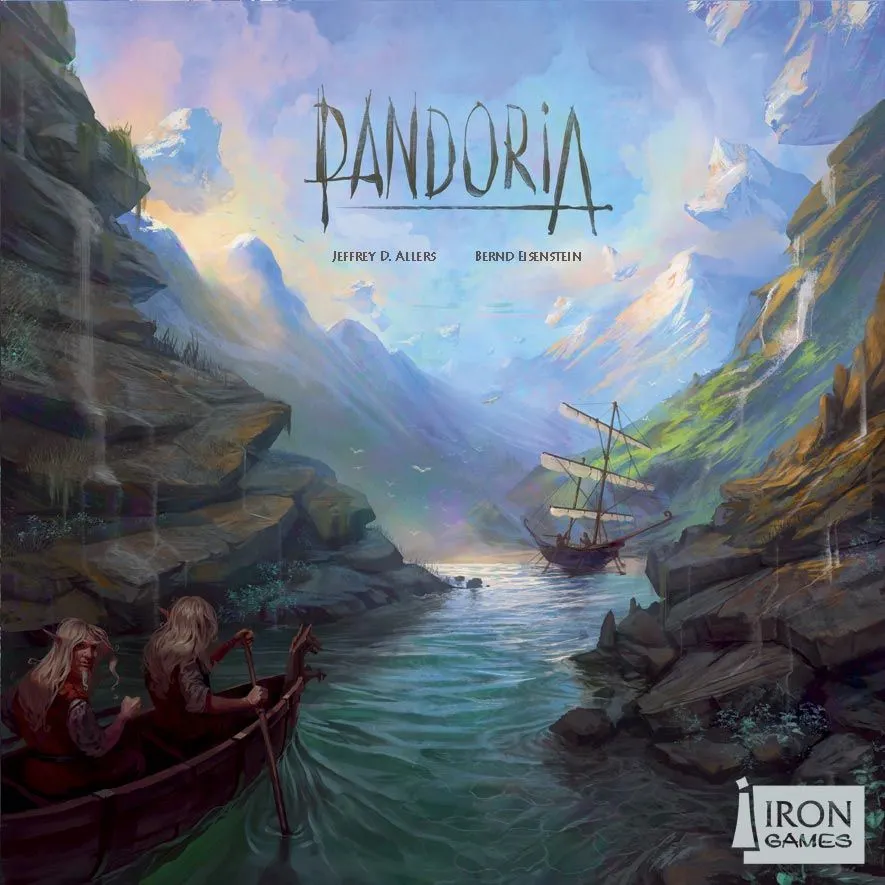
For generations, the fertile Hiddenlands were shared by the peoples of the Five Realms. The Elves, Mages, Dwarves, Halflings and Humans lived peacefully with each other, though they increasingly engaged in fierce competition for the prosperity and glory of their respective nations. And so it was that when the divisiveness threatened to break the thousand-year peace, the Goblin Hordes from across the sea unleashed a devastating surprise attack, and the peoples of the Hiddenlands could not unify quickly enough to repel them. Remnants of each of the realms fled by ship, until they at last discovered a new, unoccupied land upon which they could begin building their civilizations anew. The old rivalries would remain, of course, but perhaps this time, their competition with each other would not welcome disaster. It was a time of hope, a time for exploration and construction, and a time of renewed competition in a new world they called Pandoria. In the "gamer's game" 'Pandoria', players discover this new land by placing tiles, and they claim its territory and resources by placing their people. When a type of terrain is completely surrounded by other terrain, every worker on the borders of that terrain gains its resources. Although more than one civilization will usually benefit, each player tries to gain more than the others. Mining gold gives you income to buy cards that have two options: buildings and spells. Acquiring wood allows you to build that side of the card for permanent advantages, while mining crystals gives you the power to use the card for its one-time spell instead. Excess resources can be converted into prestige Points, and some buildings can generate more. When the new land has been fully explored (all tiles have been placed), the player with the most prestige is declared the most powerful nation of Pandoria and wins the game! The game includes a streamlined beginner game, as well as expanded rules for the complete game that includes asymmetrical player powers. The second edition from 2024 has the following changes: - The game board is double-sided - The 5 realms are newly designed - the cover is brighter/friendlier - the cards have a little different size - some realm characteristics are revised - the rule book has 4 pages more - the starting player tile is newly designed Find everything here: https://www.irongames.de/wordpress/index.php/the-games/pandoria-2024-2/ —description from the designer
Pandoria supports 2–4 players according to the catalogue. This range comes from the publisher’s listed player count, so the game can be set up for any group size within it. Some setups, rules and scoring details may still vary by player count, so check your edition’s rulebook for the exact configuration.
The listed playing time for Pandoria is 90–120 minutes. This is the publisher’s estimate for a full game. The actual duration depends on the group, the player count and familiarity with the rules: first sessions usually run longer, while experienced groups often finish faster. Setup and teaching time are not included in this estimate.
The catalogue lists Pandoria for ages 10 and up. This is the publisher’s recommendation and reflects reading demands, rule complexity and small components rather than theme alone. Younger players can often join with help from an adult, so check the age guidance on your edition and consider your group’s experience with board games.
Pandoria has a complexity rating of 2.5 out of 5 from BoardGameGeek players, which makes it a medium-light game. The rating reflects how much rules knowledge, planning and decision-making a typical game demands. Expect a longer first teach for heavier games, and use a preparation guide before game night.
Pandoria belongs to these categories: Fantasy, Economic, and Territory Building. Its main mechanics are Variable Player Powers, Hand Management, and Area Majority / Influence. Categories describe the theme and setting of a game, while mechanics describe what players actually do on their turns. Each mechanic links to a catalogue hub with similar games, which helps when you want something comparable.
The credited designers of Pandoria are: Bernd Eisenstein and Jeffrey D. Allers. These credits come from the published game data and name the people responsible for the game’s design, not its illustrators or publishers. Designer pages on MeepleRules collect other titles by the same designers, which helps when you enjoy a game and want to find similar ones.
The catalogue lists Pandoria as a base game. It can be played on its own with the components in the box and does not require any other title. Expansions, if any exist, add new content or rules on top of it and are listed separately in the catalogue with a link back to this base game.