
- BGG rank
- BGG #25,974
- BGG rating
- 5.9
Bautzen 1945
- 1–2 players
- Complexity 3.0/5
- 2017
2011
Rules assistance for Partizan!
Plain-language explanations of turns, card effects and disputed situations, with official source references and saved question history.
For 1 player
What would you like to know?
Answers come from the official rulebook, with the page to check.
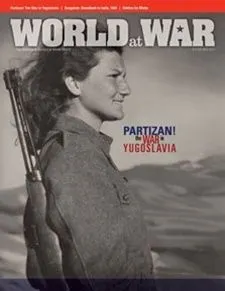
Partizan! is a board game released in 2011 for 1–2 players, 240 minutes per game, and ages 10 and up. It was designed by Javier Romero and its main mechanics are Dice Rolling, Hexagon Grid, and Simulation.
Partizan is a two-player, intermediate-complexity, historical simulation of the struggle between the Communists and the Axis occupation forces for mastery of Yugoslavia from 1941 through 1944. It starts with the first uprisings against the Axis in Bosnia, Serbia and Montenegro in late 1941, and ends in late 1944 just before the Soviet Army entered the country. The game is won by the Partisan player by waging an aggressive guerilla war: harassing the occupiers and destroying infrastructure that may be of use to them: warehouses, fuel dumps, bridges, dams, depots, railroads, viaducts, motor pools, etc (each represented by variably placed counters). “Resource hexes” represent strategic mineral deposits, such as bauxite, copper and chromium, which the Axis player must protect, along with routes from them back to Germany, while also guarding possible invasion beaches along the coast. During the game, the exact strengths of Partisan units are mostly unknown by the Axis player (via “tried” and “untried” counter-sides). He must attempt to head off Partisan operations while never certain exactly where they’re headed. The Partisan player must select his targets carefully in order to disrupt the occupation enough for him to win the game, while avoiding becoming surrounded and destroyed by the Germans in the process. The counter-mix includes the full German, Italian, Hungarian, Croatian, Bulgarian, and Ustashi orders of battle, as well as all the Partisan forces and Marshall Tito himself (the Chetniks are handled abstractly). The Partisans may even expect support from the Anglo-Allies if the guerilla war against the Axis is going well, including possibly an amphibious invasion by the Anglo-Americans (“Operation Armpit”). In fact, most of the main Axis' operations in Yugoslavia historically pertained to the protection of their coastal flank. Their primary anti-partisan offensives were intended to clear the guerrillas from the coastal areas where an Allied invasion was possible. In game terms, the "Allied Landing Scare" rule simulates the reality of German strategic fears in the Balkans. Axis forces, especially the Germans, are generally stronger than the partisans, but the partisans are elusive and difficult to catch, often forcing the Axis player to spread thin his forces. Partizan has been designed by Javier Romero (Triple Alliance War, Spanish Civil War) and developed by Eric Harvey (AETO, APTO & AOI). It contains one 34x22” extra-large-hex map and 228 iconic and NATO-style counters. Units of maneuver are brigades and divisions. There is one grand campaign scenario, which can be completed by two players in about five or six hours. Solitaire play is doable.
Partizan! supports 1–2 players according to the catalogue. This range comes from the publisher’s listed player count, so the game can be set up for any group size within it. Some setups, rules and scoring details may still vary by player count, so check your edition’s rulebook for the exact configuration.
The listed playing time for Partizan! is 240 minutes. This is the publisher’s estimate for a full game. The actual duration depends on the group, the player count and familiarity with the rules: first sessions usually run longer, while experienced groups often finish faster. Setup and teaching time are not included in this estimate.
The catalogue lists Partizan! for ages 10 and up. This is the publisher’s recommendation and reflects reading demands, rule complexity and small components rather than theme alone. Younger players can often join with help from an adult, so check the age guidance on your edition and consider your group’s experience with board games.
Partizan! has a complexity rating of 2.6 out of 5 from BoardGameGeek players, which makes it a medium-light game. The rating reflects how much rules knowledge, planning and decision-making a typical game demands. Expect a longer first teach for heavier games, and use a preparation guide before game night.
Partizan! belongs to these categories: Wargame and World War II. Its main mechanics are Dice Rolling, Hexagon Grid, and Simulation. Categories describe the theme and setting of a game, while mechanics describe what players actually do on their turns. Each mechanic links to a catalogue hub with similar games, which helps when you want something comparable.
The credited designers of Partizan! are: Javier Romero. These credits come from the published game data and name the people responsible for the game’s design, not its illustrators or publishers. Designer pages on MeepleRules collect other titles by the same designers, which helps when you enjoy a game and want to find similar ones.
The catalogue lists Partizan! as a base game. It can be played on its own with the components in the box and does not require any other title. Expansions, if any exist, add new content or rules on top of it and are listed separately in the catalogue with a link back to this base game.