
- BGG rank
- BGG #13,578
- BGG rating
- 7.2
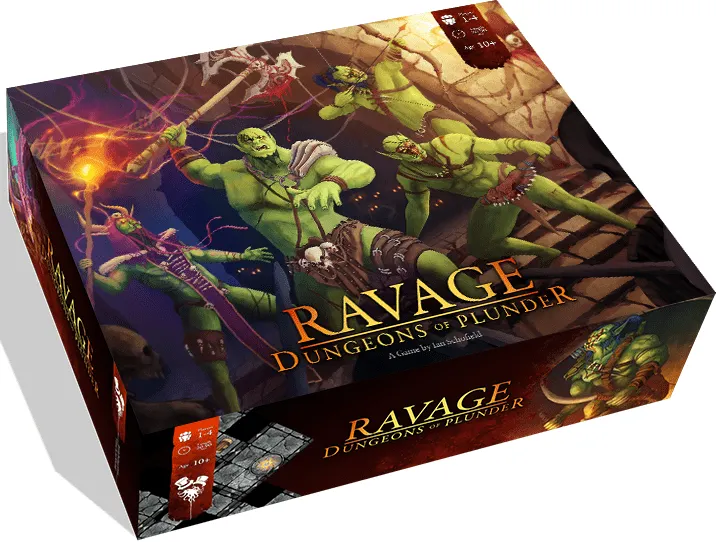
Ravage: Dungeons of Plunder
- 1–5 players
- 30–90 min
- Complexity 2.0/5
- 2018
2017
Rules assistance for Phoenix Covenant
Plain-language explanations of turns, card effects and disputed situations, with official source references and saved question history.
For 2 players
What would you like to know?
Answers come from the official rulebook, with the page to check.
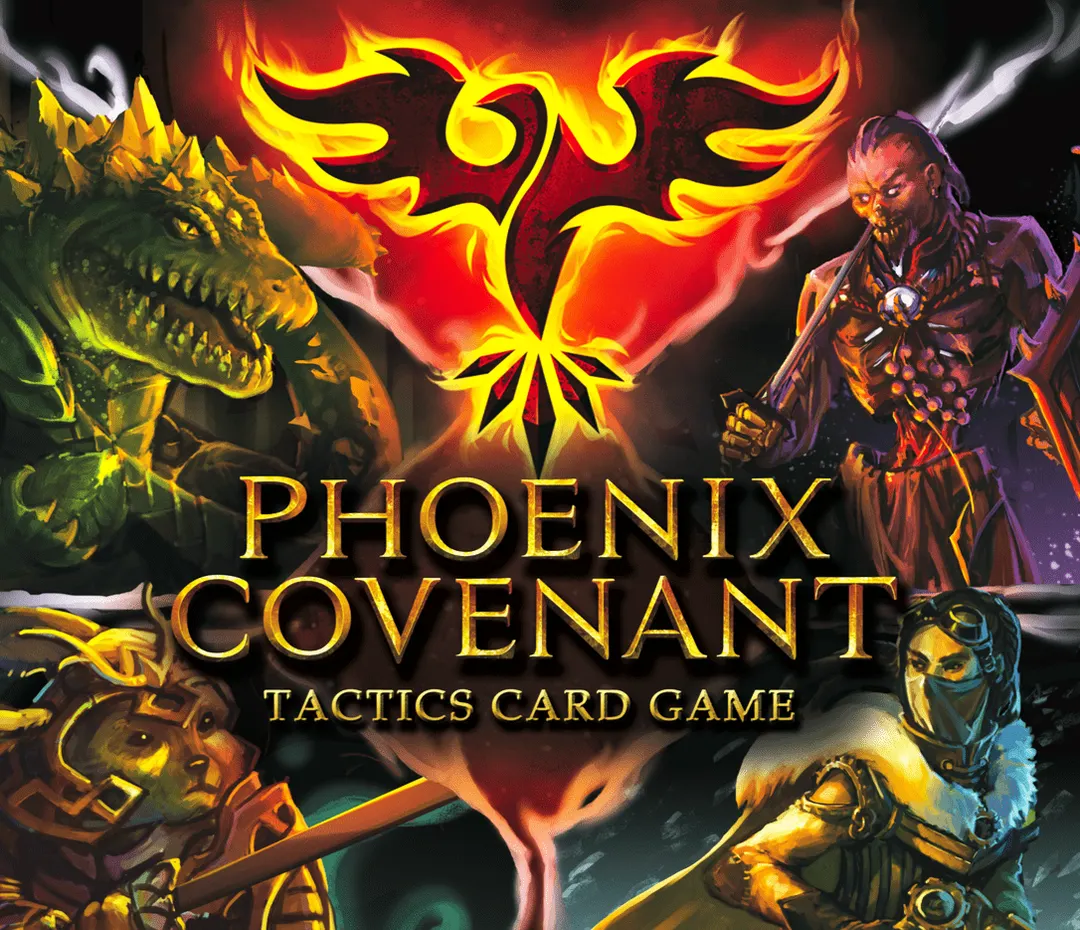
Phoenix Covenant is a board game released in 2017 for 2–4 players, 30–90 minutes per game, and ages 14 and up. It was designed by Soren Fox, Easwaran Subbaraman, Sriraman Subbaraman, and Adam Porroni and its main mechanics are Variable Player Powers, Take That, and Grid Movement.




Introduction Worlds are dying, as if someone is toying with fate itself, shredding the very fabric of the universe. This spectre does not distinguish between gods and men, all are crushed beneath the feet of what can only be called...The Cataclysm. Five great beings have formed a Covenant to halt the devastation. Battle rivals to prove that you’re a commander that The Five need in order to stop The Cataclysm and earn your place amongst their great champions. The Game Phoenix Covenant is a tactics battle card game that fans have called "like Magic meets Final Fantasy Tactics" - and yes, you can believe them. It's far more than "cards on a board;" there's real strategic depth and you're not subject to mere dice rolls at every critical moment. In this universe, you are a great commander trying to prove yourself as the best of them all in a battle of wills. Outmaneuver your foes and create tactical formations by turning your cards, outwit others with well-timed unit abilities, combos and spells, and outplay opponents by taking advantage of our unique special-summoning Commander cards, directional armor and attack system, and built-right-on-the-field structure cards. More Details Commander Units allow players to forward-deploy units against opposing forces. While you can use them for their native abilities or attack power, forward-deploying can turn the tide of a battle. Position-based mechanics augment keyword-based and event-based mechanics seen in card games up to now. Some cards grow in power based on their position on the board, others might protect units next to them, and others might deflect enemy attacks. The unique square (80mm x 80mm) card units come with a combination of armor and weakpoints. Damage is reduced when a unit is attacked on an armored side, while a unit suffers a critical hit (extra damage) when hit in a weakpoint. You'll need to maneuver and turn your units to attack your enemies' unarmored sides and weakpoints while protecting your own in deadly tactical duels across the game board. In the Player vs. Player (PvP) head-to-head mode, you test your tactical and strategic might against everyone at once. Choose your army well, learn spells, and consider constructing powerful structures to support your forces. There is also a 2v2 team battle mode for all out there who want to test their skills while bringing a friend along for the fight! A Player vs. Environment (PvE) cooperative mode is under development, and multiple scenarios are being tested. With it, you will play alongside friends and take on missions that The Five require you and other great commanders to complete. You may even be able to design your own scenarios.
Phoenix Covenant supports 2–4 players according to the catalogue. This range comes from the publisher’s listed player count, so the game can be set up for any group size within it. Some setups, rules and scoring details may still vary by player count, so check your edition’s rulebook for the exact configuration.
The listed playing time for Phoenix Covenant is 30–90 minutes. This is the publisher’s estimate for a full game. The actual duration depends on the group, the player count and familiarity with the rules: first sessions usually run longer, while experienced groups often finish faster. Setup and teaching time are not included in this estimate.
The catalogue lists Phoenix Covenant for ages 14 and up. This is the publisher’s recommendation and reflects reading demands, rule complexity and small components rather than theme alone. Younger players can often join with help from an adult, so check the age guidance on your edition and consider your group’s experience with board games.
Phoenix Covenant has a complexity rating of 3.8 out of 5 from BoardGameGeek players, which makes it a heavy game. The rating reflects how much rules knowledge, planning and decision-making a typical game demands. Expect a longer first teach for heavier games, and use a preparation guide before game night.
Phoenix Covenant belongs to these categories: Card Game and Fantasy. Its main mechanics are Variable Player Powers, Take That, and Grid Movement. Categories describe the theme and setting of a game, while mechanics describe what players actually do on their turns. Each mechanic links to a catalogue hub with similar games, which helps when you want something comparable.
The credited designers of Phoenix Covenant are: Soren Fox, Easwaran Subbaraman, Sriraman Subbaraman, and Adam Porroni. These credits come from the published game data and name the people responsible for the game’s design, not its illustrators or publishers. Designer pages on MeepleRules collect other titles by the same designers, which helps when you enjoy a game and want to find similar ones.
The catalogue lists Phoenix Covenant as a base game. It can be played on its own with the components in the box and does not require any other title. Expansions, if any exist, add new content or rules on top of it and are listed separately in the catalogue with a link back to this base game.