
- BGG rank
- BGG #28,880
- BGG rating
- 5.0
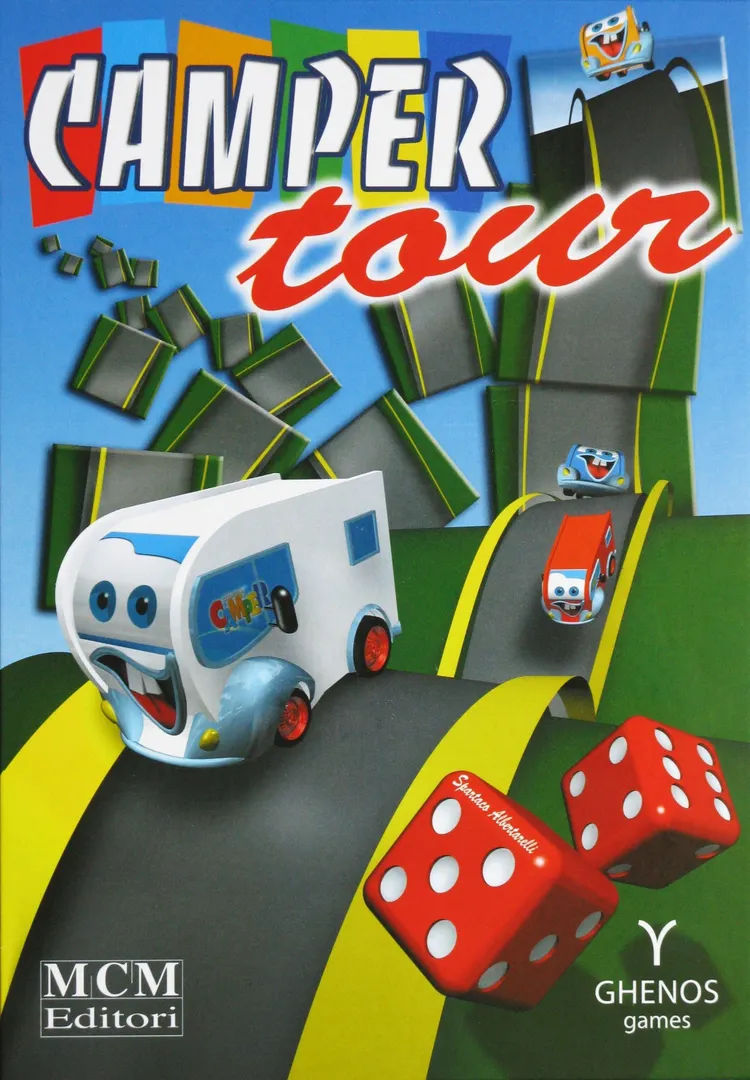
Camper Tour
- 2–4 players
- 30 min
- Complexity 1.3/5
- 2007
1974
Rules assistance for Prize Property
Plain-language explanations of turns, card effects and disputed situations, with official source references and saved question history.
For 2 players
What would you like to know?
Answers come from the official rulebook, with the page to check.
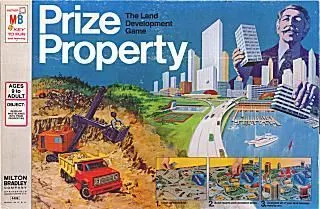
Prize Property is a board game released in 1974 for 2–4 players, 90 minutes per game, and ages 9 and up. Its main mechanics are Push Your Luck, Dice Rolling, and Tile Placement.
This is a game of land development and litigation. Each player is assigned an area of the board, containing three land sections and building lots of different colours (red, yellow, orange or blue). The object of the game is to be the first to build all of your nine buildings. On your turn, you gamble for income. The income die is rolled; if it comes up on its red dot face, you don't get any money. Otherwise, you get the amount indicated and may roll again --but if you roll the red dot, you lose any income for the turn! Income is doubled once you've completed all three buildings of one of your land sections, tripled once you've completed two sections. Next, you draw an Opportunity card and resolve it. You may buy a Town Meeting card; these cards are either Legal Action or Defence cards (this is kept secret until used). Finally, you may improve a property (from its undeveloped state), or build a resort on it (once improved) --if you have the money. The properties have varying degrees of risk associated with them (the Opportunity cards) and consequently varying building costs. When you complete a building, the other players may play Legal Action cards (up to five), each of which places a red marble in the gavel device. You automatically get a green marble, and may add up to four more by using your Defence cards. The gavel is then shaken and then held up so marbles roll into the handle; a window at the handle's end reveals who won. If the opponents win, the builder does not get his building (and has lost the money) and the opponents get money from the bank for their trouble.
Prize Property supports 2–4 players according to the catalogue. This range comes from the publisher’s listed player count, so the game can be set up for any group size within it. Some setups, rules and scoring details may still vary by player count, so check your edition’s rulebook for the exact configuration.
The listed playing time for Prize Property is 90 minutes. This is the publisher’s estimate for a full game. The actual duration depends on the group, the player count and familiarity with the rules: first sessions usually run longer, while experienced groups often finish faster. Setup and teaching time are not included in this estimate.
The catalogue lists Prize Property for ages 9 and up. This is the publisher’s recommendation and reflects reading demands, rule complexity and small components rather than theme alone. Younger players can often join with help from an adult, so check the age guidance on your edition and consider your group’s experience with board games.
Prize Property has a complexity rating of 1.6 out of 5 from BoardGameGeek players, which makes it a light game. The rating reflects how much rules knowledge, planning and decision-making a typical game demands. Expect a longer first teach for heavier games, and use a preparation guide before game night.
Prize Property belongs to these categories: City Building. Its main mechanics are Push Your Luck, Dice Rolling, and Tile Placement. Categories describe the theme and setting of a game, while mechanics describe what players actually do on their turns. Each mechanic links to a catalogue hub with similar games, which helps when you want something comparable.
The catalogue lists Prize Property as a base game. It can be played on its own with the components in the box and does not require any other title. Expansions, if any exist, add new content or rules on top of it and are listed separately in the catalogue with a link back to this base game.