
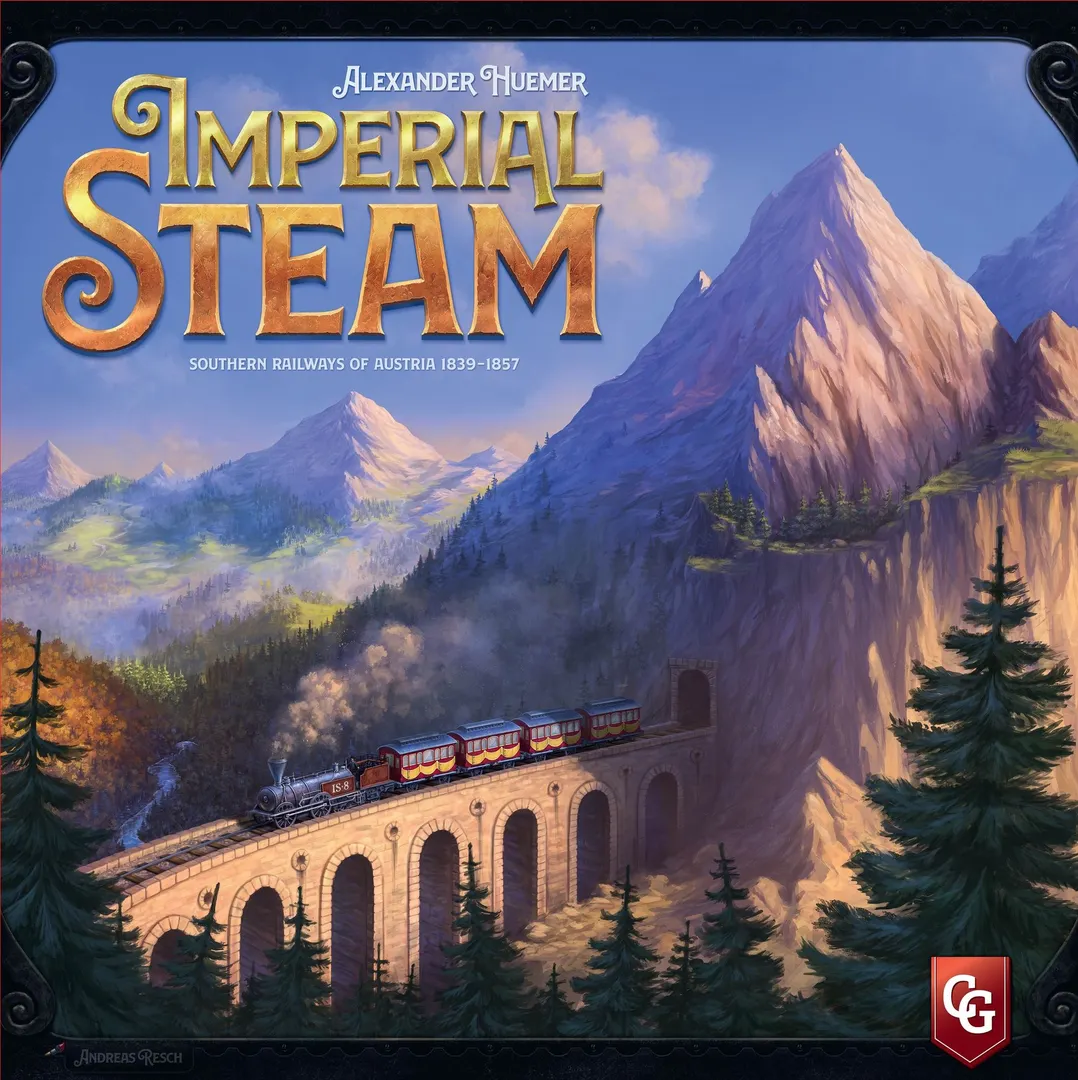
- BGG rank
- BGG #955
- BGG rating
- 7.7
Imperial Steam
- 2–4 players
- 120 min
- Complexity 4.2/5
- 2021
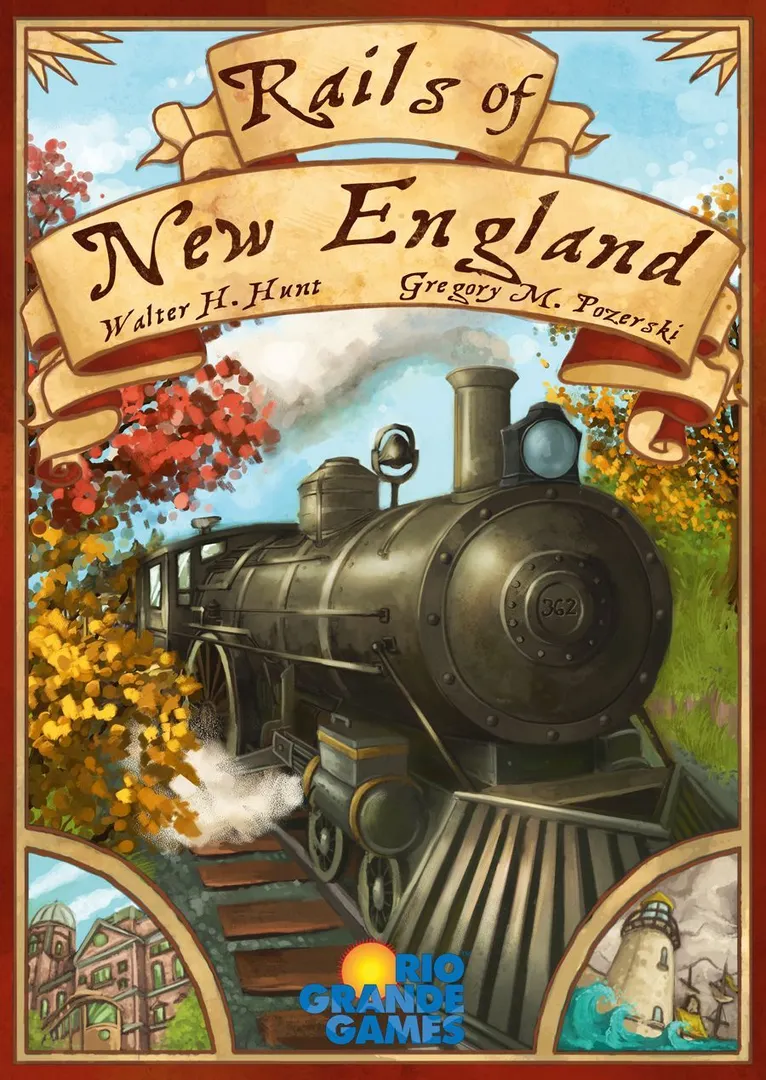
2011
Rules assistance for Rails of New England
Plain-language explanations of turns, card effects and disputed situations, with official source references and saved question history.
What would you like to know?
Answers come from the official rulebook, with the page to check.
Rails of New England is a board game released in 2011 for 2–5 players, 180 minutes per game, and ages 13 and up. It was designed by Gregory M. Pozerski and Walter H. Hunt and its main mechanics are Network and Route Building and Open Drafting.






Description from BoardgameNews.com: Players in New England Rails each represent a particular state during the 19th century – Connecticut and New Hampshire with two players, with Vermont added for three players, and so on – and start with two or three businesses in play under their control. Your goal in NER is to have more assets than other players at game end, as determined by cash in hand, cost of businesses owned, special routes completed and state subsidies acquired. The game lasts at most 16 rounds. Each round players forecast the upcoming economic condition – depression, normal or prosperity – for a future turn, then take care of any events that occur, such as "Improved Bridge Building Techniques" that allow players to build across estuaries or "Sheep Boom Goes Bust" which represents the decreased demand for wool from New England farmers as the century progressed. Four of the first five events are fixed and represent historical activities, while the other events – including devastating floods, snow, and an improved business climate – are randomized into a face-down deck. Players then each draft a business or action card, with the option to play it immediately (thereby gaining a free action) if they choose to pay the cost. During the subsequent development phase, players take two actions in turn order, either building twice, playing cards twice, or doing each action once. Players want to build depots that connect their businesses to one of the major markets in the area: New York, Boston or Montreal; to do so, they need to pay the track costs as well as the cost of the depots themselves. Players can build multiple depots in the same action, but the cost is higher since they're doing more work in the same amount of time. Once a business is connected, it earns the owner more income each turn since it's now supplying a larger, richer market. The cards allow players to start new businesses, play special actions, claim a special route (which generates income), claim one of the six state mail contracts, or collect a state subsidy, which provides special benefits like a free depot. As the game progresses, the players pass through time time periods, with different businesses being available in each. The first period focuses on crafts and farms, for example, while the second introduces more industrial businesses such as shoe and textile production. When passing from one period to another, players must choose to make some of their existing businesses obsolete. Since a player can manage only eight businesses, however, you'll likely want to make room for more profitable ventures anyway. If all mail routes, state subsidies and special routes are claimed by the end of any round, the game ends at that point; otherwise the game ends after round 16, with the richest player winning New England Rails.
Rails of New England supports 2–5 players according to the catalogue. This range comes from the publisher’s listed player count, so the game can be set up for any group size within it. Some setups, rules and scoring details may still vary by player count, so check your edition’s rulebook for the exact configuration.
The listed playing time for Rails of New England is 180 minutes. This is the publisher’s estimate for a full game. The actual duration depends on the group, the player count and familiarity with the rules: first sessions usually run longer, while experienced groups often finish faster. Setup and teaching time are not included in this estimate.
The catalogue lists Rails of New England for ages 13 and up. This is the publisher’s recommendation and reflects reading demands, rule complexity and small components rather than theme alone. Younger players can often join with help from an adult, so check the age guidance on your edition and consider your group’s experience with board games.
Rails of New England has a complexity rating of 3.3 out of 5 from BoardGameGeek players, which makes it a medium-weight game. The rating reflects how much rules knowledge, planning and decision-making a typical game demands. Expect a longer first teach for heavier games, and use a preparation guide before game night.
Rails of New England belongs to these categories: Economic, Trains, and Industry / Manufacturing. Its main mechanics are Network and Route Building and Open Drafting. Categories describe the theme and setting of a game, while mechanics describe what players actually do on their turns. Each mechanic links to a catalogue hub with similar games, which helps when you want something comparable.
The credited designers of Rails of New England are: Gregory M. Pozerski and Walter H. Hunt. These credits come from the published game data and name the people responsible for the game’s design, not its illustrators or publishers. Designer pages on MeepleRules collect other titles by the same designers, which helps when you enjoy a game and want to find similar ones.
The catalogue lists Rails of New England as a base game. It can be played on its own with the components in the box and does not require any other title. Expansions, if any exist, add new content or rules on top of it and are listed separately in the catalogue with a link back to this base game.