

- BGG rating
- 7.3
Rogue Dungeon: 3p Add-on Pack
- 1–3 players
- 30–60 min
- 2020
2020
Rules assistance for Rogue Dungeon
Plain-language explanations of turns, card effects and disputed situations, with official source references and saved question history.
For 1 player
What would you like to know?
Answers come from the official rulebook, with the page to check.
Rogue Dungeon is a board game released in 2020 for 1 player and 30–60 minutes per game. It was designed by Chad Randall Maniccia, Albert Danysh, and Jon Smith and its main mechanics are Hand Management, Trading, and Dice Rolling.
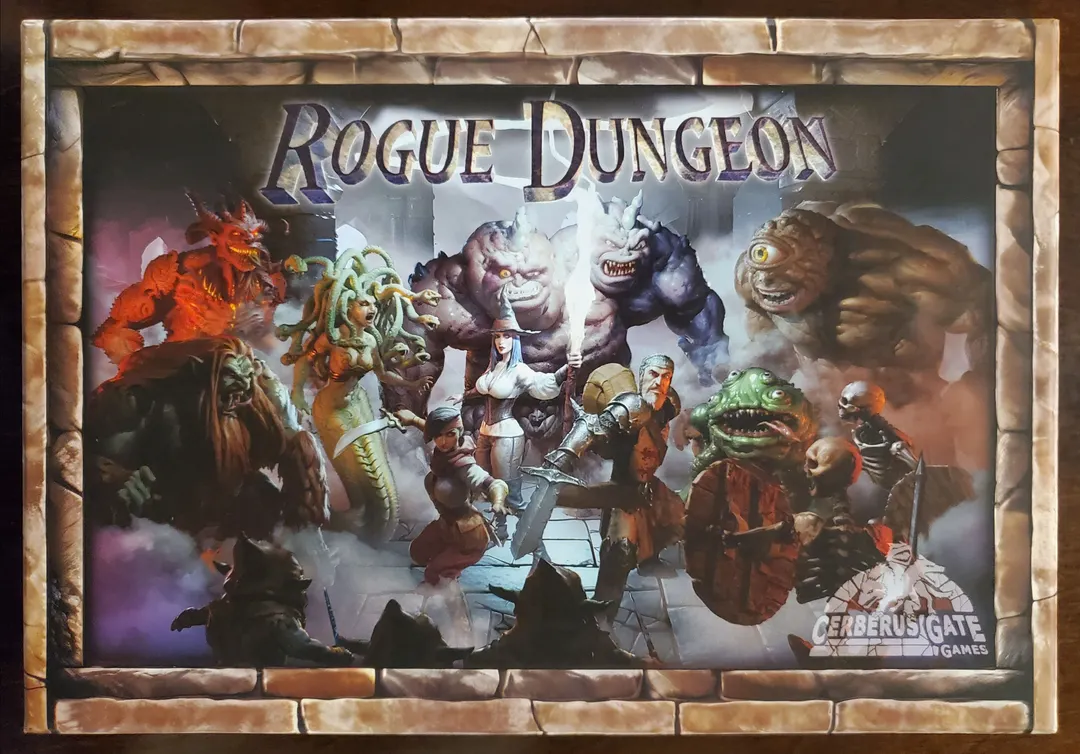

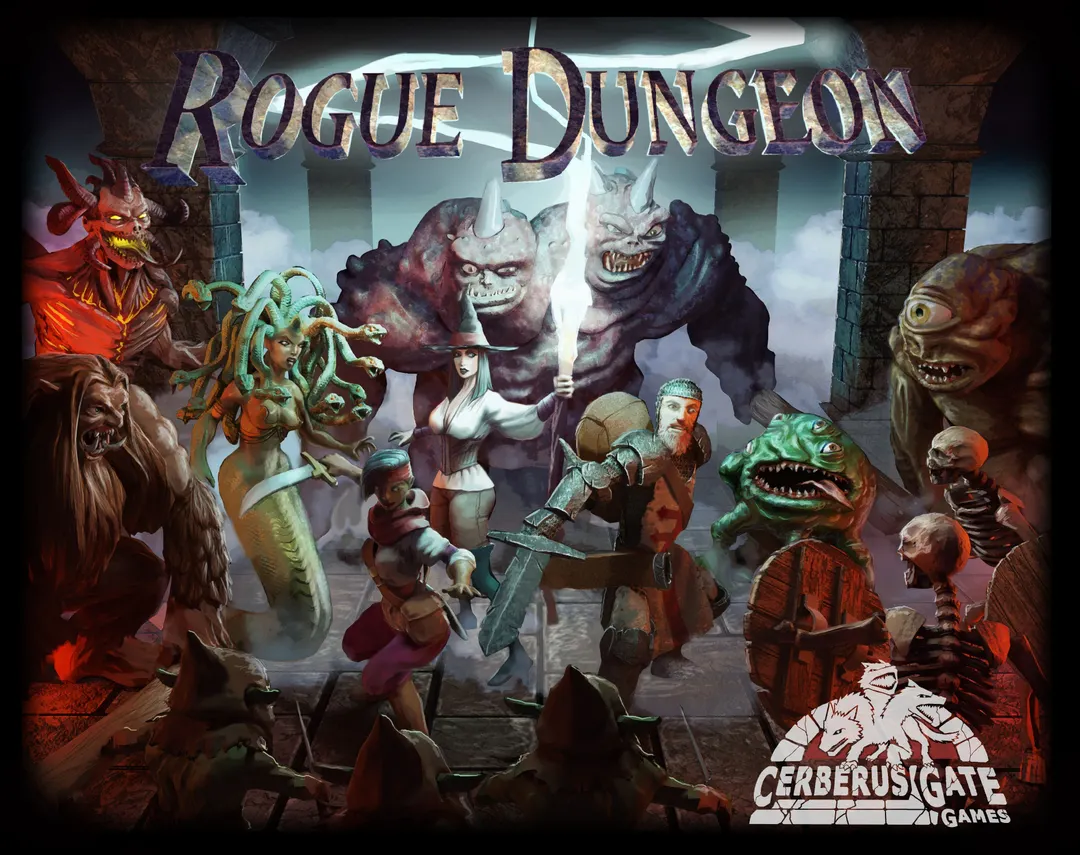
Rogue Dungeon is a solo roguelike dungeon crawl. It's a premium offering that is more than just a stinking deck of cards. It comes with a play mat that emulates the UI of a CRPG that organizes play into thematic slots for your weapon, shield, armor, helmet, gauntlets, boots, scrolls and your backpack full of loot. Rogue Dungeon is highly replayable and is dripping with theme. Not very many games let you go from zero to hero in one hour. It's a loot management game at its core and that's where its charm comes from. You might start the game with a hunk of meat, that you use to charm a wolf who helps you defeat the zombie who drops a lockpick, which you use to open the safe where you find the jeweled goblet, which you trade for a lucky shield which you use to negate the Dragon's fire. Rogue Dungeon is hard and you will DIE! However, experience and skillful play will ensure that veteran Rogues will make it out of the dungeon alive, more than you will. You, your going to end up in a Goblins belly. Prove us wrong! Pick your Rogue, grab your starting loot, grab your skills, set your starting stats and enter the dungeon. Choose which room to navigate to via the mini maps. Rooms are divided into the following types.... Traders - Offer you a choice to trade loot or stats for other loot, stats, or henchman. Some trades involve a stat test or the luck of a die. Loot traders typically trade two items for any one item they offer for trade. They make exceptions for the shiny stuff and will trade any item for a single treasure. Combat - Most combat room have you draw 1 to 3 monsters from the monster deck equal to the dungeon level. Combat is resolved using your Rogues primary stat and a D10. If the two combined are greater than the monsters combat stat your Rogue hits the monster. If they are equal both are hit. If it's less than only the Rogue is hit. Damage can be negated by discarding an armor or by playing a skill or magical item. Potions and food can be consumed at any time to increase your hitpoints to prevent your death. Some monsters have a weakness to specific thematic loot and are vanquished immediately such as when the Medusa gets a look at your face in the mirrors reflection. Once the monsters hitpoints reach zero the monster dies and you receive one loot and XP equal to the dungeon level. Traps - traps litter the dungeon but most can be disarmed or bypassed if you have the appropriate equipment. Even if the gremlins ran off with your rope there is always a chance you can come out unscathed if you pass an appropriate Strength, Agility or Intelligence test. Successful, tests result in an XP reward and negation of any potential damage. Your Mom called and insisted that you should get at least one XP even if you fail the challenge just like in High School. All rolls maybe manipulated with the use of the luck stat. Spending one luck will allow you to modify a die result by 1 up or down or allow for a complete reroll. Play progresses through 5 dungeon levels separated by a staircase. You may camp at the stairs without the threat of a wandering monster interrupting your siesta. You may level your Rogue at anytime so long as you have the XP. When you get to the final room draw a boss monster and fight. Boss monsters have special abilities activated depending on your attack roll they can summon additional monsters, drain your level, heal, etc... Upon slaying the boss monster... Do: Take a photo of your Rogue and discuss your victory on the forums. Then email your Mom, let her know you did do something with your life after all. Don't: Call your primary school bully and challenge her to a rematch. She's busy running a fortune 500 company and driving her Lambo. —description from the designer
Rogue Dungeon supports 1 player according to the catalogue. This is the publisher’s listed player count, so the game is designed for exactly that number of participants. Variants for other group sizes, if any, are described in the rulebook of your edition, so check it before setting up a different configuration.
The listed playing time for Rogue Dungeon is 30–60 minutes. This is the publisher’s estimate for a full game. The actual duration depends on the group, the player count and familiarity with the rules: first sessions usually run longer, while experienced groups often finish faster. Setup and teaching time are not included in this estimate.
Rogue Dungeon has a complexity rating of 2.0 out of 5 from BoardGameGeek players, which makes it a medium-light game. The rating reflects how much rules knowledge, planning and decision-making a typical game demands. Expect a longer first teach for heavier games, and use a preparation guide before game night.
Rogue Dungeon belongs to these categories: Fantasy, Fighting, and Dice. Its main mechanics are Hand Management, Trading, and Dice Rolling. Categories describe the theme and setting of a game, while mechanics describe what players actually do on their turns. Each mechanic links to a catalogue hub with similar games, which helps when you want something comparable.
The credited designers of Rogue Dungeon are: Chad Randall Maniccia, Albert Danysh, and Jon Smith. These credits come from the published game data and name the people responsible for the game’s design, not its illustrators or publishers. Designer pages on MeepleRules collect other titles by the same designers, which helps when you enjoy a game and want to find similar ones.
The catalogue lists Rogue Dungeon as a base game. It can be played on its own with the components in the box and does not require any other title. Expansions, if any exist, add new content or rules on top of it and are listed separately in the catalogue with a link back to this base game.