

- BGG rating
- 8.9
SAS: Rogue Regiment – Heavy Metal
- 1–4 players
- 20–120 min
- 2024
2024
Rules assistance for SAS: Rogue Regiment
Plain-language explanations of turns, card effects and disputed situations, with official source references and saved question history.
For 1 player
What would you like to know?
Answers come from the official rulebook, with the page to check.
SAS: Rogue Regiment is a board game released in 2024 for 1–4 players, 30–180 minutes per game, and ages 14 and up. It was designed by Robert Butler and its main mechanics are Dice Rolling, Grid Movement, and Modular Board.


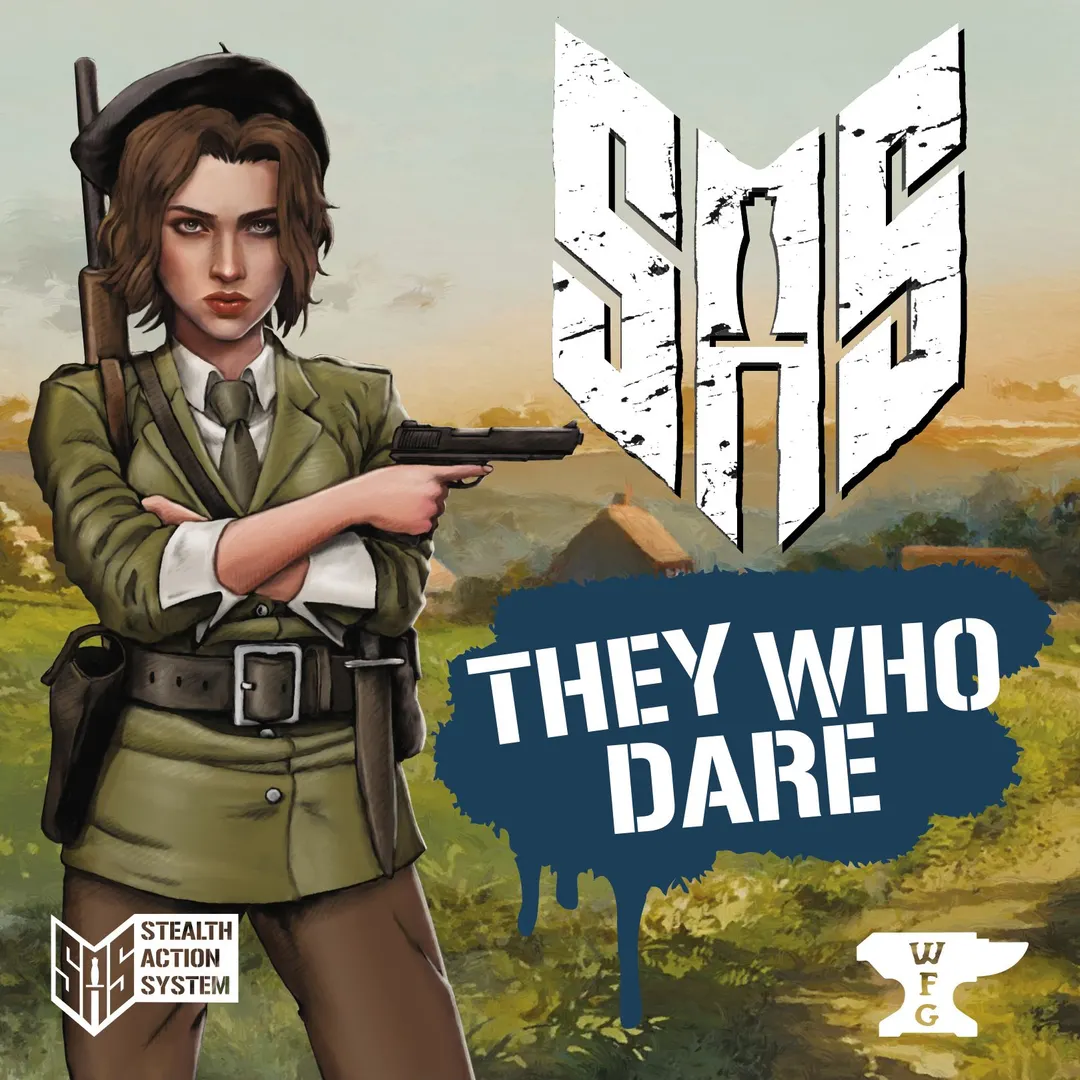
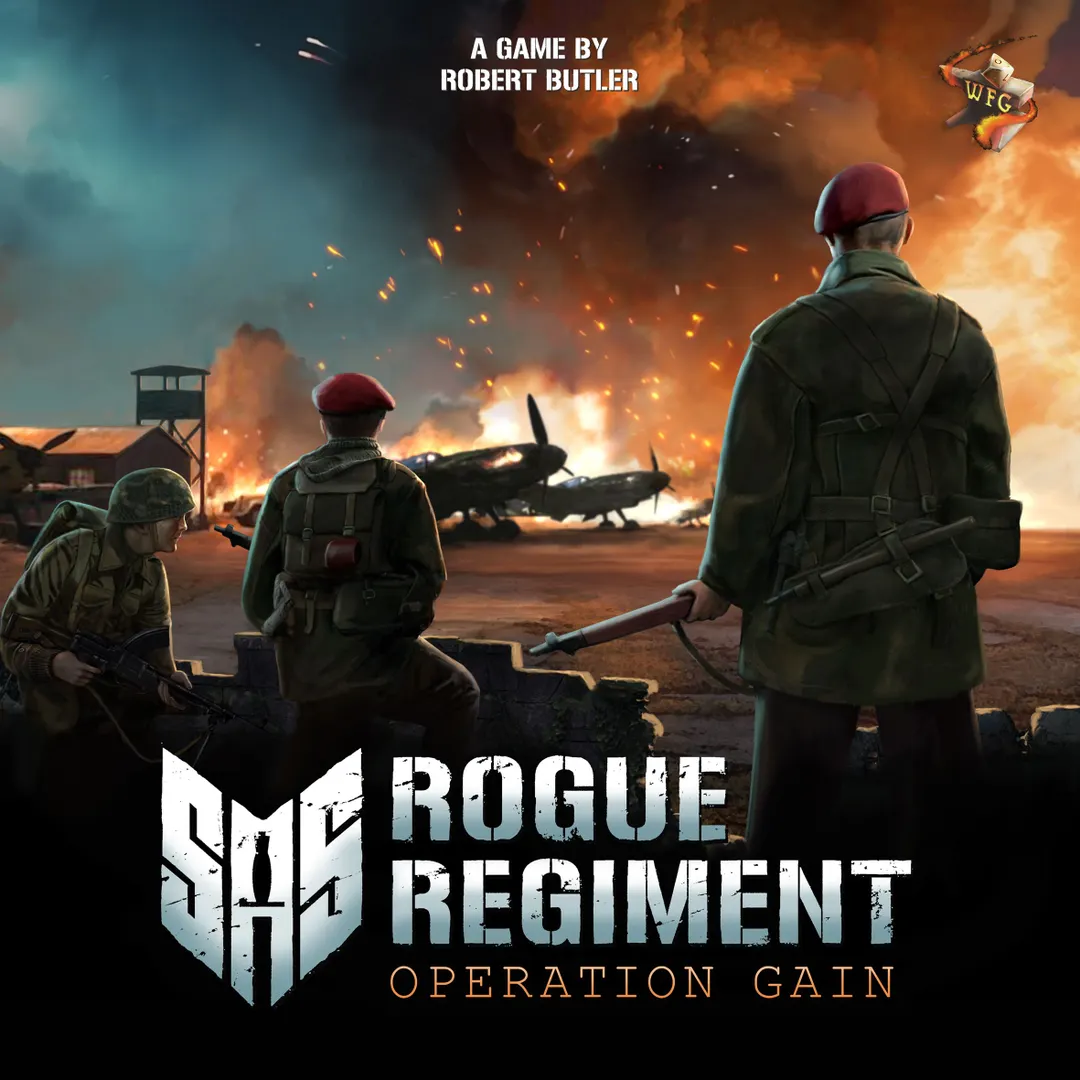




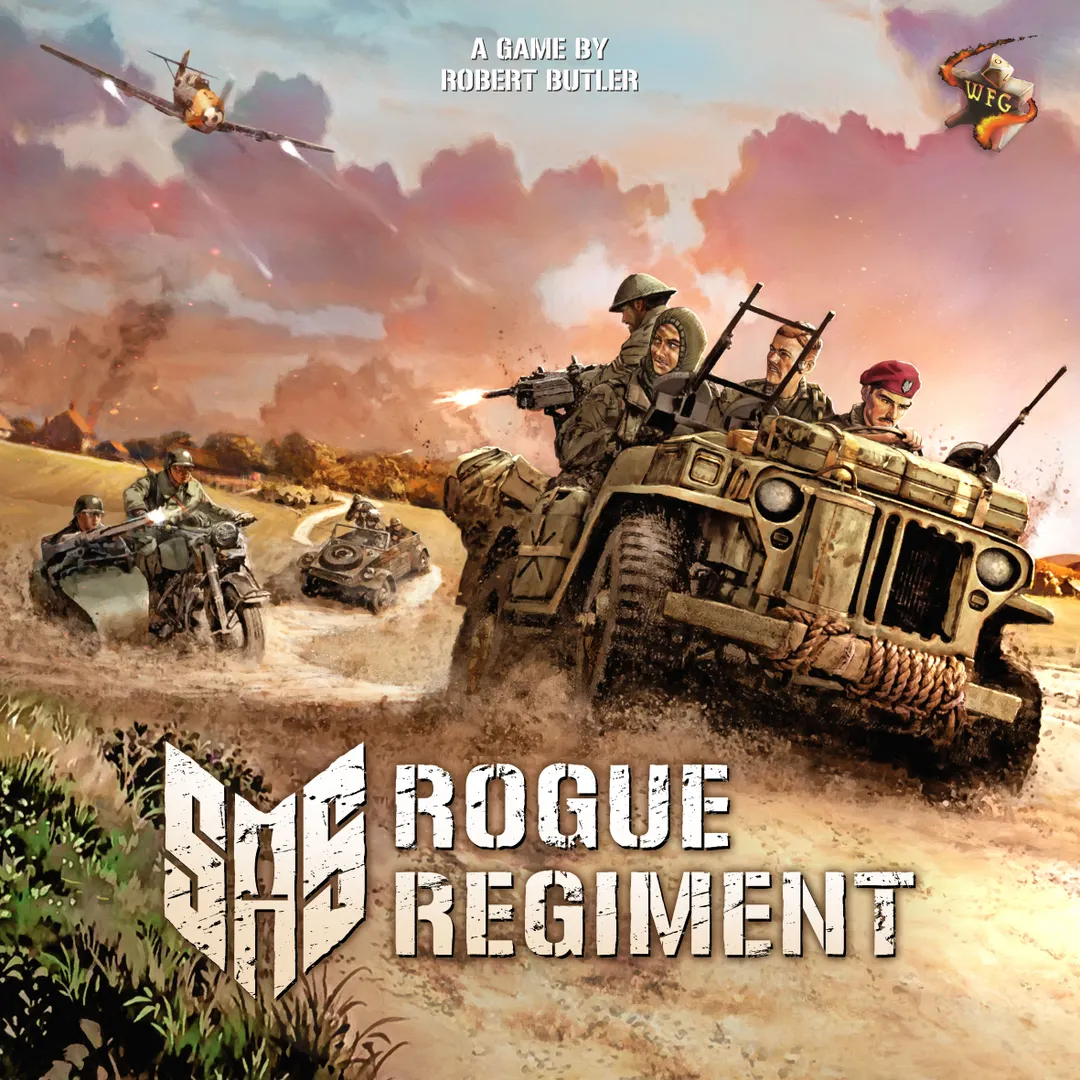
Raise merry hell with the legendary operators of the Special Air Service! Ambush convoys, assassinate high ranking officers, destroy ammo dumps and much, much more in your four man campaign against the Axis war machine! SAS: Rogue Regiment is a WW2 stealth action game. Taking on the role of SAS soldiers in the pivotal weeks following D-Day, players must carry out acts of sabotage deep behind enemy lines. Take down enemy patrols and sentries with the vast array of tools at your disposal, from rifles, explosives and grenades to vehicles, traps and your trusty fighting knife. Move quickly and quietly to complete your objectives. Kill silently and hide the bodies to avoid detection. Get spotted, make too much noise or take too long to carry out your objective and the enemy will raise the alarm. Your heavily outnumbered team won’t last long in a firefight so when the attack comes, make sure you’re in position to make four men feel like a hundred! Each turn, every SAS operator has 4 action points which they can use to move, shoot and carry out tasks. During the "stealth phase" of the game, enemy movement is dictated by patrol lines, sentry points and an event card which is drawn each turn. Each mission has a stealth meter which will slowly fill each time the players arouse suspicion (firing weapons, leaving bodies out in the open etc.) If the stealth meter completely fills the players are detected & the alarm will sound, triggering the "battle phase". The aim of the game is to carry out the mission objective and escape the area unscathed, the easiest way to do this is to avoid detection for as long as possible. —description from the designer
SAS: Rogue Regiment supports 1–4 players according to the catalogue. This range comes from the publisher’s listed player count, so the game can be set up for any group size within it. Some setups, rules and scoring details may still vary by player count, so check your edition’s rulebook for the exact configuration.
The listed playing time for SAS: Rogue Regiment is 30–180 minutes. This is the publisher’s estimate for a full game. The actual duration depends on the group, the player count and familiarity with the rules: first sessions usually run longer, while experienced groups often finish faster. Setup and teaching time are not included in this estimate.
The catalogue lists SAS: Rogue Regiment for ages 14 and up. This is the publisher’s recommendation and reflects reading demands, rule complexity and small components rather than theme alone. Younger players can often join with help from an adult, so check the age guidance on your edition and consider your group’s experience with board games.
SAS: Rogue Regiment has a complexity rating of 3.4 out of 5 from BoardGameGeek players, which makes it a medium-weight game. The rating reflects how much rules knowledge, planning and decision-making a typical game demands. Expect a longer first teach for heavier games, and use a preparation guide before game night.
SAS: Rogue Regiment belongs to these categories: Wargame, World War II, and Spies / Secret Agents. Its main mechanics are Dice Rolling, Grid Movement, and Modular Board. Categories describe the theme and setting of a game, while mechanics describe what players actually do on their turns. Each mechanic links to a catalogue hub with similar games, which helps when you want something comparable.
The credited designers of SAS: Rogue Regiment are: Robert Butler. These credits come from the published game data and name the people responsible for the game’s design, not its illustrators or publishers. Designer pages on MeepleRules collect other titles by the same designers, which helps when you enjoy a game and want to find similar ones.
The catalogue lists SAS: Rogue Regiment as a base game. It can be played on its own with the components in the box and does not require any other title. Expansions, if any exist, add new content or rules on top of it and are listed separately in the catalogue with a link back to this base game.