
- BGG rating
- 7.2
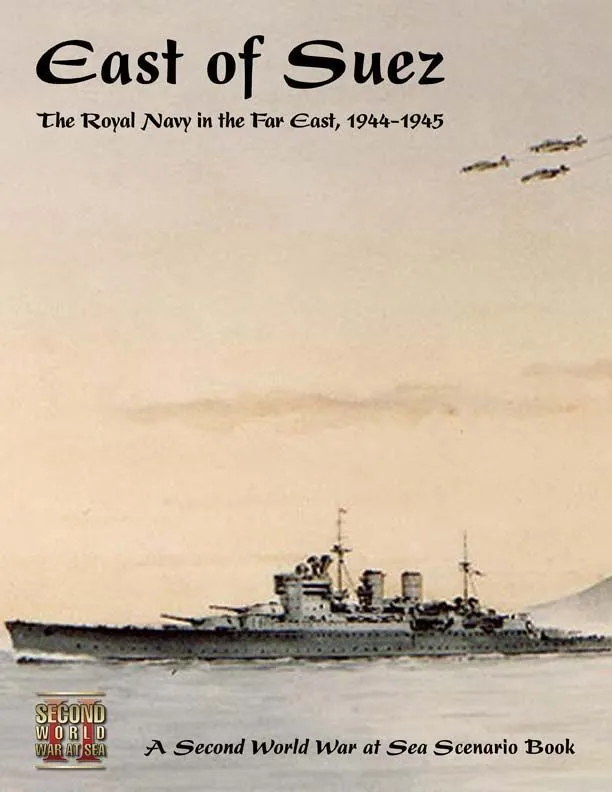
Second World War at Sea: East of Suez
- 2 players
- Complexity 2.8/5
- 2007
2005
Rules assistance for Second World War at Sea: Bismarck
Plain-language explanations of turns, card effects and disputed situations, with official source references and saved question history.
For 2 players
What would you like to know?
Answers come from the official rulebook, with the page to check.
Second World War at Sea: Bismarck is a board game released in 2005 for 2 players, 30–120 minutes per game, and ages 12 and up. It was designed by Brian L. Knipple and its main mechanics are Hexagon Grid and Simulation.
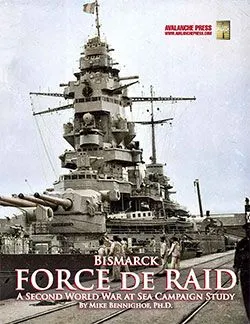








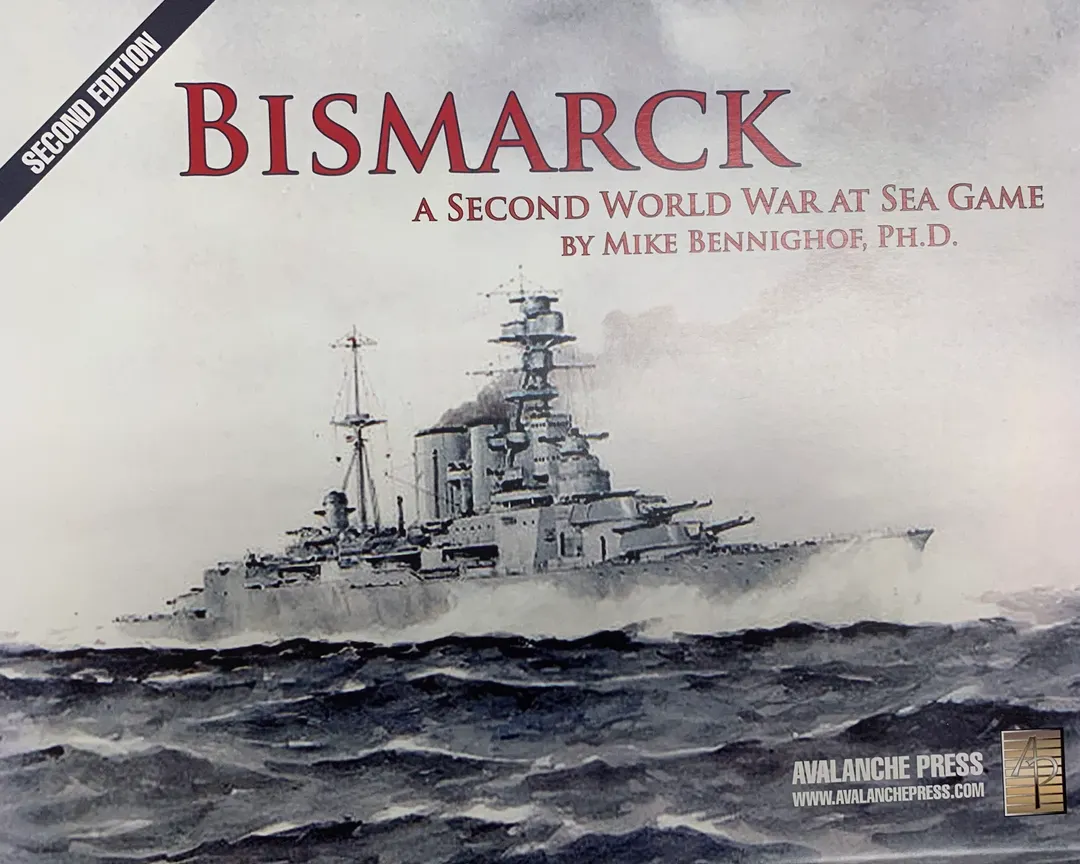
From the Avalanche Press website: The British Home Fleet tried to stop her, but Bismarck’s guns ripped apart the battle cruiser Hood. The pride of the Royal Navy went to the bottom of the Denmark Strait southwest of Iceland and Bismarck disappeared into the fog. But HMS Prince of Wales had managed to hit Bismarck below the water line, and she left behind her a slick of fuel oil. The British Home Fleet relentlessly tracked the German warship, and she finally sank beneath a hail of gunfire. This Second World War at Sea game has one of the larger operational maps in the series; the North Atlantic is a big and empty place. There are two 34x22-inch maps, covering the area from north of Iceland south to the latitude of Spain. The tactical map is a generic blue field of hexagons, used to resolve surface combat. There, ships maneuver and fight using their gunnery and torpedo factors. Each player rolls a number of dice according to the ship’s capabilities, hitting on a result of 6. Gunnery and torpedo damage tables give the results: ships can suffer damage to engines, hull or armament. The game includes 24 pages of rules and 12 scenarios which feature not just the Bismarck chase, but also the North Atlantic raids made by the German warships Admiral Hipper, Admiral Scheer, Gneisenau and Scharnhorst.
Second World War at Sea: Bismarck supports 2 players according to the catalogue. This is the publisher’s listed player count, so the game is designed for exactly that number of participants. Variants for other group sizes, if any, are described in the rulebook of your edition, so check it before setting up a different configuration.
The listed playing time for Second World War at Sea: Bismarck is 30–120 minutes. This is the publisher’s estimate for a full game. The actual duration depends on the group, the player count and familiarity with the rules: first sessions usually run longer, while experienced groups often finish faster. Setup and teaching time are not included in this estimate.
The catalogue lists Second World War at Sea: Bismarck for ages 12 and up. This is the publisher’s recommendation and reflects reading demands, rule complexity and small components rather than theme alone. Younger players can often join with help from an adult, so check the age guidance on your edition and consider your group’s experience with board games.
Second World War at Sea: Bismarck has a complexity rating of 2.9 out of 5 from BoardGameGeek players, which makes it a medium-light game. The rating reflects how much rules knowledge, planning and decision-making a typical game demands. Expect a longer first teach for heavier games, and use a preparation guide before game night.
Second World War at Sea: Bismarck belongs to these categories: Wargame, Nautical, and World War II. Its main mechanics are Hexagon Grid and Simulation. Categories describe the theme and setting of a game, while mechanics describe what players actually do on their turns. Each mechanic links to a catalogue hub with similar games, which helps when you want something comparable.
The credited designers of Second World War at Sea: Bismarck are: Brian L. Knipple. These credits come from the published game data and name the people responsible for the game’s design, not its illustrators or publishers. Designer pages on MeepleRules collect other titles by the same designers, which helps when you enjoy a game and want to find similar ones.
The catalogue lists Second World War at Sea: Bismarck as a base game. It can be played on its own with the components in the box and does not require any other title. Expansions, if any exist, add new content or rules on top of it and are listed separately in the catalogue with a link back to this base game.