- BGG rating
- 7.9
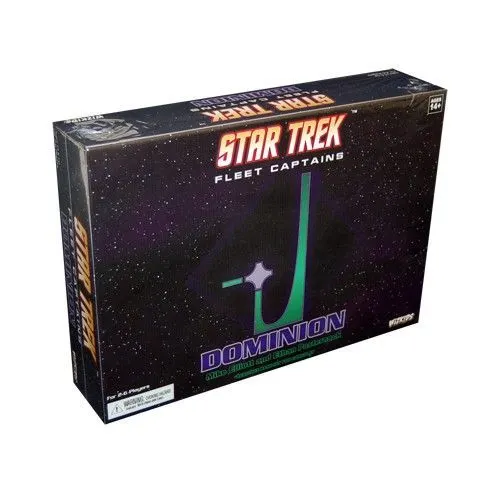
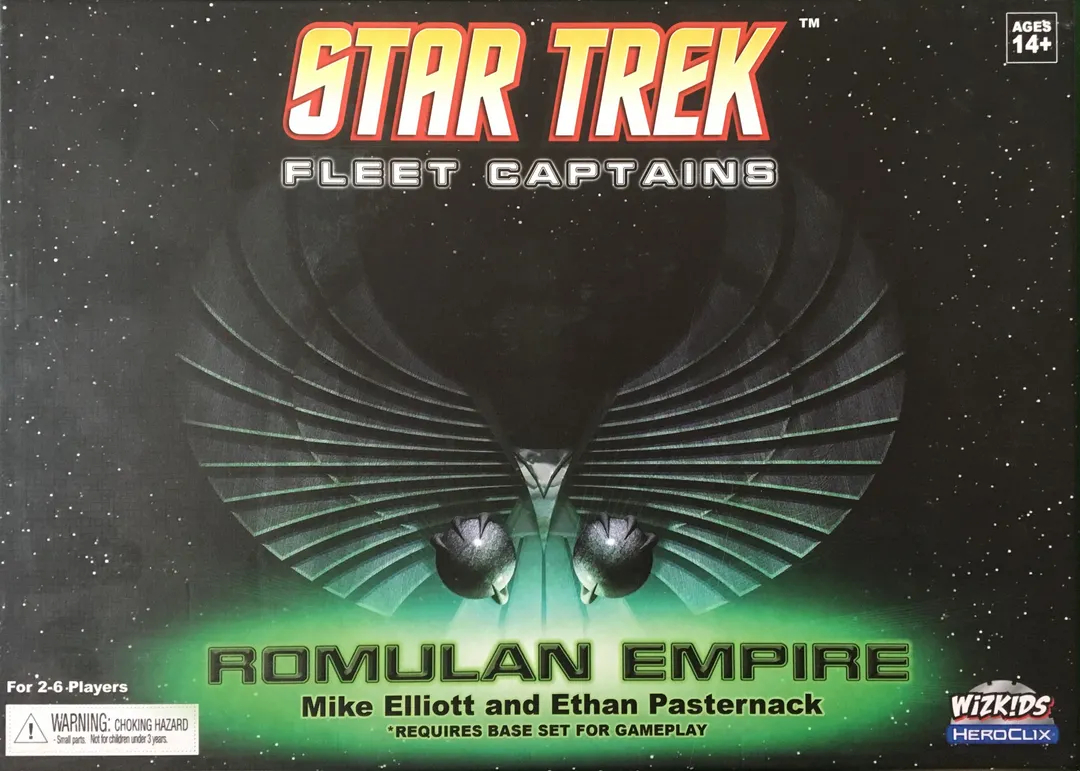
Star Trek: Fleet Captains – Romulan Empire
- 2–6 players
- 90–120 min
- Complexity 3.2/5
- 2012
2011
Rules assistance for Star Trek: Fleet Captains
Plain-language explanations of turns, card effects and disputed situations, with official source references and saved question history.
For 2 players
What would you like to know?
Answers come from the official rulebook, with the page to check.
Star Trek: Fleet Captains is a board game released in 2011 for 2–4 players, 90–120 minutes per game, and ages 14 and up. It was designed by Mike Elliott, Ethan Pasternack, and Bryan Kinsella and its main mechanics are Dice Rolling, Tile Placement, and Modular Board.

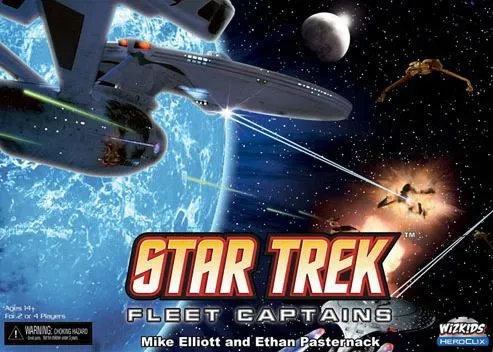
Star Trek: Fleet Captains, designed for two or four players, is set in the "Prime Universe" of STAR TREK (as seen in the various TV series and movies up to Star Trek: Nemesis) and is more adversarial in nature when compared to Star Trek: Expeditions. Each player takes the role of a faction (or race) from the universe. In the base game, the choices are Klingons and Federation. Each faction has a number of ships (on Clix dials similar to the Heroclix line of components) of varying ability and with a corresponding “size.” Fleets of ships are drafted to a given size total which reflects the victory points required to win. Thus, larger fleet sizes lead to higher point (and longer games). Players then “shuffle build” a deck of command cards. Choosing four decks from a set of ten decks per faction. Each deck has a unique flavor or theme, with corresponding major characters. For instance the Klingons have a deck themed around larger ships and imperial domination and Gowron is a central character. The four decks chosen will help to set the player’s strategy for winning. The ships chosen have physical stats like weapons, shields, engines, and sensors. They also have mission totals for science, influence, and combat missions. These determine the kinds and numbers of each kind of mission cards the player draws to form a mission deck. Completing missions gains the player points, which will win them the game. Missions could be as simple as damage an opposing ship that is larger than your own (combat), to as complex as claiming the spaces connecting your command post to your opponents (influence). Thus a player’s chosen ships sets the types of missions they will need to earn points and the deck they build determines the way they will complete missions. Points can also be earned for non-mission actions such as destroying a ship or building a starbase. The game itself plays out on a randomly built board of hex cards, called sectors that start the game unexplored. As each ship progresses through the sector, the cards are turned face up, revealing what is in that part of the sector (a Class-M planet, a Class-J Nebula, empty space, etc...). There are additionally random events that can occur when exploring, which usually correspond to a single episode of a series (for instance one encounter is “trouble with tribbles.” Some of these encounters also give victory points. Overall, the game can best be thought of as playing out an entire season of Star Trek with the conflict between players representing the major story arc and the turns, missions, and random encounters representing individual episodes. Players will move their ships, explore space, complete missions, play cards to upgrade their ships (and staff them with famous and not so famous crewmembers), or boost their stats in combat. Combat, while important, is not the sole path to victory, with the mission cards being the primary factor (some of which will encourage combat). The style of game will depend heavily on individual player decisions, but no matter what, it will feel like Star Trek.
Star Trek: Fleet Captains supports 2–4 players according to the catalogue. This range comes from the publisher’s listed player count, so the game can be set up for any group size within it. Some setups, rules and scoring details may still vary by player count, so check your edition’s rulebook for the exact configuration.
The listed playing time for Star Trek: Fleet Captains is 90–120 minutes. This is the publisher’s estimate for a full game. The actual duration depends on the group, the player count and familiarity with the rules: first sessions usually run longer, while experienced groups often finish faster. Setup and teaching time are not included in this estimate.
The catalogue lists Star Trek: Fleet Captains for ages 14 and up. This is the publisher’s recommendation and reflects reading demands, rule complexity and small components rather than theme alone. Younger players can often join with help from an adult, so check the age guidance on your edition and consider your group’s experience with board games.
Star Trek: Fleet Captains has a complexity rating of 3.1 out of 5 from BoardGameGeek players, which makes it a medium-weight game. The rating reflects how much rules knowledge, planning and decision-making a typical game demands. Expect a longer first teach for heavier games, and use a preparation guide before game night.
Star Trek: Fleet Captains belongs to these categories: Fighting, Movies / TV / Radio theme, and Science Fiction. Its main mechanics are Dice Rolling, Tile Placement, and Modular Board. Categories describe the theme and setting of a game, while mechanics describe what players actually do on their turns. Each mechanic links to a catalogue hub with similar games, which helps when you want something comparable.
The credited designers of Star Trek: Fleet Captains are: Mike Elliott, Ethan Pasternack, and Bryan Kinsella. These credits come from the published game data and name the people responsible for the game’s design, not its illustrators or publishers. Designer pages on MeepleRules collect other titles by the same designers, which helps when you enjoy a game and want to find similar ones.
The catalogue lists Star Trek: Fleet Captains as a base game. It can be played on its own with the components in the box and does not require any other title. Expansions, if any exist, add new content or rules on top of it and are listed separately in the catalogue with a link back to this base game.