
- BGG rank
- BGG #18,211
- BGG rating
- 6.5
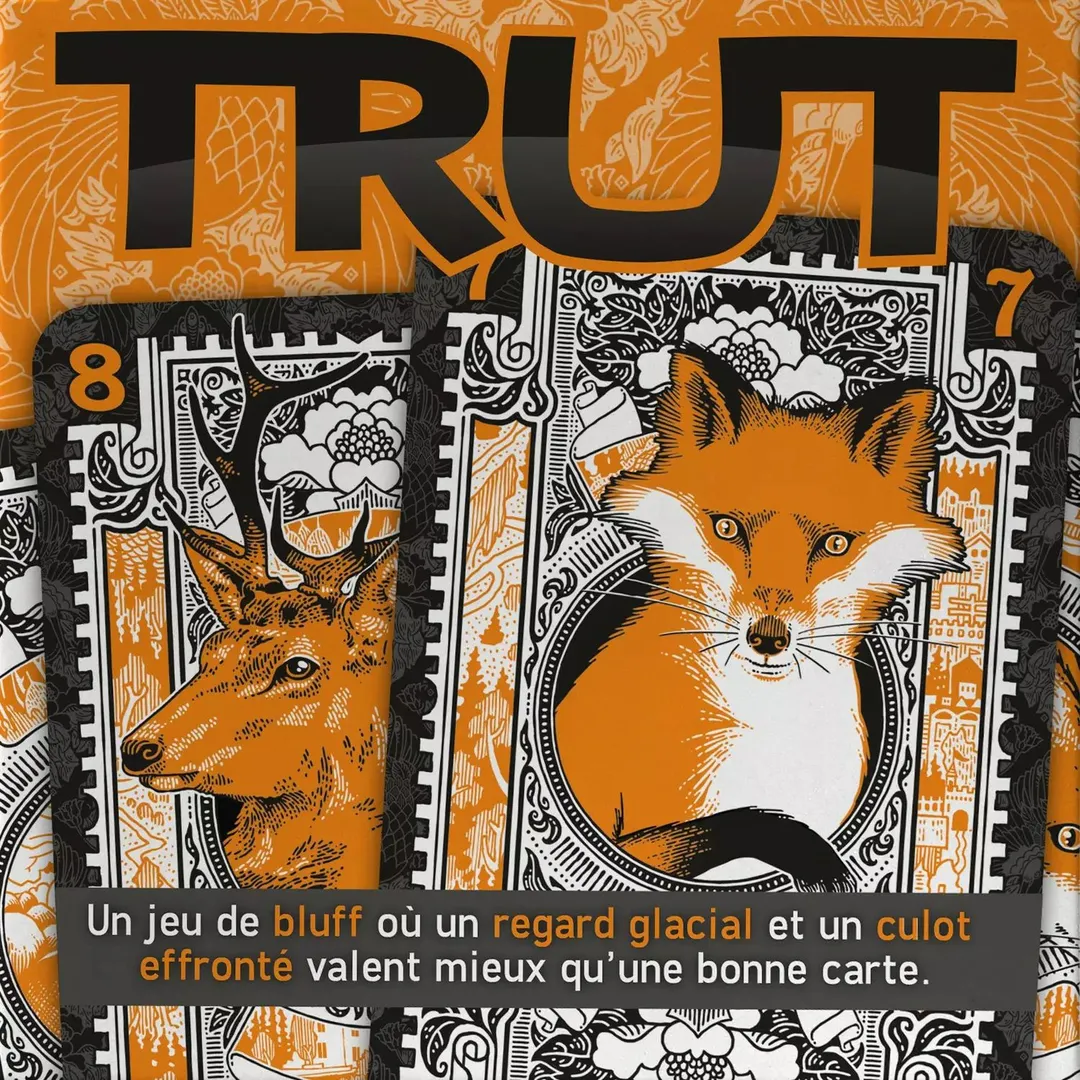
TRUT
- 2–4 players
- 5–15 min
- Complexity 1.7/5
- 1600
2021
Rules assistance for Tea, Scones, and Arsenic
Plain-language explanations of turns, card effects and disputed situations, with official source references and saved question history.
For 1 player
What would you like to know?
Answers come from the official rulebook, with the page to check.
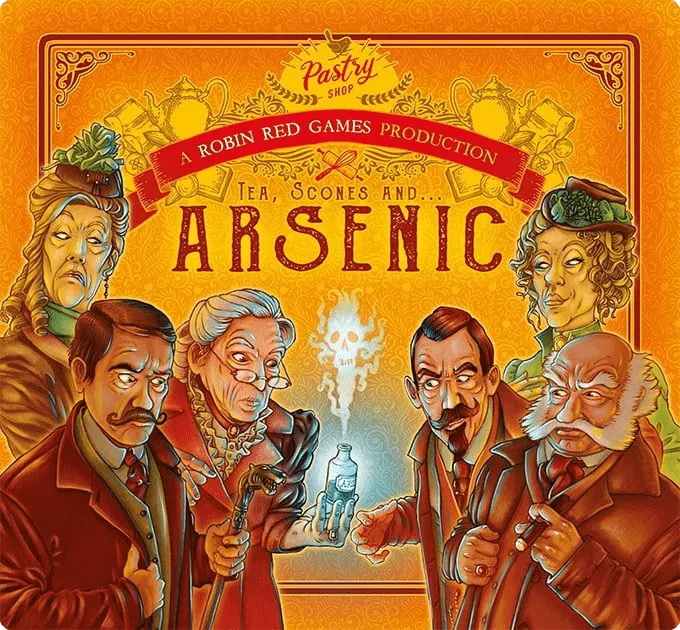
Tea, Scones, and Arsenic is a board game released in 2021 for 1–6 players, 15–30 minutes per game, and ages 7 and up. It was designed by Pascal Boucher and its main mechanics are Push Your Luck, Player Elimination, and Deduction.




You are members of an old English aristocratic family. Your uncle from America had the excellent idea of passing away bequeathing you his immense fortune. To celebrate the event, you decide to go for tea and enjoy some scones. However, each being equally greedy, each of the heirs decides to poison the cookies with Arsenic (a safe bet) in order to increase their share of their inheritance. Digestion promises to be difficult... Tea, Scones and ARSENIC is a family game, for 1 to 6 players. It’s a bluff party-game full of thought, strategy and a hint of luck. Goal of the game : Eat the most Scones without dying in excruciating pain. Setting up : Each player chooses a Cup board for their aristocrat (the choice of characters has no effect on the course of the game), and take 3 Sugar Cubes. The Scones are placed randomly, Poison side down, in the cookie box. You play with all the Scones, regardless of the number of players. Some Scones are normal, but others contain varying amounts of poison. The amount of poison is indicated at the back of the Scone. For each type of Scone, there are 2 harmless and 4 poisoned. The lethal dose at which a character succumbs to poison and is eliminated from the game differs depending on the number of players. The 1st player takes a Scone in hand and turns it over discreetly to know his dose of poison (the other players should not see anything), he can shuffle the Scones before picking if he want to. Either he eats it (he decides to keep it and places it in his Cup in front of him, Poison side hidden) or he puts it back in its place in the box and consumes a Sugar Cube to delay (he can shuffle the Scones afterward if he want to). In the course of the game, Scones pile up on his Cup. A player can look at his Scones at any time. In either case, their turn ends and it is the next player’s turn. When a player runs out of Sugar Cube, he is forced to eat the Scone. Each player, at the start of their turn (before playing), can decide that they have had enough, and stop playing (they take a turn each time it is their turn to play). In doing so, he forces the other players to continue for 2 more rounds (Honor rounds) without the possibility for them to stop. Once the 2 Honor Rounds have been completed, one of the surviving players (if any) may in round choose to stop. The remaining players therefore set off for 2 additional Honor Rounds. And so on… If a player reaches his natural resistance to poison (i.e. the number of arsenic doses he accumulated equals or exceeds the lethal dose), he dies (he is eliminated and his Scones are not counted). The deceased may choose to simply turn their board over to the Deceased side and laconically announce « I’m dead ». Or ... he may suddenly put his hands to his throat, uttering terrible rumblings interspersed with barely audible words such as « Cursed! », « Why so much hatred ... » or « Who will feed the dog? » Before slipping slowly from his chair and ending up lying on the floor in a grotesque position. To each his own style… —user summary
Tea, Scones, and Arsenic supports 1–6 players according to the catalogue. This range comes from the publisher’s listed player count, so the game can be set up for any group size within it. Some setups, rules and scoring details may still vary by player count, so check your edition’s rulebook for the exact configuration.
The listed playing time for Tea, Scones, and Arsenic is 15–30 minutes. This is the publisher’s estimate for a full game. The actual duration depends on the group, the player count and familiarity with the rules: first sessions usually run longer, while experienced groups often finish faster. Setup and teaching time are not included in this estimate.
The catalogue lists Tea, Scones, and Arsenic for ages 7 and up. This is the publisher’s recommendation and reflects reading demands, rule complexity and small components rather than theme alone. Younger players can often join with help from an adult, so check the age guidance on your edition and consider your group’s experience with board games.
Tea, Scones, and Arsenic has a complexity rating of 1.3 out of 5 from BoardGameGeek players, which makes it a light game. The rating reflects how much rules knowledge, planning and decision-making a typical game demands. Expect a longer first teach for heavier games, and use a preparation guide before game night.
Tea, Scones, and Arsenic belongs to these categories: Humor, Party Game, and Murder / Mystery. Its main mechanics are Push Your Luck, Player Elimination, and Deduction. Categories describe the theme and setting of a game, while mechanics describe what players actually do on their turns. Each mechanic links to a catalogue hub with similar games, which helps when you want something comparable.
The credited designers of Tea, Scones, and Arsenic are: Pascal Boucher. These credits come from the published game data and name the people responsible for the game’s design, not its illustrators or publishers. Designer pages on MeepleRules collect other titles by the same designers, which helps when you enjoy a game and want to find similar ones.
The catalogue lists Tea, Scones, and Arsenic as a base game. It can be played on its own with the components in the box and does not require any other title. Expansions, if any exist, add new content or rules on top of it and are listed separately in the catalogue with a link back to this base game.