
- BGG rank
- BGG #10,101
- BGG rating
- 6.8
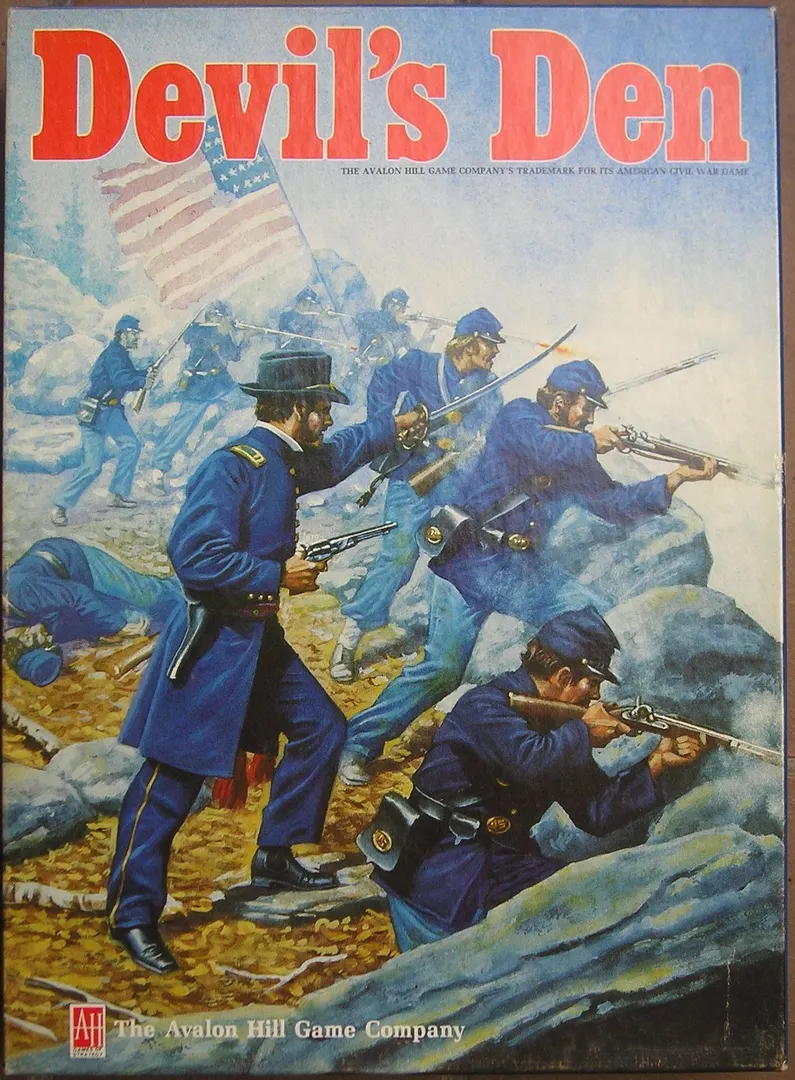
Devil's Den
- 2 players
- 360 min
- Complexity 3.2/5
- 1980
1982
Rules assistance for The Battle of Monmouth
Plain-language explanations of turns, card effects and disputed situations, with official source references and saved question history.
For 2 players
What would you like to know?
Answers come from the official rulebook, with the page to check.
The Battle of Monmouth is a board game released in 1982 for 2 players, 180 minutes per game, and ages 12 and up. It was designed by Eric Lee Smith, Leonard Millman, and David G. Martin and its main mechanics are Dice Rolling, Grid Movement, and Hexagon Grid.




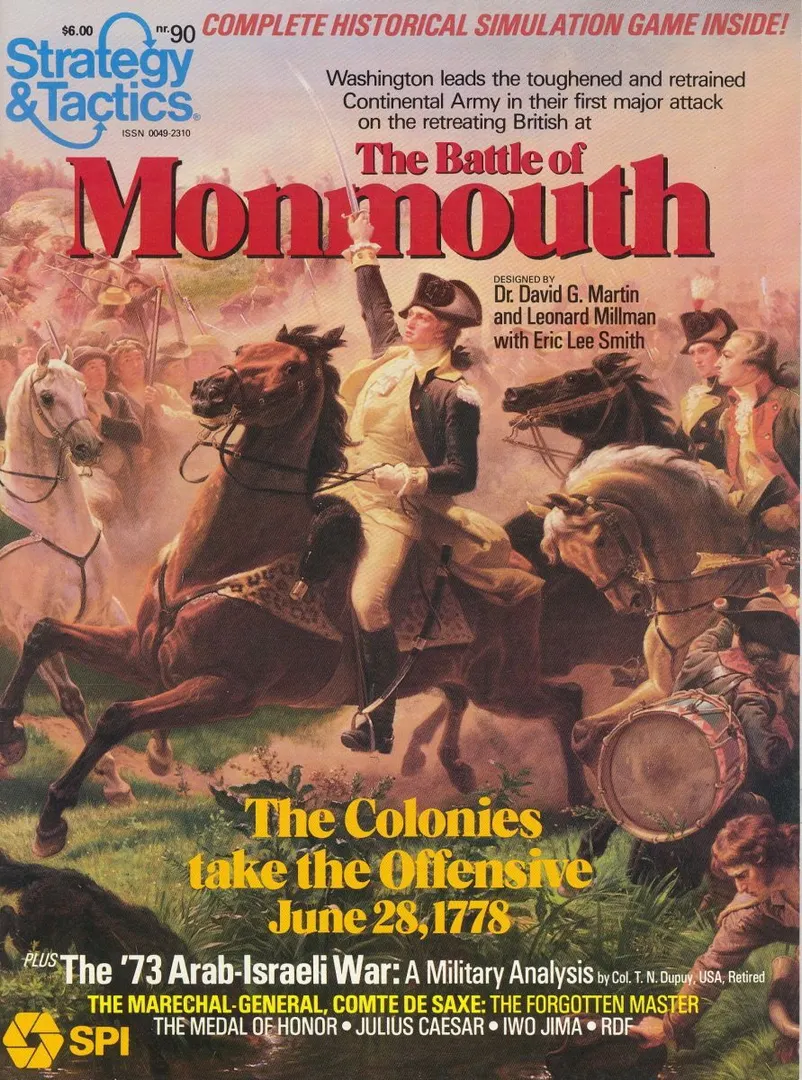
The battle of Monmouth, June 28 1778, was the last major fight in the northern theater, during the American Revolutionary War, and largest one-day battle of the whole war, for the number of men involved. Gen. Washington attacks Lt. Gen Henry Clinton's rearguard at Monmouth Court House. The legend of Molly Pitcher is generally associated with this battle. The game uses Wellington's Victory's system, modified for the American Revolution era. No cavalry charges and complex rules. The main aspects of the rules include unit facing, morale modified by casualties received, command control and fatigue due to hot temperatures during the battle. Victory is determined by eliminating enemy strength points and capturing the 4 crossroads in the battle area. Map terrain has five levels in increments of 30 feet, with each hex spanning 100 yards side to side. Each infantry unit represents a regiment (or several regiments for some Colonial units); each artillery unit represents a battery of two guns; each dragoon unit represents a regiment of cavalry. Turns represent 20 minutes of real time. Three scenarios are provided: one introductory involving the hedgerow battle, and two advanced covering Monmouth Courthouse and the Grand Battle. Published in Strategy & Tactics magazine Nr.90 (Jan/Feb 1982)
The Battle of Monmouth supports 2 players according to the catalogue. This is the publisher’s listed player count, so the game is designed for exactly that number of participants. Variants for other group sizes, if any, are described in the rulebook of your edition, so check it before setting up a different configuration.
The listed playing time for The Battle of Monmouth is 180 minutes. This is the publisher’s estimate for a full game. The actual duration depends on the group, the player count and familiarity with the rules: first sessions usually run longer, while experienced groups often finish faster. Setup and teaching time are not included in this estimate.
The catalogue lists The Battle of Monmouth for ages 12 and up. This is the publisher’s recommendation and reflects reading demands, rule complexity and small components rather than theme alone. Younger players can often join with help from an adult, so check the age guidance on your edition and consider your group’s experience with board games.
The Battle of Monmouth has a complexity rating of 2.6 out of 5 from BoardGameGeek players, which makes it a medium-light game. The rating reflects how much rules knowledge, planning and decision-making a typical game demands. Expect a longer first teach for heavier games, and use a preparation guide before game night.
The Battle of Monmouth belongs to these categories: Wargame, Age of Reason, and American Revolutionary War. Its main mechanics are Dice Rolling, Grid Movement, and Hexagon Grid. Categories describe the theme and setting of a game, while mechanics describe what players actually do on their turns. Each mechanic links to a catalogue hub with similar games, which helps when you want something comparable.
The credited designers of The Battle of Monmouth are: Eric Lee Smith, Leonard Millman, and David G. Martin. These credits come from the published game data and name the people responsible for the game’s design, not its illustrators or publishers. Designer pages on MeepleRules collect other titles by the same designers, which helps when you enjoy a game and want to find similar ones.
The catalogue lists The Battle of Monmouth as a base game. It can be played on its own with the components in the box and does not require any other title. Expansions, if any exist, add new content or rules on top of it and are listed separately in the catalogue with a link back to this base game.