
- BGG rank
- BGG #8,831
- BGG rating
- 8.8
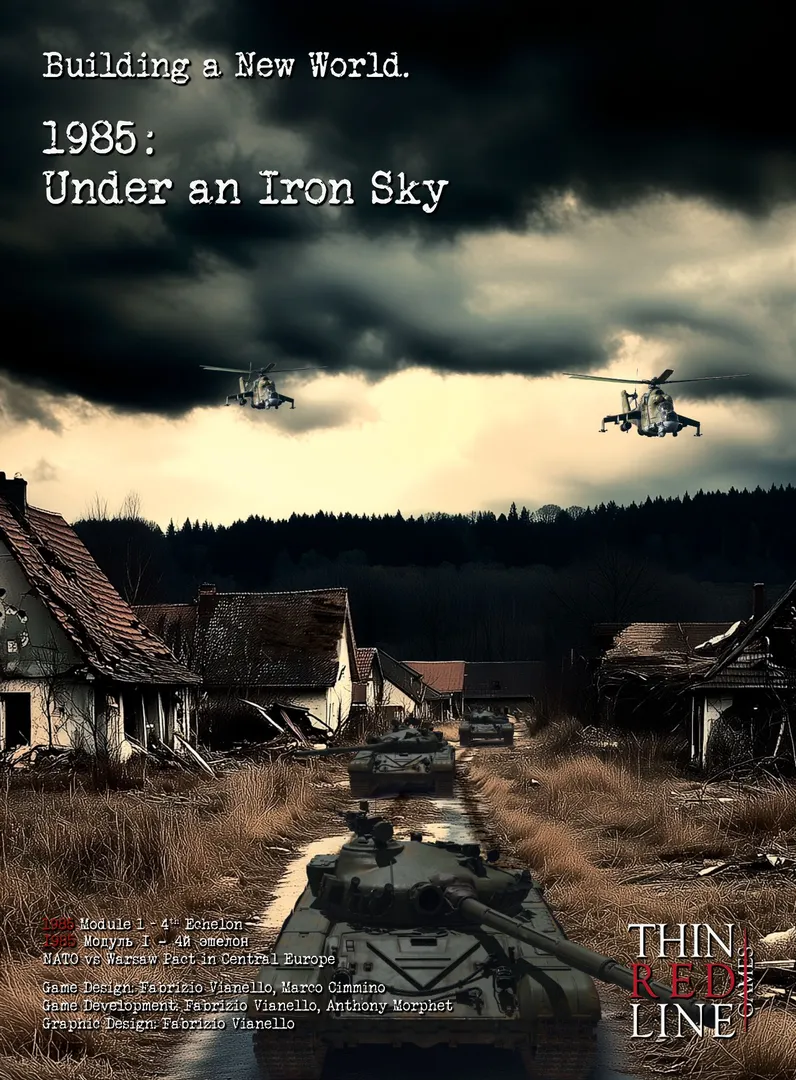
1985: Under an Iron Sky
- 2–6 players
- 120–8640 min
- Complexity 4.2/5
- 2018
2024
Rules assistance for The Fate of All
Plain-language explanations of turns, card effects and disputed situations, with official source references and saved question history.
For 2 players
What would you like to know?
Answers come from the official rulebook, with the page to check.
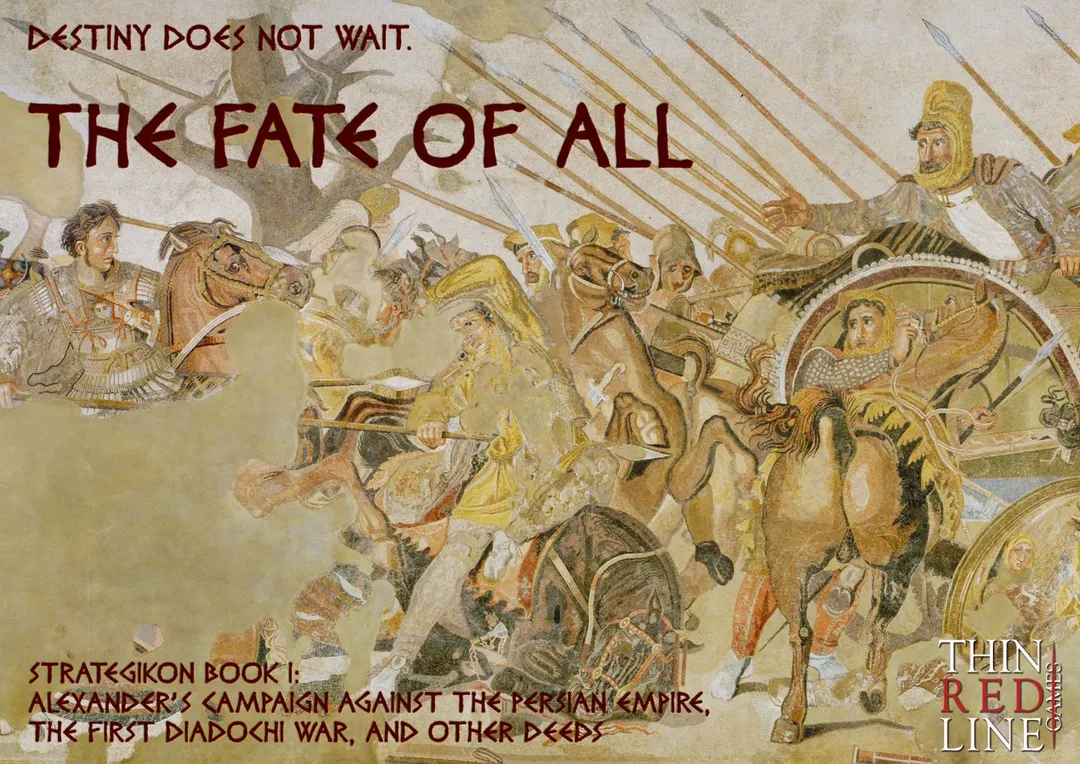
The Fate of All is a board game released in 2024 for 2 players, 240–1200 minutes per game, and ages 14 and up. It was designed by Fabrizio Vianello and its main mechanics are Dice Rolling, Secret Unit Deployment, and Hexagon Grid.









Loosely inspired on SPI’s “The Conquerors”, The Fate of All is an operational / tactical simulation covering the first four years of the campaign led by Alexander the Great against the Achaemenid Empire ruled by Darius III, and other related conflicts. The final goal is to give a realistic representation of ancient warfare, without strange salads of godly interventions, auguries and Homeric duels. In the end, players will find that the problems faced were similar to those encountered during the Napoleonic era or the American Civil War. Counters are 5/8″, each one representing a formation, from a Macedonian Phalanx Taxis (approx. 1500 soldiers) to a Cavalry Ile (200 – 300 mounted soldiers). Commanders and naval forces are also represented and will be key elements for the final victory. Rules are centred on the problems of army organisation, supply and morale: Commanders are essentials, armies must be organised in a balanced way or they will move slowly, cavalry must be used for foraging, raid and reconnaissance, morale must be kept under control using sound military achievements or donations. Political aspects are also a key element: Actions like Plundering and Sacking will have a negative impact on the local support by the ruling class and population, and both sides will have to use money or threats to gain it back. Last but not least, treason, revolts and dubious allies will be a problem too. The four maps cover Greece, part of the Balkans, Anatolia, Egypt and the Middle East up to Babylon. The scale is 30 km per hex with monthly turns. The maps are designed using the latest archaeological studies and findings, but despite centuries of research several things are still only vaguely known: Some examples are the extension and path of the Persian Royal Roads, the location of several important cities and the exact route of Alexander’s Army. In these cases, the “most accepted theory” rule has been used. Battles can be fought using Strategic Combat, still realistic but quicker, or to their full extent using the Tactical Rules and Map – probably the best choice for a decisive battle. All the classical sources and several modern military-focused studies have been used during development. In particular, The Anabasis of Alexander by Arrian was chosen as the main and most reliable classical source for two reasons: Arrian based most of his writing on the now lost Ptolemy’s account of the campaign, and he was himself a military commander, thus having a better understanding of the problems and key facts of a military campaign. Game Highlights 30 km per hex, one month per turn Units representing various formations, from Phalanx to Chariots Order of battle and commanders based on primary sources and the most recent historical research Realistic supply problems with realistic and possibly violent solutions Cavalry Reconnaissance, Foraging and Raiding Reaction Movement, not so easy retreats and catastrophic routs Attrition and Army Morale, your first problems in the morning Naval Warfare Satrapies, Taxation and Bribes Revolts, Treachery and worse Five different scenarios: The Anger of Achilles - The four decisive years of Alexander’s campaign, 334 BCE Ten Thousand, Again - Parmenion’s preparatory expedition in Anatolia, 336 BCE Arise, Hellas! - The Greek revolt following Alexander’s death, 323 BCE It All Comes to This - The final clash between Alexander and Darius, 331 BCE The Shattered Bonds - The first Diadochi war, 320 BCE Winner of the 2024 Charles Roberts Award in the Ancient category. —description from the publisher
The Fate of All supports 2 players according to the catalogue. This is the publisher’s listed player count, so the game is designed for exactly that number of participants. Variants for other group sizes, if any, are described in the rulebook of your edition, so check it before setting up a different configuration.
The listed playing time for The Fate of All is 240–1200 minutes. This is the publisher’s estimate for a full game. The actual duration depends on the group, the player count and familiarity with the rules: first sessions usually run longer, while experienced groups often finish faster. Setup and teaching time are not included in this estimate.
The catalogue lists The Fate of All for ages 14 and up. This is the publisher’s recommendation and reflects reading demands, rule complexity and small components rather than theme alone. Younger players can often join with help from an adult, so check the age guidance on your edition and consider your group’s experience with board games.
The Fate of All has a complexity rating of 3.0 out of 5 from BoardGameGeek players, which makes it a medium-weight game. The rating reflects how much rules knowledge, planning and decision-making a typical game demands. Expect a longer first teach for heavier games, and use a preparation guide before game night.
The Fate of All belongs to these categories: Wargame, Nautical, and Ancient. Its main mechanics are Dice Rolling, Secret Unit Deployment, and Hexagon Grid. Categories describe the theme and setting of a game, while mechanics describe what players actually do on their turns. Each mechanic links to a catalogue hub with similar games, which helps when you want something comparable.
The credited designers of The Fate of All are: Fabrizio Vianello. These credits come from the published game data and name the people responsible for the game’s design, not its illustrators or publishers. Designer pages on MeepleRules collect other titles by the same designers, which helps when you enjoy a game and want to find similar ones.
The catalogue lists The Fate of All as a base game. It can be played on its own with the components in the box and does not require any other title. Expansions, if any exist, add new content or rules on top of it and are listed separately in the catalogue with a link back to this base game.