
- BGG rank
- BGG #13,587
- BGG rating
- 8.1
Sellswords & Spellslingers
- 1–6 players
- 30–120 min
- Complexity 2.0/5
- 2018
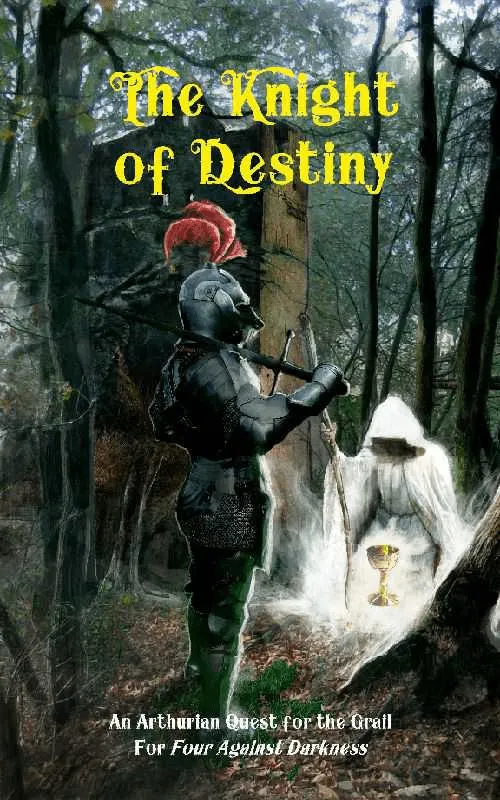
Expansion for Four Against Darkness
2016
Rules assistance for The Knight of Destiny: An Arthurian Quest for the Grail for Four Against Darkness
Plain-language explanations of turns, card effects and disputed situations, with official source references and saved question history.
What would you like to know?
Answers come from the official rulebook, with the page to check.
The Knight of Destiny: An Arthurian Quest for the Grail for Four Against Darkness is an expansion for Four Against Darkness released in 2016 for 1 player and 45–60 minutes per game. It was designed by Andrea Sfiligoi and Victor Jarmusz and its main mechanics are Dice Rolling, Paper-and-Pencil, and Role Playing.
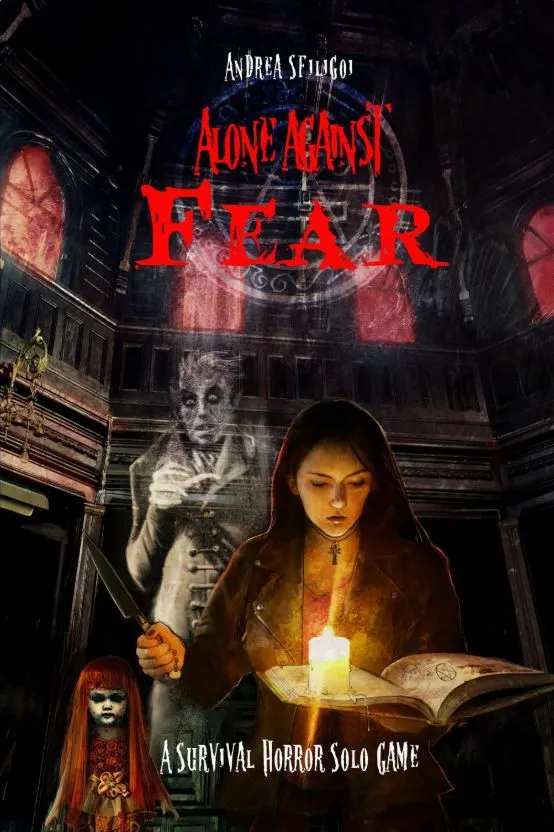







Knight of Destiny is an Arthurian adventure for a single character, a questing paladin, using the Four Against Darkness rules. Your character can also hire retainers along the way, enlisting men-at-arms, merchants, and other travellers to help him in his quest for the Grail. The Kingdom is in decay. Lancelot has left and King Arthur has fallen ill. Traitor knights, led by Morgana and her unholy child Mordred have rebelled. Only the Grail can heal Arthur and end the evil, but it is a race against time. The traitors are hunting paladins to stop the quest. If the Grail is not found in time, all will be lost to darkness… This adventure requires no mapping. It includes rules for paladins (and guidelines to use them in your standard Four Against Darkness games), Arthurian magic items, and random tables to generate inns, encounters, quests, and even the names of characters met.
The Knight of Destiny: An Arthurian Quest for the Grail for Four Against Darkness supports 1 player according to the catalogue. This is the publisher’s listed player count, so the game is designed for exactly that number of participants. Variants for other group sizes, if any, are described in the rulebook of your edition, so check it before setting up a different configuration.
The listed playing time for The Knight of Destiny: An Arthurian Quest for the Grail for Four Against Darkness is 45–60 minutes. This is the publisher’s estimate for a full game. The actual duration depends on the group, the player count and familiarity with the rules: first sessions usually run longer, while experienced groups often finish faster. Setup and teaching time are not included in this estimate.
The Knight of Destiny: An Arthurian Quest for the Grail for Four Against Darkness has a complexity rating of 2.5 out of 5 from BoardGameGeek players, which makes it a medium-light game. The rating reflects how much rules knowledge, planning and decision-making a typical game demands. Expect a longer first teach for heavier games, and use a preparation guide before game night.
The Knight of Destiny: An Arthurian Quest for the Grail for Four Against Darkness belongs to these categories: Print & Play, Exploration, and Adventure. Its main mechanics are Dice Rolling, Paper-and-Pencil, and Role Playing. Categories describe the theme and setting of a game, while mechanics describe what players actually do on their turns. Each mechanic links to a catalogue hub with similar games, which helps when you want something comparable.
The credited designers of The Knight of Destiny: An Arthurian Quest for the Grail for Four Against Darkness are: Andrea Sfiligoi and Victor Jarmusz. These credits come from the published game data and name the people responsible for the game’s design, not its illustrators or publishers. Designer pages on MeepleRules collect other titles by the same designers, which helps when you enjoy a game and want to find similar ones.
The catalogue lists The Knight of Destiny: An Arthurian Quest for the Grail for Four Against Darkness as an expansion for Four Against Darkness. Expansions add new content, rules or scenarios to the base game and usually cannot be played on their own, so you need Four Against Darkness to use it. Check that your edition of Four Against Darkness is compatible, as some expansions were revised between editions.

