
- BGG rank
- BGG #3,940
- BGG rating
- 6.8
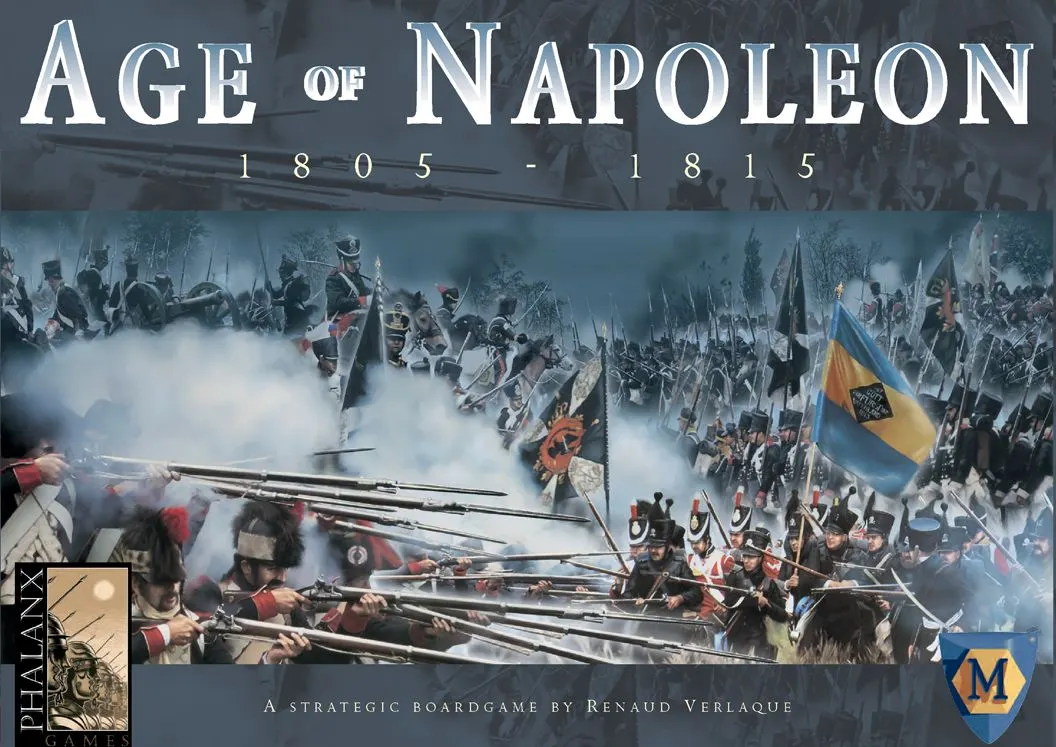
Age of Napoleon
- 2 players
- 60 min
- Complexity 3.2/5
- 2003
2008
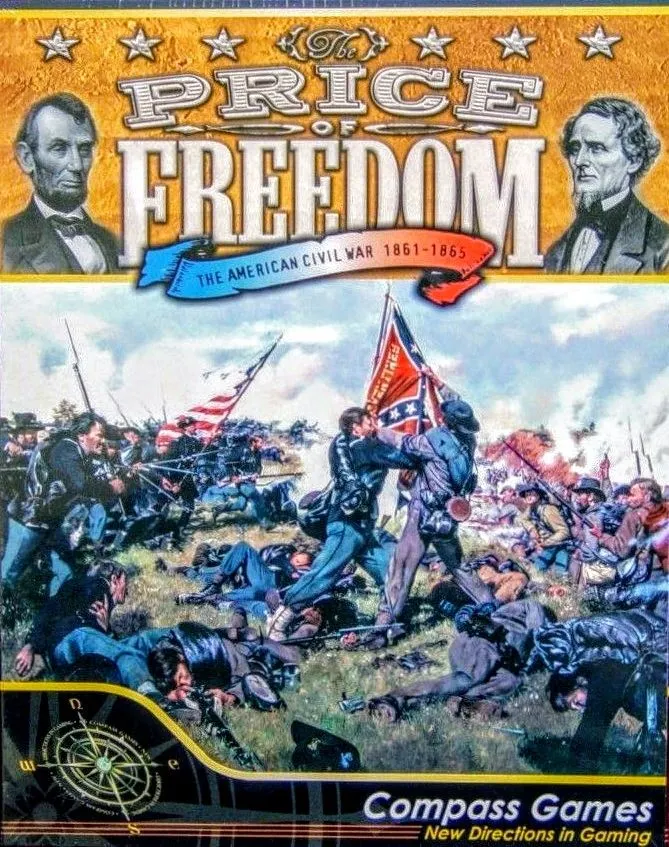
Rules assistance for The Price of Freedom: The American Civil War 1861-1865
Plain-language explanations of turns, card effects and disputed situations, with official source references and saved question history.
For 2 players
What would you like to know?
Answers come from the official rulebook, with the page to check.
The Price of Freedom: The American Civil War 1861-1865 is a board game released in 2008 for 2 players, 180 minutes per game, and ages 12 and up. It was designed by Renaud Verlaque and its main mechanics are Dice Rolling, Point to Point Movement, and Simulation.
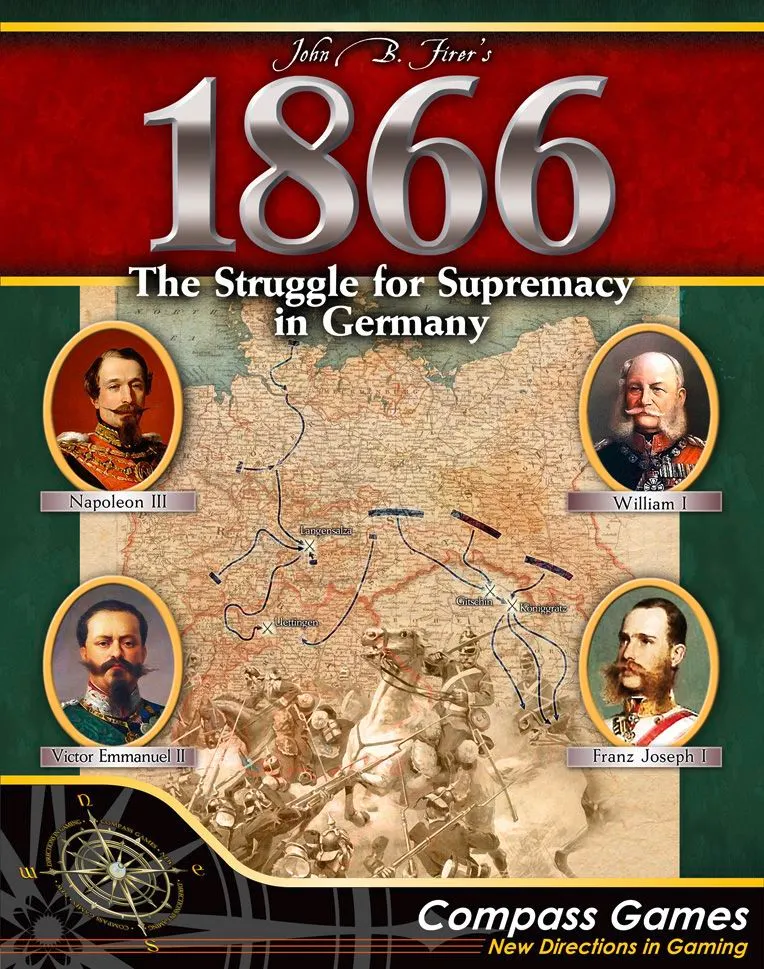
(from the designer:) The Price of Freedom: The American Civil War, 1861-65 is Renaud Verlaque's second published design after Age of Napoleon, winner of 2003 Best Pre-WW2 Historical Boardgame CSR award. The Price of Freedom is a true grand-strategic-level look at the American Civil War. Using an original card-driven system, it provides strong historical flavor in a simple game that can consistently be played in three hours. This makes The Price of Freedom an ideal game for today's gamer's busy lifestyle, as well as for tournaments. As you might expect from a quick-playing game, counter density in The Price of Freedom is purposefully low and is also constrained by each side’s War Effort level, an aggregate measure of economic, political and diplomatic support for the war. Each military game piece represents a "corps" of 20-30,000 men. Corps must organized into armies led by the colorful commanders that every American Civil War aficionado has come to love or hate. Twenty-five historical army commanders are available for theater or field command, from Ben "Spoons" Butler to "Massa" Robert E. Lee, with each commander rated -1, 0 or +1 for offense, defense and movement. Armies move and fight on a functional and yet very attractive point-to-point representation of the Eastern and Western theaters, vying to capture or defend critical territory or simply to beat each other out. The card-driven engine ensures that no game of The Price of Freedom is ever the same as another and that there are plenty of hard choices to make in each campaign impulse. The game uses a well-balanced deck of 55 cards that are all playable by both sides. Each card has two uses that are generally mutually exclusive: either it can be used by spending its operational value (ranging 1-3) on various actions (moving, reorganizing or reinforcing armies) or it can be used to implement the event described on the card. Events can affect army leadership (Commander-in-Chief, Clash of Egos, Shot from the Saddle) or battle resolution (Blundering Fool; Seeing the Elephant; Bickering Generals; etc.), help gain operational advantage (Strategic Transfer; Turning Movement; Interior Lines), or simulate major political, economic or diplomatic events (Draft; Kentucky; Blockade; etc.). Like overall army size, hand size is dictated by each side's War Effort level. The Union player can win by driving down the Confederate War Effort level low enough or by vastly outnumbering Confederate troops. The Confederate player can win in similar fashion or by hanging long and well enough to cause Lincoln to lose the 1864 elections or prevent the Union player from achieving the historical outcome. So convene your cabinet, call up your generals, muster your troops, it is time to fight and find out what is the true Price of Freedom! (from Compass Games website:)Components: 1 25"x19" cardstock map 132 counters 1 deck of 55 playing cards 2 player-aid cards 1 rules booklet 2 6-sided dice 1 full color box and lid
The Price of Freedom: The American Civil War 1861-1865 supports 2 players according to the catalogue. This is the publisher’s listed player count, so the game is designed for exactly that number of participants. Variants for other group sizes, if any, are described in the rulebook of your edition, so check it before setting up a different configuration.
The listed playing time for The Price of Freedom: The American Civil War 1861-1865 is 180 minutes. This is the publisher’s estimate for a full game. The actual duration depends on the group, the player count and familiarity with the rules: first sessions usually run longer, while experienced groups often finish faster. Setup and teaching time are not included in this estimate.
The catalogue lists The Price of Freedom: The American Civil War 1861-1865 for ages 12 and up. This is the publisher’s recommendation and reflects reading demands, rule complexity and small components rather than theme alone. Younger players can often join with help from an adult, so check the age guidance on your edition and consider your group’s experience with board games.
The Price of Freedom: The American Civil War 1861-1865 has a complexity rating of 2.9 out of 5 from BoardGameGeek players, which makes it a medium-light game. The rating reflects how much rules knowledge, planning and decision-making a typical game demands. Expect a longer first teach for heavier games, and use a preparation guide before game night.
The Price of Freedom: The American Civil War 1861-1865 belongs to these categories: Wargame, Post-Napoleonic, and American Civil War. Its main mechanics are Dice Rolling, Point to Point Movement, and Simulation. Categories describe the theme and setting of a game, while mechanics describe what players actually do on their turns. Each mechanic links to a catalogue hub with similar games, which helps when you want something comparable.
The credited designers of The Price of Freedom: The American Civil War 1861-1865 are: Renaud Verlaque. These credits come from the published game data and name the people responsible for the game’s design, not its illustrators or publishers. Designer pages on MeepleRules collect other titles by the same designers, which helps when you enjoy a game and want to find similar ones.
The catalogue lists The Price of Freedom: The American Civil War 1861-1865 as a base game. It can be played on its own with the components in the box and does not require any other title. Expansions, if any exist, add new content or rules on top of it and are listed separately in the catalogue with a link back to this base game.