
- BGG rank
- BGG #10,277
- BGG rating
- 6.5
John Prados' Third Reich
- 2–5 players
- 360 min
- Complexity 4.0/5
- 2001
2004
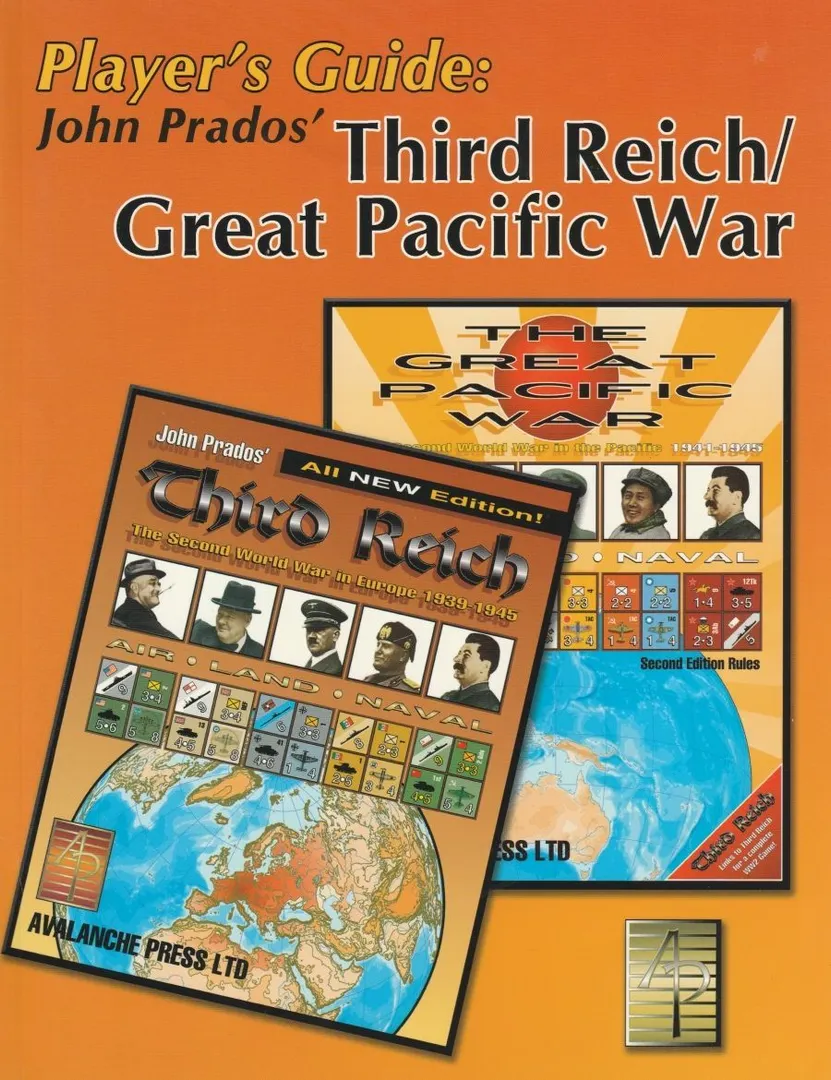
Rules assistance for Third Reich/Great Pacific War Player's Guide
Plain-language explanations of turns, card effects and disputed situations, with official source references and saved question history.
What would you like to know?
Answers come from the official rulebook, with the page to check.
Third Reich/Great Pacific War Player's Guide is a board game expansion released in 2004 for 2–5 players, 360 minutes per game, and ages 12 and up. It was designed by John Prados, Michael Bennighof, Brian L. Knipple, William Sariego, and John Herrington and its main mechanics are Hexagon Grid.





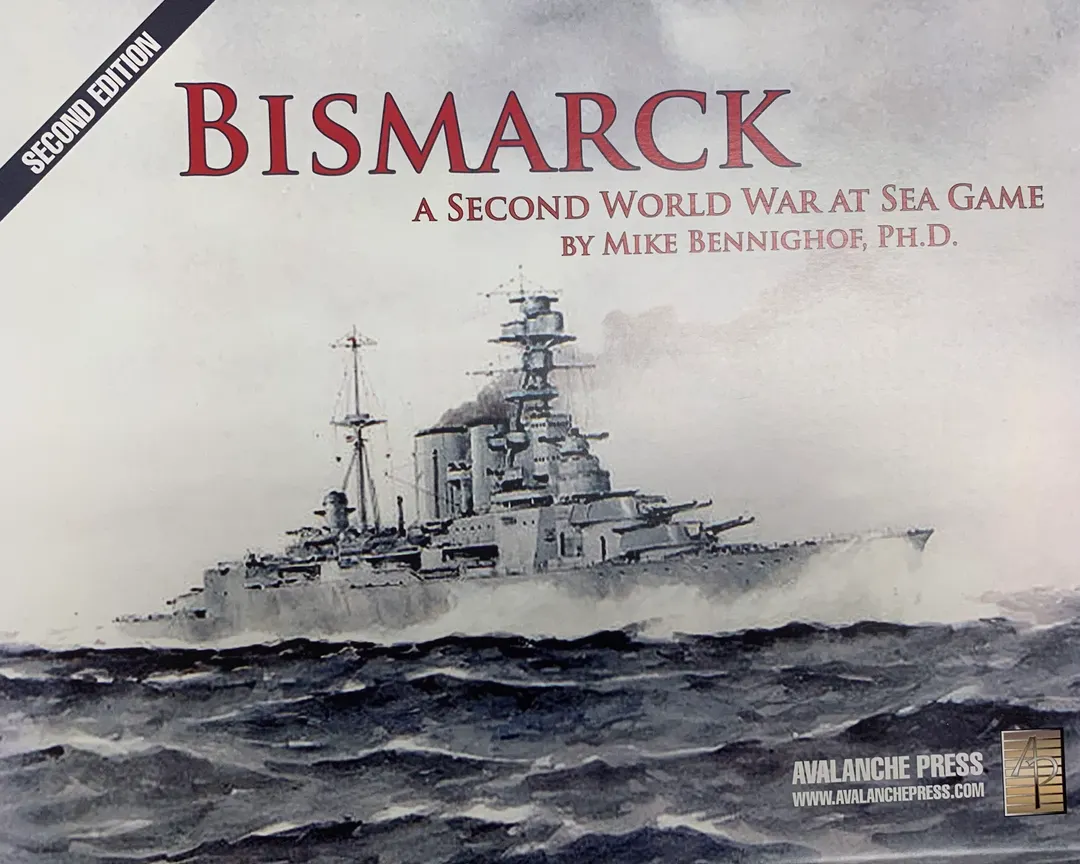
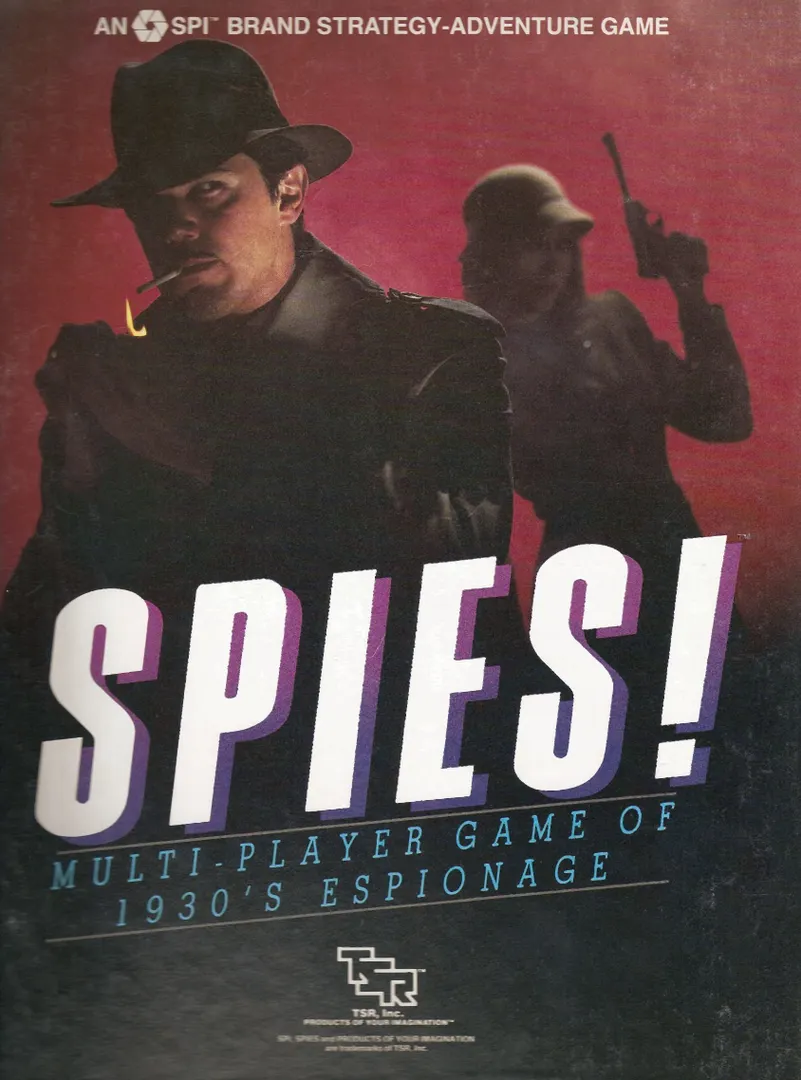

(from Avalanche Press website:) The book comes with 120 die-cut and mounted counters, just like those in the games themselves. There are new scenarios covering two very real possibilities that never occurred: a 1936 war between France and the Soviet Union following the Nazi occupation of the Rhineland, and a 1946 war between East and West. Two smaller scenarios concentrate on the Spanish Civil War and the Japanese invasion of China. And we have variant rules. One set gives Spain and Turkey their own player, who controls both countries but does not have total freedom of action. And then there's the one players have demanded since the day we released John Prados' Third Reich: jet fighters. New jet fighter counters for Germany, Britain, the United States, the Soviet Union, Italy and Japan. Sporting the lovely graphics you've come to expect of the Me262, Gloster Meteor, Nakajima Kikka and more. A set of variant rules now requires that major powers build their jets once the science becomes available, rather than receiving an instant upgrade, and the technology can be captured. There are new political markers included, allowing Germany to develop advanced submarines, V1 and V2 missiles, and the atomic bomb. The German player has to pay a stiff economic and military price for such science, however. There are V1 and V2 unit counters, too. Drawing on the tradition of the original edition, we've also added a set of pre-war options players can add to spice up their games: Italian and Polish re-armament, the German Z-Plan, Japanese tank development, a Republican Spain, hard-fighting Austrians, Soviet naval development and more. The book's centerpiece is a series of strategy articles, analyzing the positions of every player in both the separate games and the combined scenarios. There are also guides to key concepts like economic warfare.
Third Reich/Great Pacific War Player's Guide supports 2–5 players according to the catalogue. This range comes from the publisher’s listed player count, so the game can be set up for any group size within it. Some setups, rules and scoring details may still vary by player count, so check your edition’s rulebook for the exact configuration.
The listed playing time for Third Reich/Great Pacific War Player's Guide is 360 minutes. This is the publisher’s estimate for a full game. The actual duration depends on the group, the player count and familiarity with the rules: first sessions usually run longer, while experienced groups often finish faster. Setup and teaching time are not included in this estimate.
The catalogue lists Third Reich/Great Pacific War Player's Guide for ages 12 and up. This is the publisher’s recommendation and reflects reading demands, rule complexity and small components rather than theme alone. Younger players can often join with help from an adult, so check the age guidance on your edition and consider your group’s experience with board games.
Third Reich/Great Pacific War Player's Guide has a complexity rating of 3.4 out of 5 from BoardGameGeek players, which makes it a medium-weight game. The rating reflects how much rules knowledge, planning and decision-making a typical game demands. Expect a longer first teach for heavier games, and use a preparation guide before game night.
Third Reich/Great Pacific War Player's Guide belongs to these categories: Wargame, World War II, and Expansion for Base-game. Its main mechanics are Hexagon Grid. Categories describe the theme and setting of a game, while mechanics describe what players actually do on their turns. Each mechanic links to a catalogue hub with similar games, which helps when you want something comparable.
The credited designers of Third Reich/Great Pacific War Player's Guide are: John Prados, Michael Bennighof, Brian L. Knipple, William Sariego, and John Herrington. These credits come from the published game data and name the people responsible for the game’s design, not its illustrators or publishers. Designer pages on MeepleRules collect other titles by the same designers, which helps when you enjoy a game and want to find similar ones.
The catalogue lists Third Reich/Great Pacific War Player's Guide as an expansion. Expansions add new content, rules or scenarios to an existing base game and usually cannot be played on their own. Check the box or publisher description for the exact base game required, and make sure your edition of that game is compatible with this expansion.