
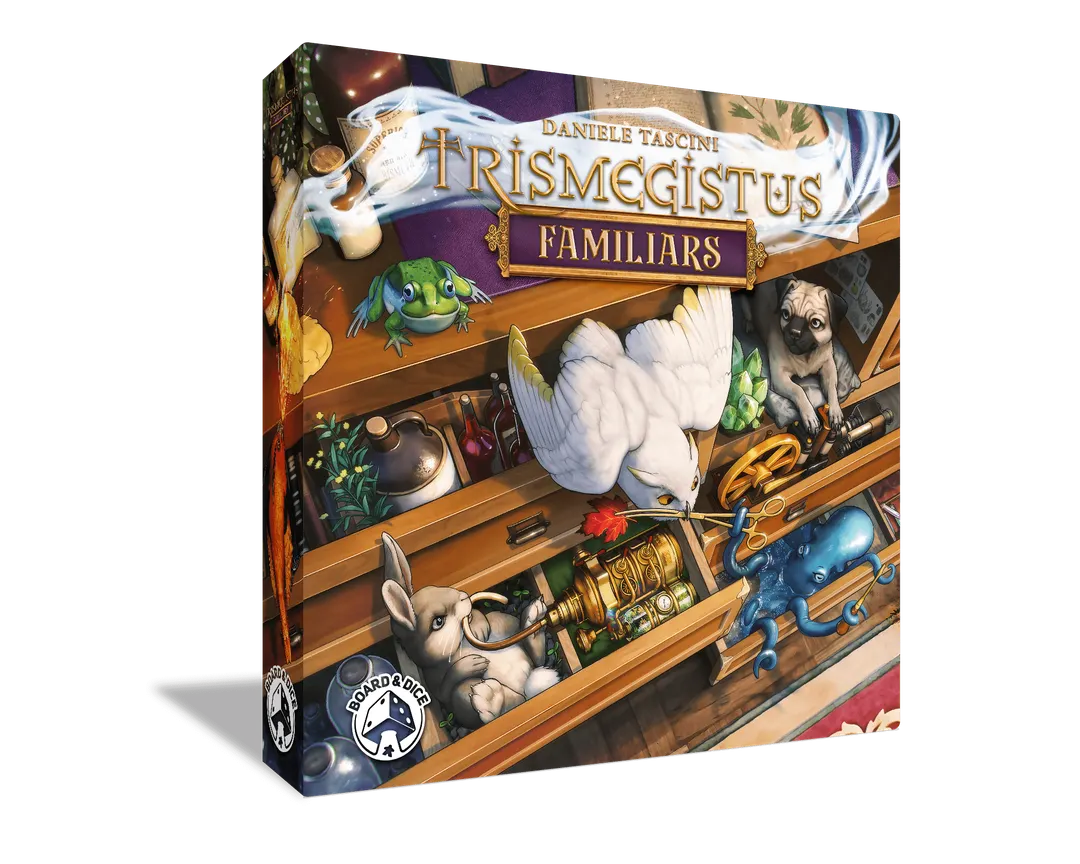
- BGG rating
- 7.5
Trismegistus: Familiars
- 1–4 players
- 90–120 min
- 2026
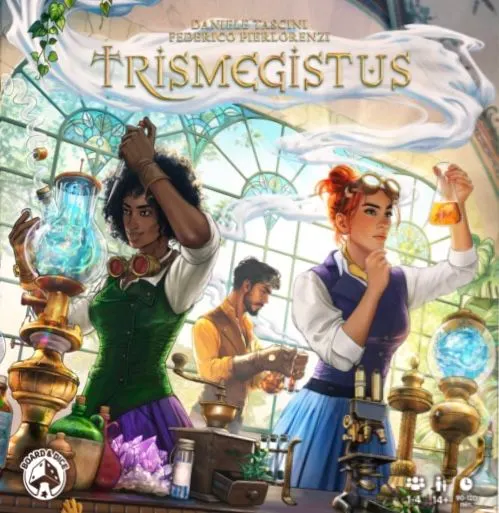
2026
Rules assistance for Trismegistus
Plain-language explanations of turns, card effects and disputed situations, with official source references and saved question history.
For 1 player
What would you like to know?
Answers come from the official rulebook, with the page to check.
Trismegistus is a board game released in 2026 for 1–4 players, 90–150 minutes per game, and ages 14 and up. It was designed by Daniele Tascini and Federico Pierlorenzi and its main mechanics are Variable Player Powers, Set Collection, and Dice Rolling.
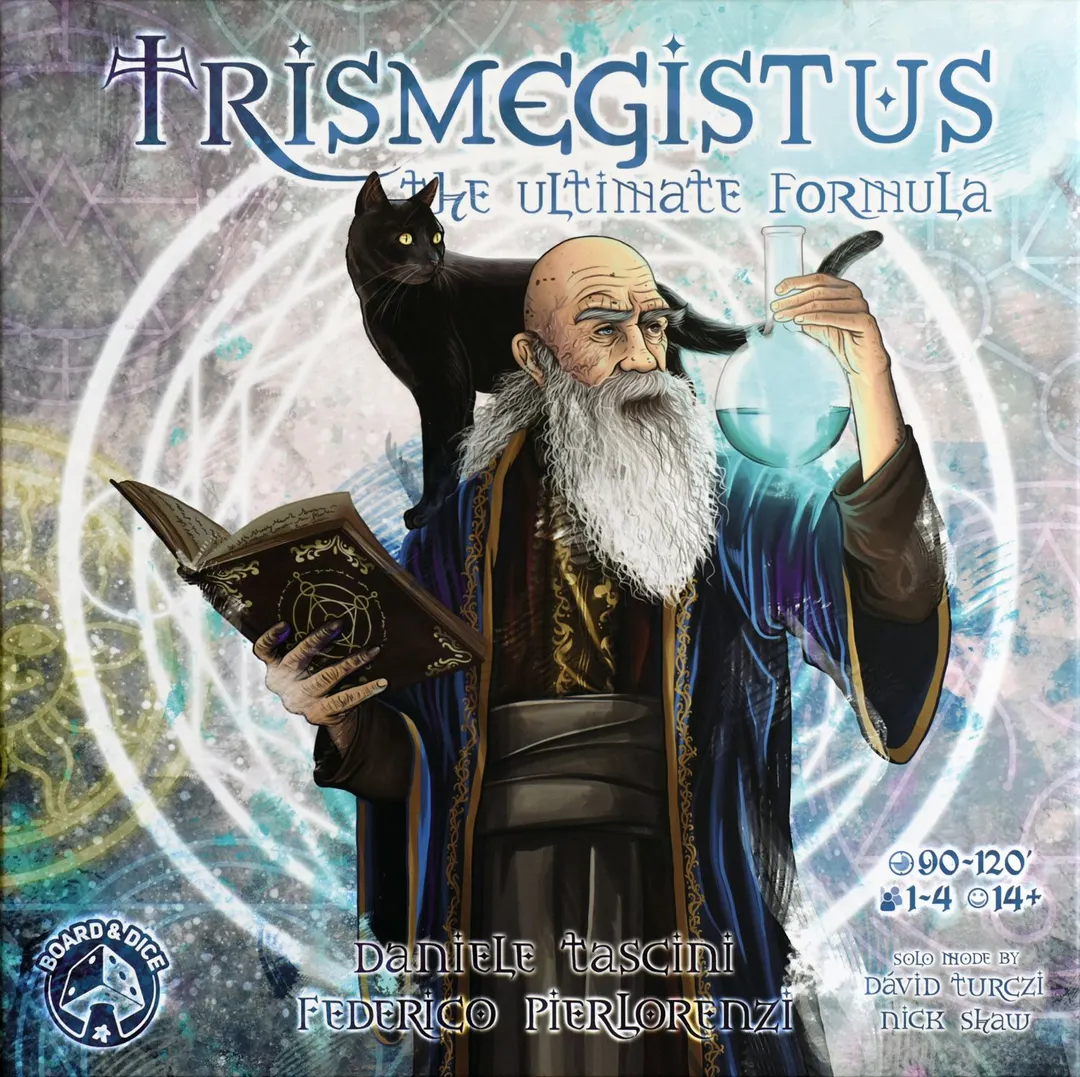


In the 19th century, alchemy was regarded as an occult science—a blend of modern discoveries and ancient wisdom. Though the golden age of alchemy has long passed, the dream of bending the laws of nature and creating the Philosopher’s Stone remains alive. A new generation now walks in the footsteps of the legendary Hermes Trismegistus, seeking forbidden knowledge and craving power. Their imagination and resolve are unrivaled. Some view them with fear; others, with awe and admiration. As you take your first steps into the world of alchemy, your goal is to uncover the mysteries hidden since the dawn of time and outshine all others in the quest to become the greatest alchemist the world has ever known. In Trismegistus, players take on the role of 19th-century researchers who have discovered Trismegistus' notes and attempt to follow his formula for creating the Philosopher's Stone. Over the course of three rounds — representing the years of their doctoral studies — they will perform various experiments, gaining and transmuting metals with the aid of mysterious artifacts. At the end of the game, players are awarded points based on their published research and their knowledge of the primal elements, as well as their progress toward creating the Philosopher's Stone itself. The new edition features a more accessible and less complex set of game mechanics.
Trismegistus supports 1–4 players according to the catalogue. This range comes from the publisher’s listed player count, so the game can be set up for any group size within it. Some setups, rules and scoring details may still vary by player count, so check your edition’s rulebook for the exact configuration.
The listed playing time for Trismegistus is 90–150 minutes. This is the publisher’s estimate for a full game. The actual duration depends on the group, the player count and familiarity with the rules: first sessions usually run longer, while experienced groups often finish faster. Setup and teaching time are not included in this estimate.
The catalogue lists Trismegistus for ages 14 and up. This is the publisher’s recommendation and reflects reading demands, rule complexity and small components rather than theme alone. Younger players can often join with help from an adult, so check the age guidance on your edition and consider your group’s experience with board games.
Trismegistus has a complexity rating of 3.9 out of 5 from BoardGameGeek players, which makes it a heavy game. The rating reflects how much rules knowledge, planning and decision-making a typical game demands. Expect a longer first teach for heavier games, and use a preparation guide before game night.
Trismegistus belongs to these categories: Fantasy and Dice. Its main mechanics are Variable Player Powers, Set Collection, and Dice Rolling. Categories describe the theme and setting of a game, while mechanics describe what players actually do on their turns. Each mechanic links to a catalogue hub with similar games, which helps when you want something comparable.
The credited designers of Trismegistus are: Daniele Tascini and Federico Pierlorenzi. These credits come from the published game data and name the people responsible for the game’s design, not its illustrators or publishers. Designer pages on MeepleRules collect other titles by the same designers, which helps when you enjoy a game and want to find similar ones.
The catalogue lists Trismegistus as a base game. It can be played on its own with the components in the box and does not require any other title. Expansions, if any exist, add new content or rules on top of it and are listed separately in the catalogue with a link back to this base game.