

- BGG rank
- BGG #5,907
- BGG rating
- 8.4
Death Valley: Battles for the Shenandoah
- 1–2 players
- 300–1200 min
- Complexity 4.3/5
- 2019
2014
Rules assistance for Twin Peaks
Plain-language explanations of turns, card effects and disputed situations, with official source references and saved question history.
For 1 player
What would you like to know?
Answers come from the official rulebook, with the page to check.
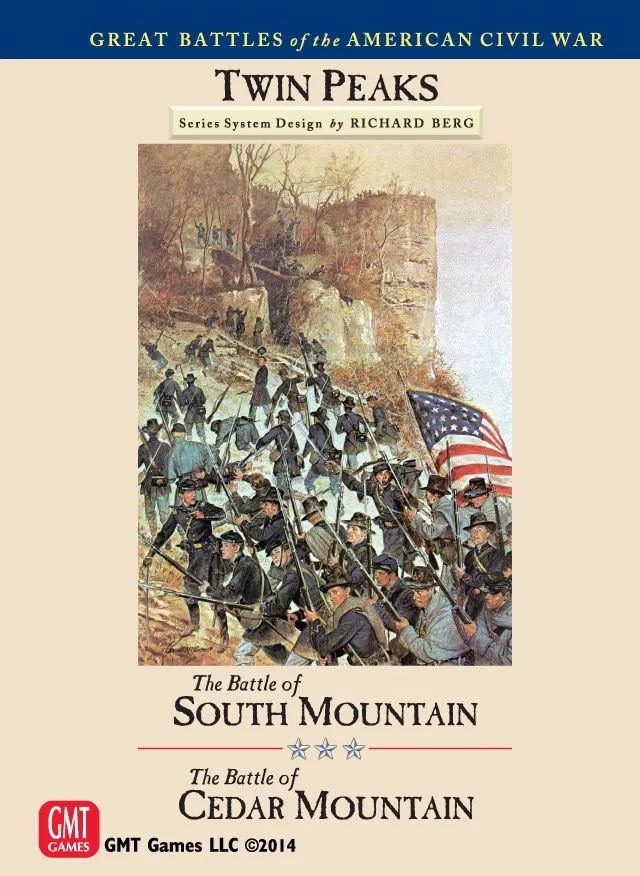
Twin Peaks is a board game released in 2014 for 1–4 players and 360–780 minutes per game. It was designed by Richard H. Berg and Greg Laubach and its main mechanics are Dice Rolling, Hexagon Grid, and Simulation.

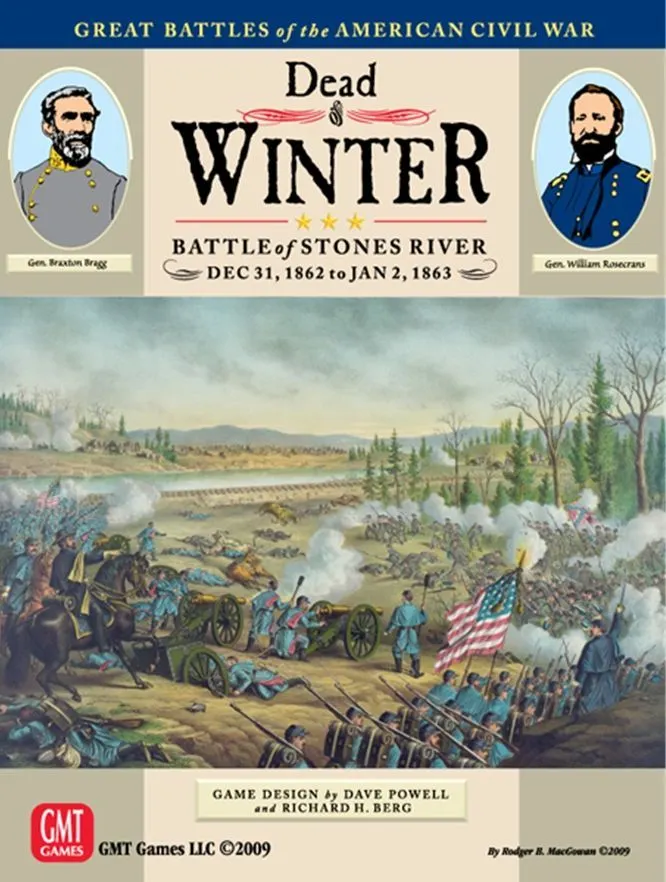
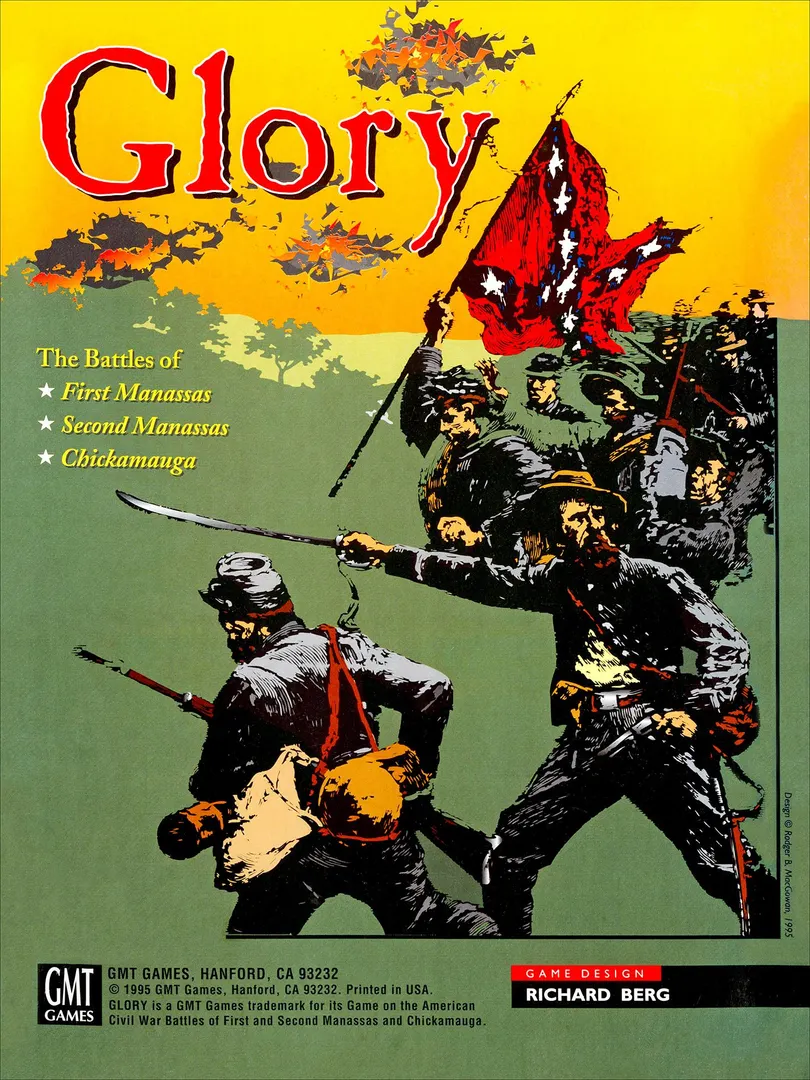


Twin Peaks is the sixth installment in the Great Battles of the American Civil War (GBACW) series, published by GMT Games. Two full battles are included: Cedar Mountain August 9th, 1862. With the Peninsular Campaign winding down, Gen. Robert E. Lee sent Maj. Gens. Stonewall Jackson and A.P. Hill to attack Maj. Gen. John Pope’s new Federal Army of Virginia with 27,000 troops. Gen. John Pope, hoping to draw attention away from Maj. Gen. George McClellan’s withdrawal from the Peninsula, moved against the rail junction at Gordonsville, Va. Stonewall Jackson found USA Maj. Gen. Nathaniel Banks’s division isolated. Jackson crossed the Rapidan River to engage. Pope ordered Brig. Gen. James Ricketts’s division to unite with Banks’s forces on high ground near Cedar Run, seven miles south of the town of Culpeper. These two forces met in the afternoon heat. South Mountain September 14th, 1862. After the CSA success at Second Bull Run Gen. Robert E. Lee believed the demoralized USA armies could not respond to any bold action. Thusly, he planned a campaign to raid Maryland and Pennsylvania and to threaten Washington D.C. itself. Once again Lee confidently divided his army to both move north and neutralize the large Union garrison at Harper’s Ferry. However, the Union Army under Gen. George B. McClellan was quick to recover from the Bull Run defeat and was already in pursuit of Lee. The gods of war smiled on the Union troops as a copy of Lee’s orders fell into Union hands. An attack through the lightly held gaps at South Mountain would cut Lee’s army in two and perhaps end the war. At 6:00 am the Union Army moved. The Great Battles of the American Civil War Series: This series is one of the hobby’s longest lived design concepts, springing from the legendary regimental level Gettysburg game -Terrible Swift Sword (SPI)- designed by Richard Berg in 1976. Under GMT, the rules system has remained stable but has shown remarkable flexibility to allow each game to smoothly incorporate additional rules to reflect the historical battles. The series relies on interactive chit-pull mechanics to simulate the oftentimes chaotic nature of the 19th Century battlefield at the regimental level. The Game: Twin Peaks contains two battle games each with its own full size map on one double-sided mapsheet. Experienced players will be able to play either in one sitting. Both battles highlight the effects of fatigue from the late summer heat and the difficult terrain. The optional fatigue rules are mandatory in both battles. The Cedar Mountain battle also includes optional units which could have joined the battle.
Twin Peaks supports 1–4 players according to the catalogue. This range comes from the publisher’s listed player count, so the game can be set up for any group size within it. Some setups, rules and scoring details may still vary by player count, so check your edition’s rulebook for the exact configuration.
The listed playing time for Twin Peaks is 360–780 minutes. This is the publisher’s estimate for a full game. The actual duration depends on the group, the player count and familiarity with the rules: first sessions usually run longer, while experienced groups often finish faster. Setup and teaching time are not included in this estimate.
Twin Peaks has a complexity rating of 4.1 out of 5 from BoardGameGeek players, which makes it a heavy game. The rating reflects how much rules knowledge, planning and decision-making a typical game demands. Expect a longer first teach for heavier games, and use a preparation guide before game night.
Twin Peaks belongs to these categories: Wargame and American Civil War. Its main mechanics are Dice Rolling, Hexagon Grid, and Simulation. Categories describe the theme and setting of a game, while mechanics describe what players actually do on their turns. Each mechanic links to a catalogue hub with similar games, which helps when you want something comparable.
The credited designers of Twin Peaks are: Richard H. Berg and Greg Laubach. These credits come from the published game data and name the people responsible for the game’s design, not its illustrators or publishers. Designer pages on MeepleRules collect other titles by the same designers, which helps when you enjoy a game and want to find similar ones.
The catalogue lists Twin Peaks as a base game. It can be played on its own with the components in the box and does not require any other title. Expansions, if any exist, add new content or rules on top of it and are listed separately in the catalogue with a link back to this base game.