
- BGG rating
- 7.3
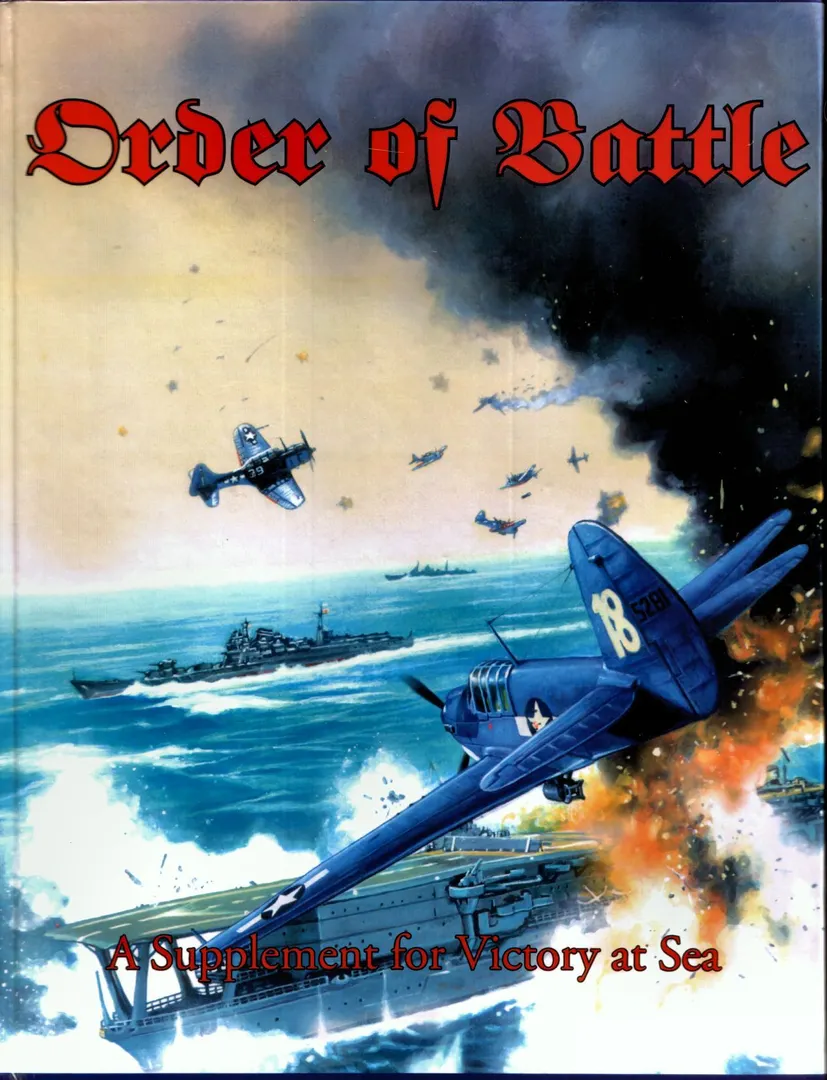
Order of Battle: A Supplement for Victory at Sea
- 2 players
- 360 min
- Complexity 3.0/5
- 2007

2006
Rules assistance for Victory at Sea: World War II Naval Combat Game
Plain-language explanations of turns, card effects and disputed situations, with official source references and saved question history.
For 2 players
What would you like to know?
Answers come from the official rulebook, with the page to check.
Victory at Sea: World War II Naval Combat Game is a board game released in 2006 for 2 players, 360 minutes per game, and ages 12 and up. It was designed by Matthew Sprange and its main mechanics are Dice Rolling, Simulation, and Measurement Movement.



From the publisher's website: The Second World War saw naval warfare evolve from the clash of mighty dreadnoughts, which had been the preoccupation of navies for half a century, to a conflict dominated by the aircraft carrier and submarine. The Battle of the Atlantic saw German U-boats attempt to strangle the economy of the United Kingdom, with fast commerce raiders such as the pocket battleships and the mighty Bismarck attempting to slip into the Atlantic to wreak devastation upon the allied convoys. In the Mediterranean the Italian and British fleets squared off as each side attempted to settle the fate of Egypt and North Africa, as both sides attempted to strangle the other’s supply routes. In the east mighty carrier fleets clashed as the Imperial Japanese Navy tried to hold on to the rapid conquests of 1942, whilst all the while American submariners strove to paralyze Japan’s industrial might via attacks on her merchant fleet. It was here that mighty battleships clashed in ferocious night battles amongst the Pacific islands. Victory at Sea brings these conflicts to life allowing budding admirals to re-fight the epic battles of this conflict, or to create their own fleets based upon the ships of the day and fight entire campaigns. Over seventy different ship classes are detailed, allowing a wide array of different battles to be fought with eighteen scenarios included. Based upon the award winning A Call to Arms games system, Victory at Sea is a fast flowing game that will allow novices and veteran gamers alike to enjoy recreating the epic struggles between the mighty fleets of the era. Victory at Sea includes counters to use with every class of ship featured in the game. Expanded by: Order of Battle: A Supplement for Victory at Sea Re-implemented by: Victory at Sea: Age of Dreadnoughts
Victory at Sea: World War II Naval Combat Game supports 2 players according to the catalogue. This is the publisher’s listed player count, so the game is designed for exactly that number of participants. Variants for other group sizes, if any, are described in the rulebook of your edition, so check it before setting up a different configuration.
The listed playing time for Victory at Sea: World War II Naval Combat Game is 360 minutes. This is the publisher’s estimate for a full game. The actual duration depends on the group, the player count and familiarity with the rules: first sessions usually run longer, while experienced groups often finish faster. Setup and teaching time are not included in this estimate.
The catalogue lists Victory at Sea: World War II Naval Combat Game for ages 12 and up. This is the publisher’s recommendation and reflects reading demands, rule complexity and small components rather than theme alone. Younger players can often join with help from an adult, so check the age guidance on your edition and consider your group’s experience with board games.
Victory at Sea: World War II Naval Combat Game has a complexity rating of 2.5 out of 5 from BoardGameGeek players, which makes it a medium-light game. The rating reflects how much rules knowledge, planning and decision-making a typical game demands. Expect a longer first teach for heavier games, and use a preparation guide before game night.
Victory at Sea: World War II Naval Combat Game belongs to these categories: Wargame, Miniatures, and Nautical. Its main mechanics are Dice Rolling, Simulation, and Measurement Movement. Categories describe the theme and setting of a game, while mechanics describe what players actually do on their turns. Each mechanic links to a catalogue hub with similar games, which helps when you want something comparable.
The credited designers of Victory at Sea: World War II Naval Combat Game are: Matthew Sprange. These credits come from the published game data and name the people responsible for the game’s design, not its illustrators or publishers. Designer pages on MeepleRules collect other titles by the same designers, which helps when you enjoy a game and want to find similar ones.
The catalogue lists Victory at Sea: World War II Naval Combat Game as a base game. It can be played on its own with the components in the box and does not require any other title. Expansions, if any exist, add new content or rules on top of it and are listed separately in the catalogue with a link back to this base game.