
- BGG rating
- 6.4
Viewpoint Reflections
- 2–6 players
- 15 min
- Complexity 1.4/5
- 2011
2009
Rules assistance for Viewpoint
Plain-language explanations of turns, card effects and disputed situations, with official source references and saved question history.
What would you like to know?
Answers come from the official rulebook, with the page to check.
Viewpoint is a board game released in 2009 for 2–6 players, 15 minutes per game, and ages 7 and up. It was designed by Sean Carroll (I) and its main mechanics are Hand Management.








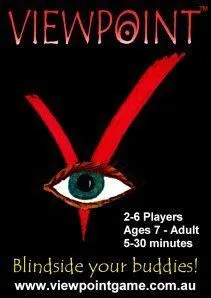
Viewpoint in a non-collectible card game produced by the Australian game design company 93 Made Games. The game contents consist of a deck of 70 cards, each illustrated in a ‘70s/‘80s retro art style, and a rule sheet, attractively packaged in a small black cardboard box. Most of what you need to know is printed on the cards themselves and makes picking up and getting into the game very easy. The use of icons on the cards, representing different aspects of the game (e.g. the discard pile, the play area and your hand of cards), makes the game even easier to understand. The game is designed for 2 to 6 players of ages 7 and up. Games can take as little as 5 minutes or as long as 30 minutes to play - depending on the experience of players and the number of players in each game. The objective of the game is to be the first player with 100 points down on the table, which isn’t as easy as it sounds. Players have cards that can steal cards you have tabled or send them to the discard pile. So you need to be able to judge the best time to put cards on the table and how to defend your cards once they are down. Game-play is highly interactive and the base rules are simple to follow to make it accessible to casual and non-gamers as well as dedicated gamers. At the start of play, each person is dealt a hand of five cards. These cards each have values clearly printed on them, ranging from negative amounts to a maximum of 20 points. They also have actions printed on them, along with a graphic (which features some pun on vision such as ‘wink’ or ‘blind spot’). The action associated with an individual card is usually executed as you attempt to put the card face up into your play area (known as your Field of View). There are a few cards (such as Spectacles) that allow you to play the card as a reaction to other players trying to affect your cards. While your first few games of Viewpoint might not appear to involve a high degree of skill for winning, you will soon discover that you need to be much more strategic about how and when you play your cards, as well as keeping a careful eye on what people have got down on the table. Simply placing cards into your Field of View won’t win you the game, as other players will start targeting you as you hit a score of around 80+. You need think ‘out of the box’ and bluff your opponents, by sitting on a ‘non-threatening’ score, while searching for cards that will let you steal cards or take multiple turns, allowing you to suddenly win the game by coming from behind. The design of the game system provides an entertaining and interactive experience encouraging replayability. The games system also provides the opportunity to release future expansion packs of cards to add to the mischief already present in the base deck.
Viewpoint supports 2–6 players according to the catalogue. This range comes from the publisher’s listed player count, so the game can be set up for any group size within it. Some setups, rules and scoring details may still vary by player count, so check your edition’s rulebook for the exact configuration.
The listed playing time for Viewpoint is 15 minutes. This is the publisher’s estimate for a full game. The actual duration depends on the group, the player count and familiarity with the rules: first sessions usually run longer, while experienced groups often finish faster. Setup and teaching time are not included in this estimate.
The catalogue lists Viewpoint for ages 7 and up. This is the publisher’s recommendation and reflects reading demands, rule complexity and small components rather than theme alone. Younger players can often join with help from an adult, so check the age guidance on your edition and consider your group’s experience with board games.
Viewpoint has a complexity rating of 1.5 out of 5 from BoardGameGeek players, which makes it a light game. The rating reflects how much rules knowledge, planning and decision-making a typical game demands. Expect a longer first teach for heavier games, and use a preparation guide before game night.
Viewpoint belongs to these categories: Card Game, Party Game, and Bluffing. Its main mechanics are Hand Management. Categories describe the theme and setting of a game, while mechanics describe what players actually do on their turns. Each mechanic links to a catalogue hub with similar games, which helps when you want something comparable.
The credited designers of Viewpoint are: Sean Carroll (I). These credits come from the published game data and name the people responsible for the game’s design, not its illustrators or publishers. Designer pages on MeepleRules collect other titles by the same designers, which helps when you enjoy a game and want to find similar ones.
The catalogue lists Viewpoint as a base game. It can be played on its own with the components in the box and does not require any other title. Expansions, if any exist, add new content or rules on top of it and are listed separately in the catalogue with a link back to this base game.