

- Puesto en BGG
- BGG #22.585
- Puntuación BGG
- 6,6
Red Dragon, Blue Dragon: The Huaihai, 1948-1949
- 1–2 jugadores
- Complejidad 2,8/5
- 2016
2009
Ayuda con las reglas de Battle for China, 1937-1941 (Second Edition)
Explicaciones claras de turnos, efectos de cartas y situaciones dudosas, con referencias a fuentes oficiales e historial de preguntas guardado.
¿Qué quieres saber?
Las respuestas salen del reglamento oficial, con la página para comprobarlo.
Battle for China, 1937-1941 (Second Edition) es un juego de mesa publicado en 2009 para 2–3 jugadores, con partidas de 240 minutos y a partir de 12 años. Fue diseñado por Brian Train, Ty Bomba, Terence Co y Earl Dixon y sus mecánicas principales son Area Movement y Hexagon Grid.

En inglés
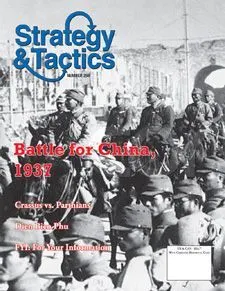
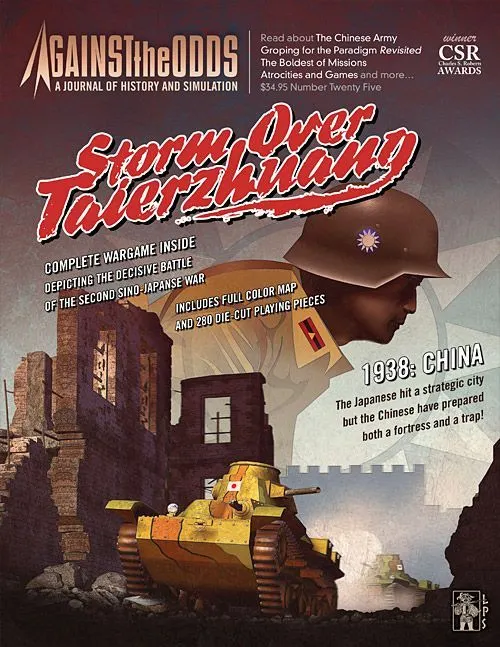
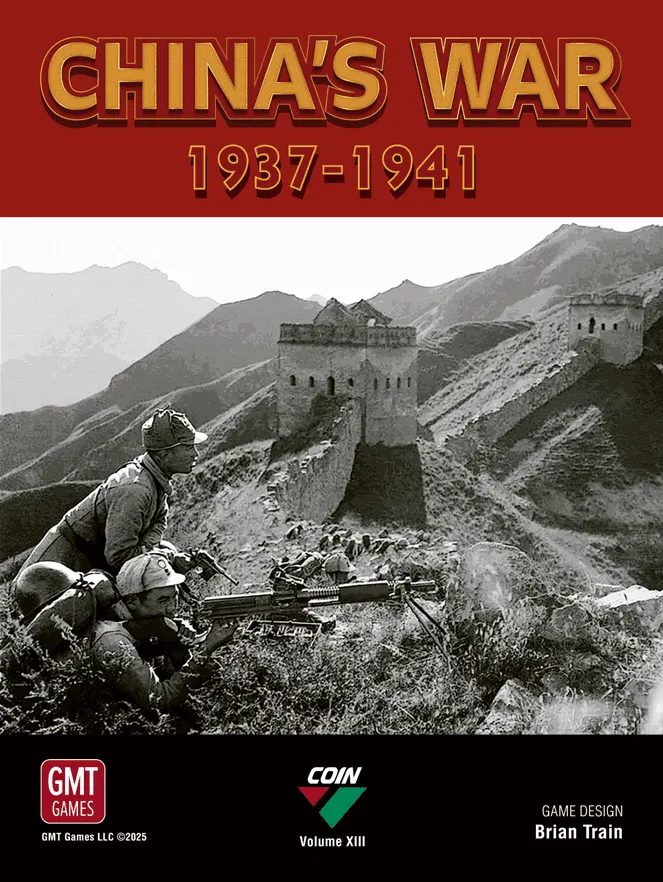
Battle for China is an intermediate-complexity wargame, designed by Brian Train, of what that people call their "War of Resistance Against Japan," specifically covering the struggle from the initial Japanese invasion in July 1937 to the end of 1941. The game is for two players, one directing the military forces acting to defend China against the Japanese, and the other commanding the forces of imperial Japan. The game can also be played with a third player taking the Chinese Communist forces. The area map is drawn at approximately 75 miles to the inch. Units of maneuver are brigades, divisions, corps and armies. Specialist units (air, armor and artillery) are represented by abstract markers representing concentrations of those formations. There are 280 small-size iconic units. The 18 game turns are seasonal. The system is an evolution of the one found in Arriba Espana, which will have appeared in World at War number nine. Two experienced players can complete a game in about four to five hours. Rules cover: KMT factionalism, anti-guerrilla operations, Japanese puppet forces, truces, foreign support and intervention, peasant revolts, atrocities, desertions and defections, famine, disease, off-map border clashes with the Soviets, united fronts, the Burma Road, the Indo-China railway, US lend-lease, the broader war in the Pacific, floods, amphibious assaults, fortification, cadres, shifting initiative, and more. S&T issue 259
Según el catálogo, Battle for China, 1937-1941 (Second Edition) admite de 2 a 3 jugadores. Este intervalo corresponde al número de jugadores indicado por la editorial, así que el juego puede prepararse para cualquier grupo dentro de ese margen. La preparación, algunas reglas y la puntuación pueden variar según el número de jugadores; consulta la configuración exacta en el reglamento de tu edición.
La duración indicada para Battle for China, 1937-1941 (Second Edition) es de 240 minutos, la estimación de la editorial para una partida completa. El tiempo real depende del grupo, del número de jugadores y del conocimiento de las reglas: las primeras partidas suelen alargarse y los grupos con experiencia terminan antes. La preparación y la explicación de las reglas no están incluidas.
El catálogo indica Battle for China, 1937-1941 (Second Edition) a partir de 12 años. Es la recomendación de la editorial y refleja la lectura necesaria, la complejidad de las reglas y las piezas pequeñas, no solo el tema. Los más pequeños a menudo pueden jugar con ayuda de un adulto: comprueba la edad recomendada en tu edición y la experiencia de tu grupo.
Battle for China, 1937-1941 (Second Edition) tiene una puntuación de complejidad de 2,6 sobre 5 según los jugadores de BoardGameGeek, lo que lo convierte en un juego algo ligero. La puntuación refleja cuánto conocimiento de reglas, planificación y toma de decisiones exige una partida típica. Los juegos exigentes requieren una explicación inicial más larga, así que conviene usar una guía de preparación.
Battle for China, 1937-1941 (Second Edition) pertenece a estas categorías: Wargame y World War II. Sus mecánicas principales son Area Movement y Hexagon Grid. Las categorías describen el tema y la ambientación de un juego, mientras que las mecánicas describen lo que los jugadores hacen realmente en su turno. Cada mecánica lleva a una página del catálogo con juegos similares.
Los autores acreditados de Battle for China, 1937-1941 (Second Edition) son: Brian Train, Ty Bomba, Terence Co y Earl Dixon. Estos créditos proceden de los datos publicados del juego y nombran a las personas responsables de su diseño, no a ilustradores ni editoriales. Las páginas de autor de MeepleRules reúnen otros títulos de los mismos autores, algo útil cuando un juego te gusta y buscas otros parecidos.
El catálogo clasifica Battle for China, 1937-1941 (Second Edition) como juego base. Se juega por sí solo con los componentes de la caja y no requiere ningún otro título. Las expansiones, si existen, añaden contenido o reglas nuevas y aparecen por separado en el catálogo con un enlace a este juego base.