

- Puesto en BGG
- BGG #5779
- Puntuación BGG
- 7,9
Baltic Gap: Summer 1944
- 2 jugadores
- 240 min
- Complejidad 4,1/5
- 2009
1989
Ayuda con las reglas de Bloody 110
Explicaciones claras de turnos, efectos de cartas y situaciones dudosas, con referencias a fuentes oficiales e historial de preguntas guardado.
Para 2 jugadores
¿Qué quieres saber?
Las respuestas salen del reglamento oficial, con la página para comprobarlo.
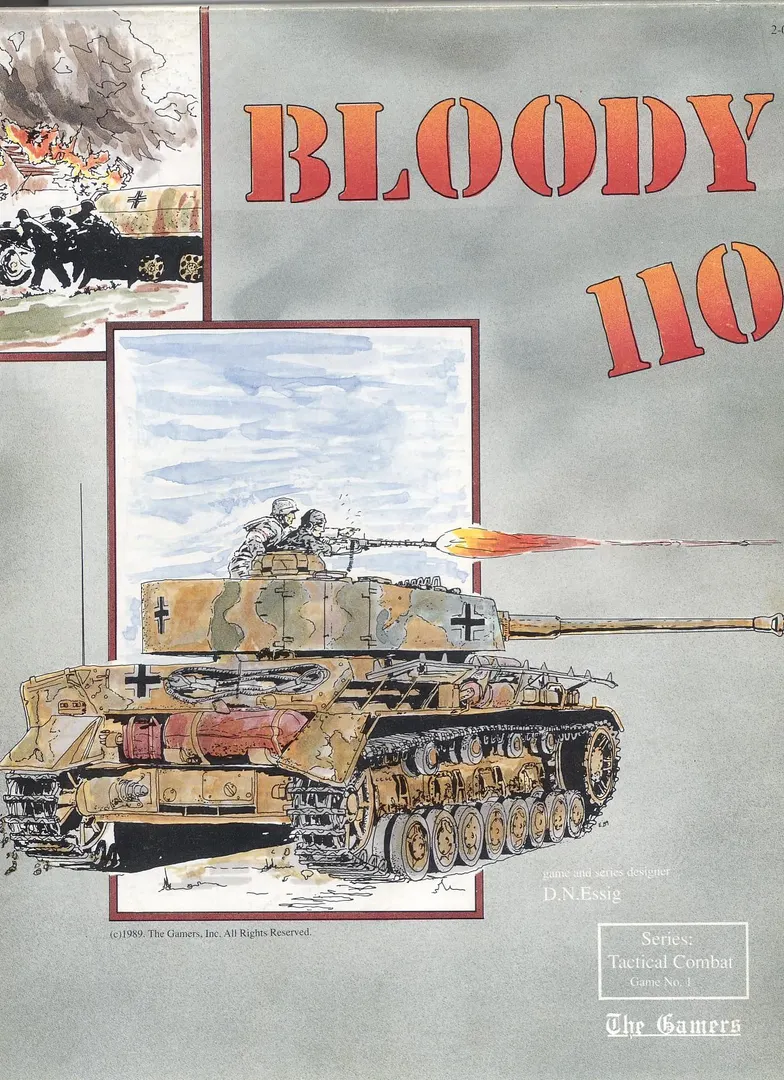
Bloody 110 es un juego de mesa publicado en 1989 para 2 jugadores, con partidas de 360 minutos y a partir de 12 años. Fue diseñado por Dean Essig y sus mecánicas principales son Dice Rolling, Hexagon Grid y Simulation.


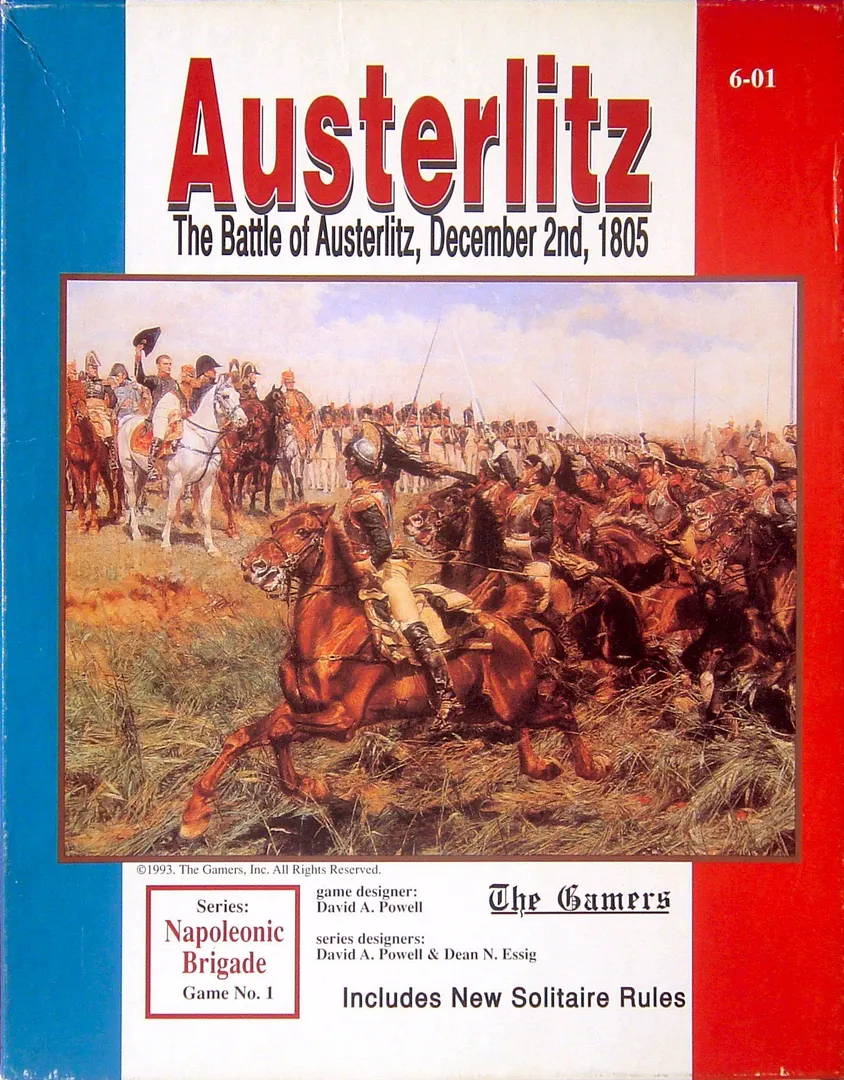
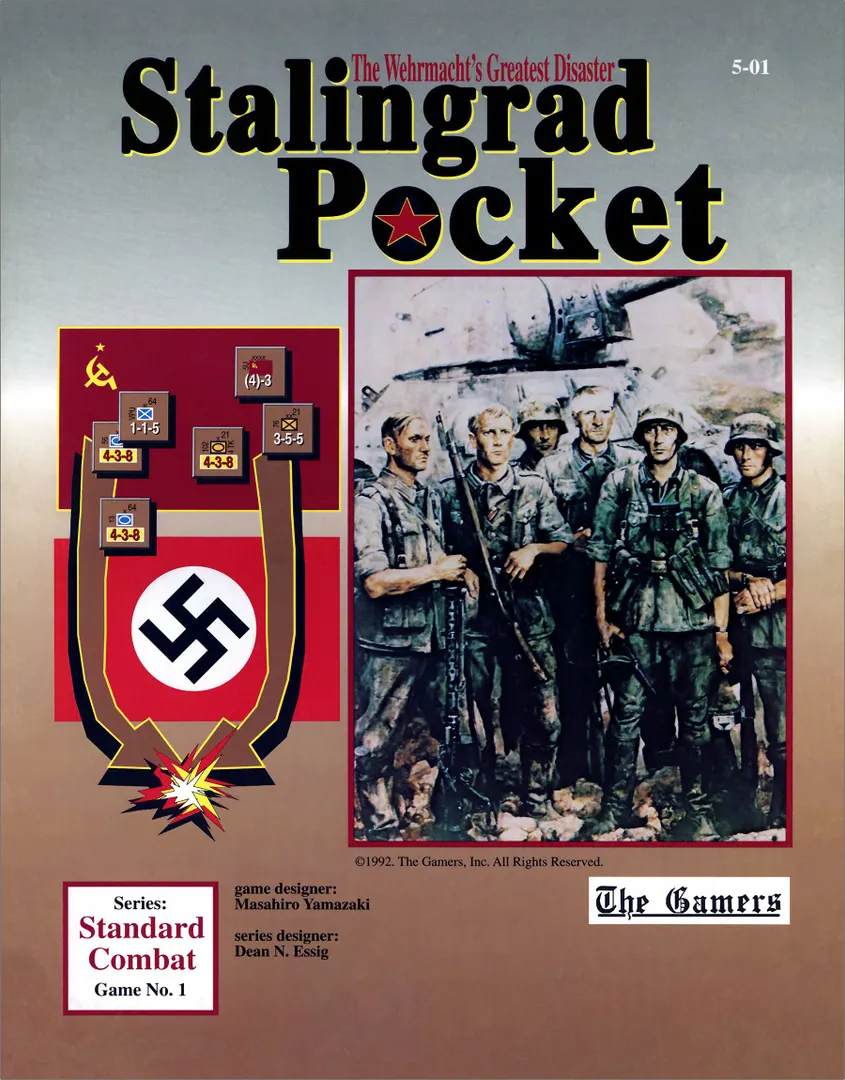

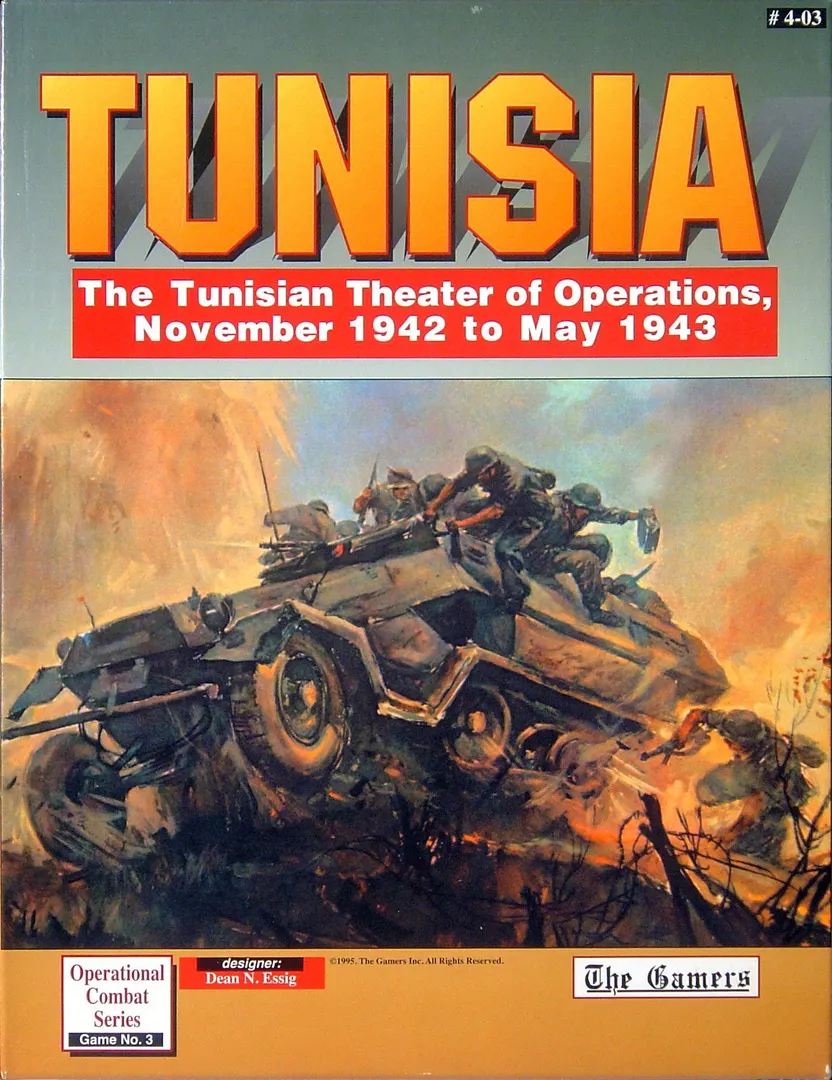
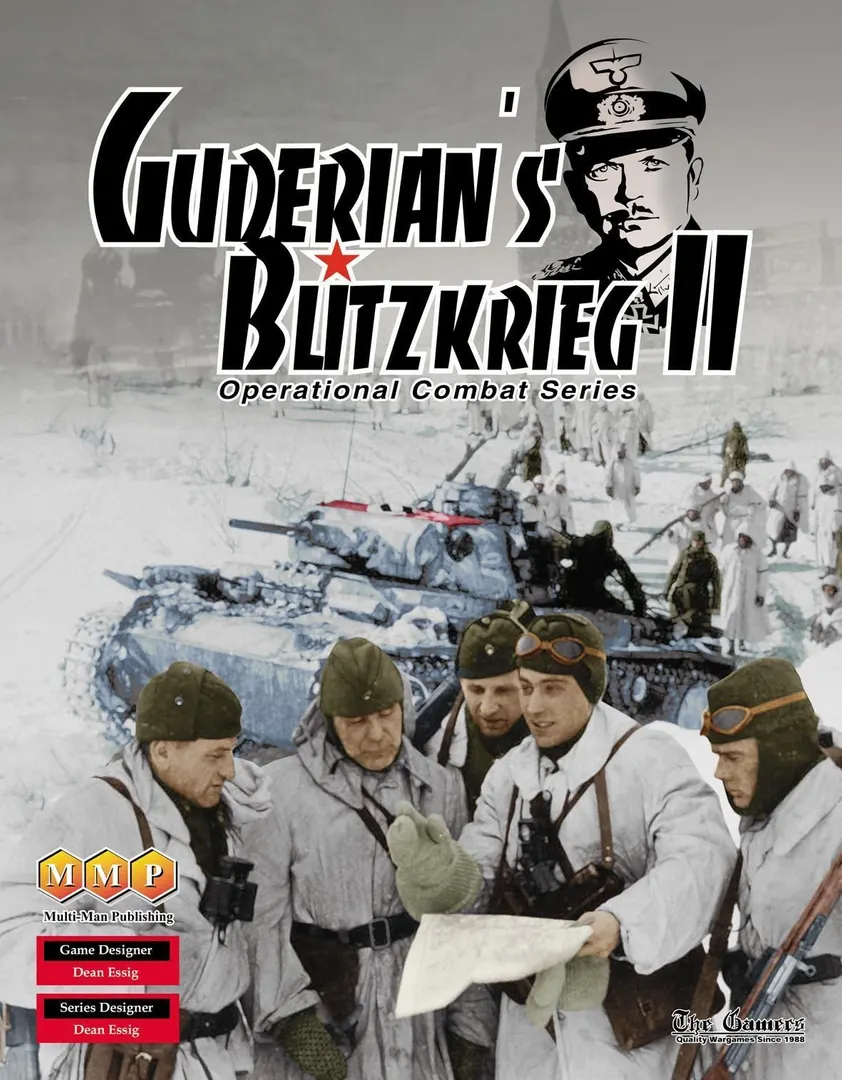
En inglés
Bloody 110 - The Battle for Clervaux, December 16-17, 1944 is the first game in the Tactical Combat Series (TCS) by The Gamers and it features the vital two day delay of the 2nd Panzer Division by elements of the US 28th Infantry Division along the road to Bastogne on December 16th and 17th, 1944. The actions of the handful of Americans represented by the game were critical in setting the stage for the more famous siege of Bastogne itself. It was their defense that provided the time needed for other units, including the 101st Airborne, to make it to Bastogne in order to defend it. Without this successful defense, Bastogne would surely have fallen and the road would have been clear to the Meuse. Game Scale: Game Turn: 20 minutes Hex: 125 yards / 114 meters Units: Infantry platoons, individual vehicles Game Inventory: Two 22 x 34" full color maps Three dual-side printed countersheets (840 1/2" counters) One 32-page TCS specific rulebook One 14-page Bloody 110 specific rulebook Two 6-sided dice Solitaire Playability: Medium Complexity Level: High Players: 2 or more Playing Time: 1-30 hours
Según el catálogo, Bloody 110 admite 2 jugadores. Es el número de jugadores indicado por la editorial, así que el juego está diseñado exactamente para esa cantidad de participantes. Las variantes para otros tamaños de grupo, si existen, se describen en el reglamento de tu edición; consúltalo antes de preparar otra configuración.
La duración indicada para Bloody 110 es de 360 minutos, la estimación de la editorial para una partida completa. El tiempo real depende del grupo, del número de jugadores y del conocimiento de las reglas: las primeras partidas suelen alargarse y los grupos con experiencia terminan antes. La preparación y la explicación de las reglas no están incluidas.
El catálogo indica Bloody 110 a partir de 12 años. Es la recomendación de la editorial y refleja la lectura necesaria, la complejidad de las reglas y las piezas pequeñas, no solo el tema. Los más pequeños a menudo pueden jugar con ayuda de un adulto: comprueba la edad recomendada en tu edición y la experiencia de tu grupo.
Bloody 110 tiene una puntuación de complejidad de 3,9 sobre 5 según los jugadores de BoardGameGeek, lo que lo convierte en un juego exigente. La puntuación refleja cuánto conocimiento de reglas, planificación y toma de decisiones exige una partida típica. Los juegos exigentes requieren una explicación inicial más larga, así que conviene usar una guía de preparación.
Bloody 110 pertenece a estas categorías: Wargame y World War II. Sus mecánicas principales son Dice Rolling, Hexagon Grid y Simulation. Las categorías describen el tema y la ambientación de un juego, mientras que las mecánicas describen lo que los jugadores hacen realmente en su turno. Cada mecánica lleva a una página del catálogo con juegos similares.
Los autores acreditados de Bloody 110 son: Dean Essig. Estos créditos proceden de los datos publicados del juego y nombran a las personas responsables de su diseño, no a ilustradores ni editoriales. Las páginas de autor de MeepleRules reúnen otros títulos de los mismos autores, algo útil cuando un juego te gusta y buscas otros parecidos.
El catálogo clasifica Bloody 110 como juego base. Se juega por sí solo con los componentes de la caja y no requiere ningún otro título. Las expansiones, si existen, añaden contenido o reglas nuevas y aparecen por separado en el catálogo con un enlace a este juego base.