
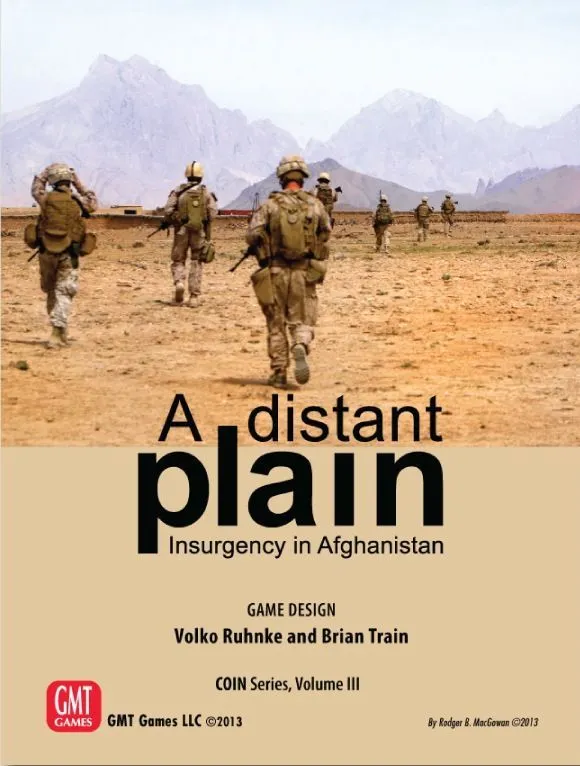
- Puesto en BGG
- BGG #1397
- Puntuación BGG
- 7,8
A Distant Plain
- 1–4 jugadores
- 180–300 min
- Complejidad 3,9/5
- 2013
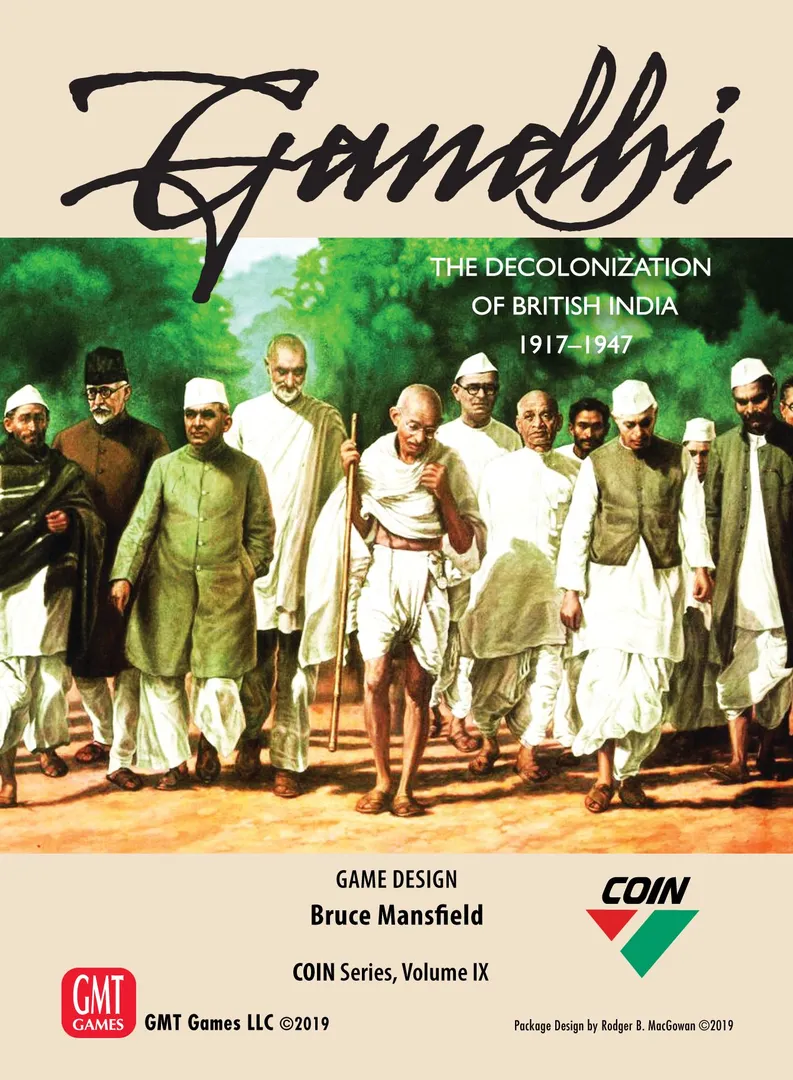
2019
Ayuda con las reglas de Gandhi: The Decolonization of British India, 1917 – 1947
Explicaciones claras de turnos, efectos de cartas y situaciones dudosas, con referencias a fuentes oficiales e historial de preguntas guardado.
Para 1 jugador
¿Qué quieres saber?
Las respuestas salen del reglamento oficial, con la página para comprobarlo.
Gandhi: The Decolonization of British India, 1917 – 1947 es un juego de mesa publicado en 2019 para 1–4 jugadores, con partidas de 90 a 240 minutos y a partir de 14 años. Fue diseñado por Bruce Mansfield y sus mecánicas principales son Variable Player Powers, Area Movement y Dice Rolling.

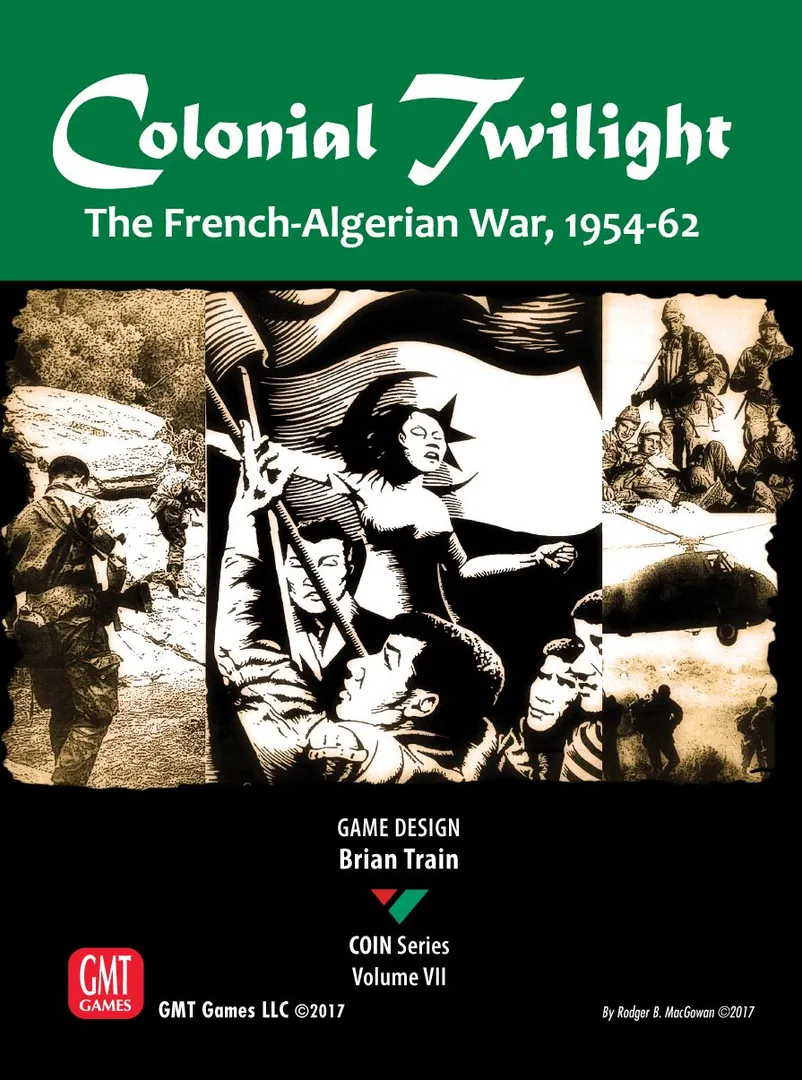




En inglés
Gandhi: The Decolonization of British India, 1917–1947 is Volume IX in GMT’s acclaimed COIN Series. Exploring one of the world’s most prominent experiments with nonviolent resistance, Gandhi takes us to the subcontinent of India, the jewel in the crown of the British Empire, for a detailed look at the final decades of the British Raj. 1 to 4 players compete to determine the future of India; will the transition to home rule be a peaceful one, will India be split apart by partition or civil war, or will it remain firmly in the grip of empire? Gandhi offers a fresh perspective on the history of insurgency with the addition of a new type of faction to the COIN Series, the Nonviolent (NV) faction, while retaining the multi-faction, asymmetrical, card-assisted system of earlier titles in the COIN Series. COIN veterans will be able to jump right in. Other features include: Gandhi as the game’s sole leader piece. Nonviolent operations and special activities. Nonviolent activists that are always active, but generally immune from Raj actions until engaged in protests (or caught up in post-terror reprisals). Protests that erode support but leave activists vulnerable to arrest by Raj forces. A Hindu-Muslim Unity track that measures tensions between these two communities, affecting resources, operations, and victory. A British Rule track that reflects shifts in colonial policy in response to events on the map, from resolve to restraint, affecting the cost of several actions. British Viceroys who come and go with each passing campaign and have their own unique effects on each faction. An out-of-play jail space that holds nonviolent forces arrested during martial law. Pieces can be kept in jail over several campaigns, but at a cost to the Raj. Independent Princely States that are never controlled by any faction, yet offer a haven for violent and nonviolent insurgents alike. Short and medium-length scenarios that allow for the study of different periods of the struggle against British rule in India. Support for solitaire, 2-player, 3-player, and 4-player games. In Gandhi, players will face a range of difficult and interesting strategic choices. Following in the innovative footsteps of previous COIN titles, Gandhi weaves together historical, political, and cultural threads and offers an opportunity to study nonviolent and violent resistance in one of the most significant colonial possessions from the age of European imperialism. Civil disobedience and non-cooperation, protests and terror, imperialism and constructive programme, growing unrest, negotiation, agitation, assassination, persuasion, boycotts, martial law, and many other options await. “Gandhi made it impossible for us to go on ruling India, but at the same time he made it possible for us to abdicate without rancor and without dishonour.” — British Historian Arnold Toynbee
Según el catálogo, Gandhi: The Decolonization of British India, 1917 – 1947 admite de 1 a 4 jugadores. Este intervalo corresponde al número de jugadores indicado por la editorial, así que el juego puede prepararse para cualquier grupo dentro de ese margen. La preparación, algunas reglas y la puntuación pueden variar según el número de jugadores; consulta la configuración exacta en el reglamento de tu edición.
La duración indicada para Gandhi: The Decolonization of British India, 1917 – 1947 es de 90 a 240 minutos, la estimación de la editorial para una partida completa. El tiempo real depende del grupo, del número de jugadores y del conocimiento de las reglas: las primeras partidas suelen alargarse y los grupos con experiencia terminan antes. La preparación y la explicación de las reglas no están incluidas.
El catálogo indica Gandhi: The Decolonization of British India, 1917 – 1947 a partir de 14 años. Es la recomendación de la editorial y refleja la lectura necesaria, la complejidad de las reglas y las piezas pequeñas, no solo el tema. Los más pequeños a menudo pueden jugar con ayuda de un adulto: comprueba la edad recomendada en tu edición y la experiencia de tu grupo.
Gandhi: The Decolonization of British India, 1917 – 1947 tiene una puntuación de complejidad de 4,2 sobre 5 según los jugadores de BoardGameGeek, lo que lo convierte en un juego exigente. La puntuación refleja cuánto conocimiento de reglas, planificación y toma de decisiones exige una partida típica. Los juegos exigentes requieren una explicación inicial más larga, así que conviene usar una guía de preparación.
Gandhi: The Decolonization of British India, 1917 – 1947 pertenece a estas categorías: Wargame y Modern Warfare. Sus mecánicas principales son Variable Player Powers, Area Movement y Dice Rolling. Las categorías describen el tema y la ambientación de un juego, mientras que las mecánicas describen lo que los jugadores hacen realmente en su turno. Cada mecánica lleva a una página del catálogo con juegos similares.
Los autores acreditados de Gandhi: The Decolonization of British India, 1917 – 1947 son: Bruce Mansfield. Estos créditos proceden de los datos publicados del juego y nombran a las personas responsables de su diseño, no a ilustradores ni editoriales. Las páginas de autor de MeepleRules reúnen otros títulos de los mismos autores, algo útil cuando un juego te gusta y buscas otros parecidos.
El catálogo clasifica Gandhi: The Decolonization of British India, 1917 – 1947 como juego base. Se juega por sí solo con los componentes de la caja y no requiere ningún otro título. Las expansiones, si existen, añaden contenido o reglas nuevas y aparecen por separado en el catálogo con un enlace a este juego base.