
- Puesto en BGG
- BGG #24.972
- Puntuación BGG
- 5,8
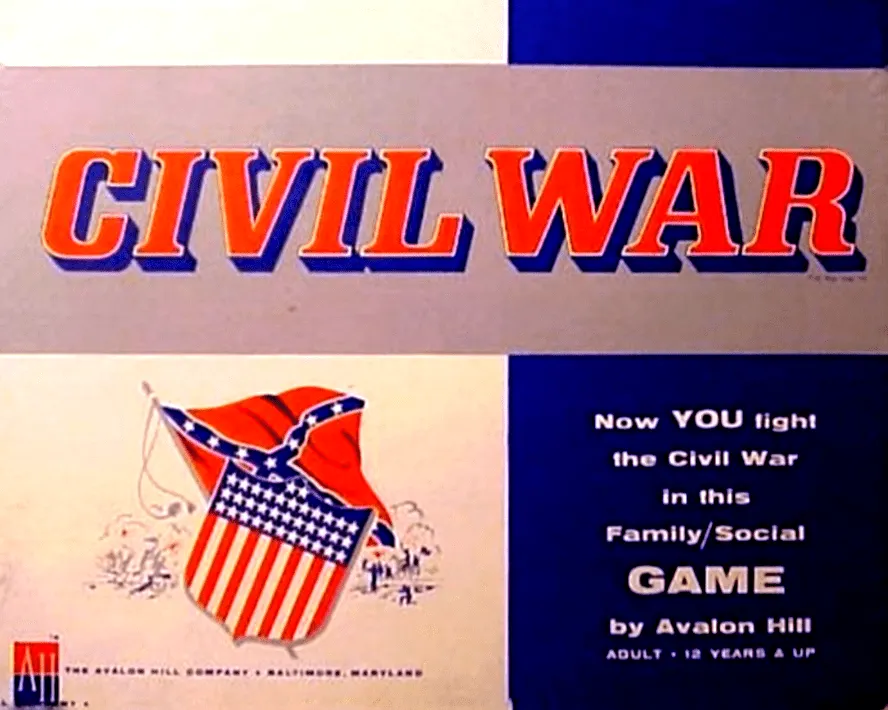
Civil War
- 2 jugadores
- 90–180 min
- Complejidad 1,6/5
- 1961
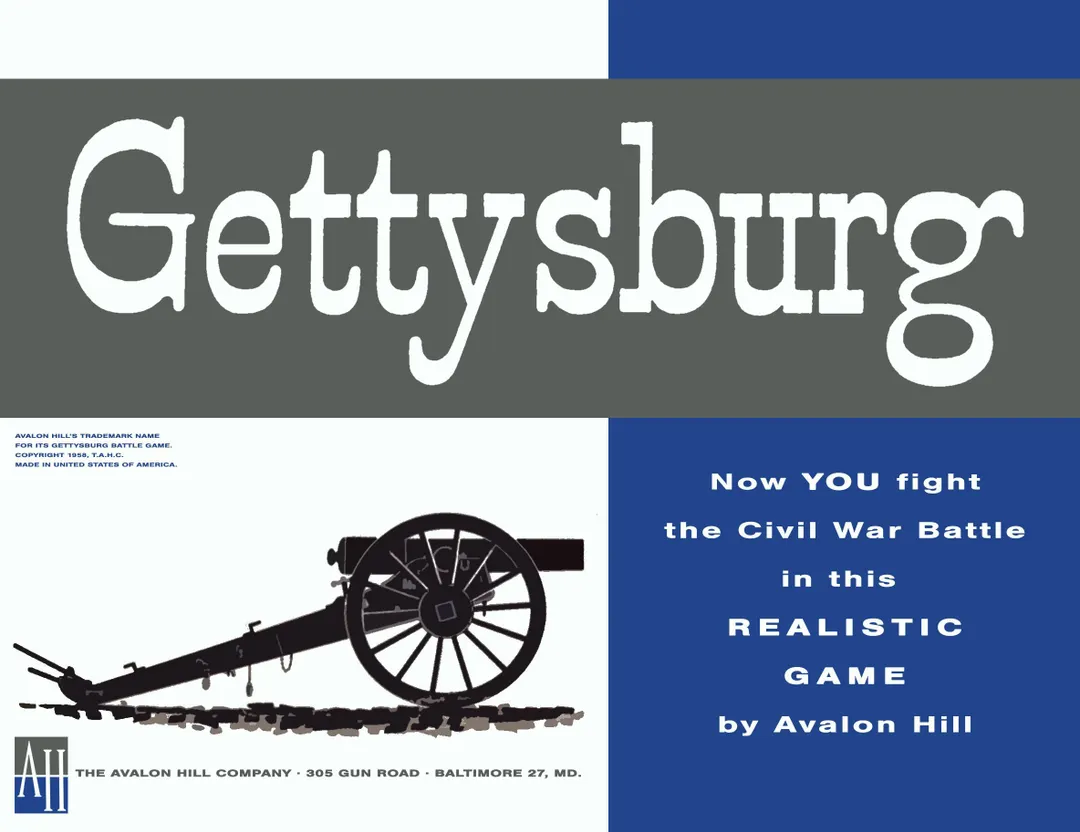
1958
Ayuda con las reglas de Gettysburg
Explicaciones claras de turnos, efectos de cartas y situaciones dudosas, con referencias a fuentes oficiales e historial de preguntas guardado.
Para 2 jugadores
¿Qué quieres saber?
Las respuestas salen del reglamento oficial, con la página para comprobarlo.
Gettysburg es un juego de mesa publicado en 1958 para 2 jugadores, con partidas de 120 a 240 minutos y a partir de 12 años. Fue diseñado por Charles S. Roberts y sus mecánicas principales son Dice Rolling, Square Grid y Grid Movement.
En inglés
One of the original set of Avalon Hill "Adult Games" that includes U-Boat, Tactics II, Verdict, and Dispatcher. This is one of the earliest "typical" wargames, with movement/strength counters, order of appearance chart, CRT, etc. Board has square grid with squares 1" = 1/4 mile. One hour turns. 27 Confederate counters 41 Union counters Units include infantry, artillery, cavalry, HQs (but had no use), and outposts (pickets, not in '64 Ed.). Roberts redesigned this game in 1961 with hexagons. Although it sold out, Roberts wasn't happy with it. He then re-released it in 1964 with squares again, like the 1958 version. However, the rules were significantly changed. The 1958 version was basically a miniatures game on a map. You used range cards (shown in the illustration) both to move your units and then to check their firing range. Units could rotate on their centers before checking with a range card, which was placed along the front side of the rectangular pieces. You got better odds hitting from a flank. Artillery had double range the of infantry or cavalry (this was only optional as far as I know). There were at least 3 slightly different rule books for the '58, '59, & '60 Ed., all were basically the '58 one. The game also had optional rules for hidden movement. You left the room while your opponent put his pieces on the board and moved them, recorded their new positions and removed them again! If they came within sight of a unit (including an outpost unit), he had to tell you where they were seen, or leave them on the board if still in sight. Line of sight rules for all this. The 1964 version required you to keep your units aligned with the square grid rather than the free form miniatures style movement of the 1958 version. This really didn't work well. Units facing diagonally had to be adjacent to form a solid wall of ZOC sqs. to their front and could not therefore protect their flanks if they spread out any at all. This made doubled and tripled attacks easily possible. Every version would benefit from a road movement bonus rule, x3 at a minimum (but x4 would be better, units that move this fast should not be able to attack that turn, though).
Según el catálogo, Gettysburg admite 2 jugadores. Es el número de jugadores indicado por la editorial, así que el juego está diseñado exactamente para esa cantidad de participantes. Las variantes para otros tamaños de grupo, si existen, se describen en el reglamento de tu edición; consúltalo antes de preparar otra configuración.
La duración indicada para Gettysburg es de 120 a 240 minutos, la estimación de la editorial para una partida completa. El tiempo real depende del grupo, del número de jugadores y del conocimiento de las reglas: las primeras partidas suelen alargarse y los grupos con experiencia terminan antes. La preparación y la explicación de las reglas no están incluidas.
El catálogo indica Gettysburg a partir de 12 años. Es la recomendación de la editorial y refleja la lectura necesaria, la complejidad de las reglas y las piezas pequeñas, no solo el tema. Los más pequeños a menudo pueden jugar con ayuda de un adulto: comprueba la edad recomendada en tu edición y la experiencia de tu grupo.
Gettysburg tiene una puntuación de complejidad de 2,2 sobre 5 según los jugadores de BoardGameGeek, lo que lo convierte en un juego algo ligero. La puntuación refleja cuánto conocimiento de reglas, planificación y toma de decisiones exige una partida típica. Los juegos exigentes requieren una explicación inicial más larga, así que conviene usar una guía de preparación.
Gettysburg pertenece a estas categorías: Wargame, Civil War y Post-Napoleonic. Sus mecánicas principales son Dice Rolling, Square Grid y Grid Movement. Las categorías describen el tema y la ambientación de un juego, mientras que las mecánicas describen lo que los jugadores hacen realmente en su turno. Cada mecánica lleva a una página del catálogo con juegos similares.
Los autores acreditados de Gettysburg son: Charles S. Roberts. Estos créditos proceden de los datos publicados del juego y nombran a las personas responsables de su diseño, no a ilustradores ni editoriales. Las páginas de autor de MeepleRules reúnen otros títulos de los mismos autores, algo útil cuando un juego te gusta y buscas otros parecidos.
El catálogo clasifica Gettysburg como juego base. Se juega por sí solo con los componentes de la caja y no requiere ningún otro título. Las expansiones, si existen, añaden contenido o reglas nuevas y aparecen por separado en el catálogo con un enlace a este juego base.